

GULF WEEKLY -
Wildlife tourism is emerging as a major trend among travellers in Bahrain and beyond, with globetrotters planning their holidays around experiences that allow them to explore nature more closely and ethically.
Gone are the days when typical tourist tropes appealed to jetsetters. Today’s excursionist is discerning, ensuring a productive approach while having fun. Nature-inspired travel has come a long way from tourists crowding zoos where wild animals are caged and often poorly treated, including as props by visitors clicking photographs or as means of transportation.
Today, ‘serious’ wildlife enthusiasts are exploring the world’s diverse flora and fauna responsibly. Among them is Bahraini shutterbug Rasha Yousif, who has travelled to 195 countries.
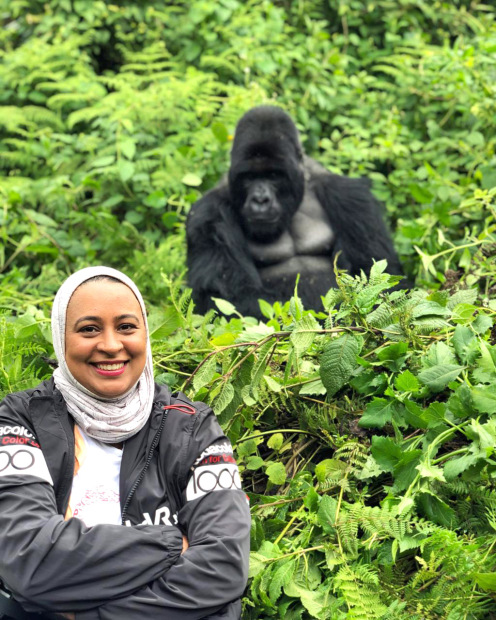
Photo bombed: Rasha with a chance acquaintance in Rwanda
“Over the years, I have realised that some of my strongest memories were not necessarily of famous landmarks but of moments in nature,” the 44-year-old told GulfWeekly.
“From the gorillas of East Africa and safaris in Kenya to conservation work in Saudi Arabia, I have had the opportunity to experience wildlife tourism in very different forms,” added the documentary and travel photographer.
Rasha strongly believes that wildlife should never exist for our entertainment. “There is a huge difference between observing an animal behaving naturally in its environment and an experience that has been created purely so tourists can touch, hold, feed or photograph an animal. Every time we pay for such an experience, we are effectively voting for that type of tourism,” she warned.
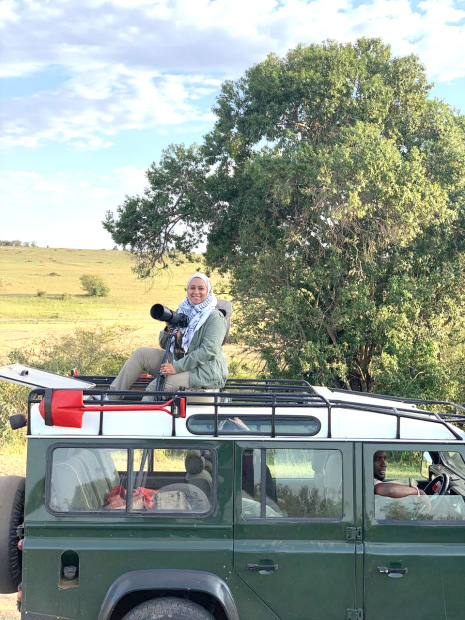
All set: Ready to explore Masai Mara
“Sometimes, the most memorable wildlife encounters are the ones where very little happens. You may sit for an hour waiting for an animal to appear. You may see it from far away. You may not get the perfect photograph. That is part of the experience,” highlighted the creative entrepreneur and Qaflh Travel founder.
Echoing the same sentiments is Bahrain’s ‘3D couple’; Limnesh Augstine, 43, and Jincy Babu, 33, have shared many wildlife experiences together on their art-related travels. The pair is presently in Kenya on the invitation of Kenyatta University, Nairobi, and has plans to explore the rich local biodiversity alongside work. So far, they have been collecting intriguing stories about the wildlife history there.
“On our visit to Nairobi National Museum, we learned about an elephant named Ahmed, who was given special protection against poachers by the country’s first president Jomo Kenyatta. Ahmed had unusually long tusks and was always escorted by rangers. His skeleton is showcased at the museum,” explained art educator and pet mum Jincy.
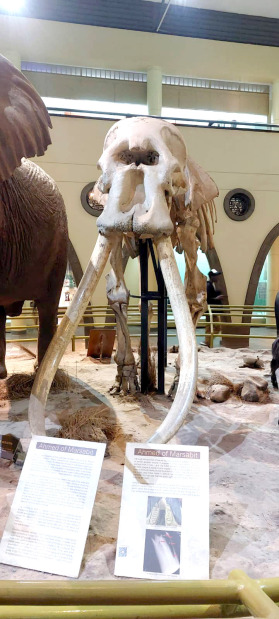
History: Ahmed the elephant’s skeleton with the long tusks at Nairobi National Museum
“Hunting is illegal here so much so that even the indigenous tribes that previously hunted animals as part of their initialisation rituals have come up with different traditions,” she added.
What sets wildlife tourism apart from other types of travels is that no matter how much you plan, nature follows its own rules. Often, it surprises you when you least expect it as experienced by Belgian expatriate and beekeeper Inge Michiels from Amwaj, who noted that she prefers ‘chance encounters’ to planning.
“One special memory comes from a stay in a South African Big Five reserve. My cabana overlooked the open bush and one morning I woke up to find a herd of antelope grazing peacefully outside. I sat up in bed and remained perfectly still, watching them pass by, not wanting to disturb the moment,” said the 52-year-old Bahrain resident of 20 years.
Closer to home, Inge came across a troop of baboons in Taif, Saudi Arabia, as she was simply driving in the area.
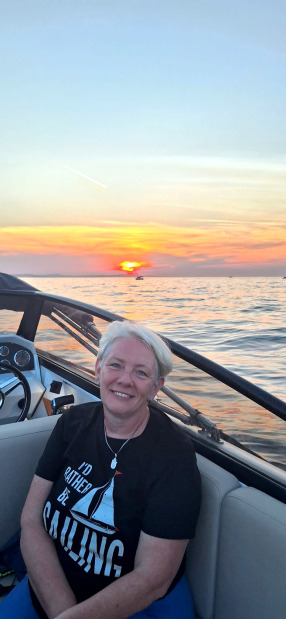
Peaceful: Inge soaks in a mesmerising sunset in Croatia
“I had not set out to see wildlife that day, but I stopped to watch their antics. One was sitting on top of my mirror until the troop decided to go because there was no food to be had. Another memorable encounter occurred in a wadi (valley) in Saudi Arabia where I found myself surrounded by hundreds of butterflies – it was magical,” remarked the Jetpet Global owner.
She highlighted that wildlife exists all around us if we slow down enough to notice it. “I love driving to work and see the migrating birds at Arad Bay. Once, I spotted a desert rabbit while driving to a camp.
“Bahrain’s natural attractions are often overlooked. While it may not have the dramatic wildlife associated with some larger countries, it offers unique experiences through its desert landscapes, coastal ecosystems, bird life and marine environments. There is real potential for responsible eco-tourism that highlights the country’s natural heritage and encourages people to experience a different side of Bahrain,” added the adventurist, who is currently exploring Croatia.
Meanwhile, Indian expatriate and overlander V Krishnadas shared his fascination for Bahrain’s natural treasures, which he has been closely watching for many years.
“Farmlands, seaside areas and places with dense trees away from buildings often reveal snakes, mongooses and diverse bird species. Flamingos are a seasonal highlight, with hundreds gathering in certain coastal areas.
“Al Areen Wildlife Park is a great spot for birdwatching and observing animals up close. I have learned to capture sharp images here as the birds are friendly and accustomed to visitors, allowing for colourful photography at short distances. Budaiya farms are home to snakes, mongooses and a wide variety of birds,” revealed the A’ali resident. The self-taught photographer has won many awards for his wildlife captures.
The business development manager, who has called the kingdom home for the last 18 years, recounted his extensive travels in India. “Kabini and Bandipur in Karnataka are unforgettable for their safaris. Vedanthangal Bird Sanctuary in Tamil Nadu is excellent for bird photography. Another must-visit place is Malakkappara in Kerala – a promising destination with thick forests stretching 45km, no mobile signal and frequent sightings of wild elephants. It is a raw and thrilling experience that keeps me connected to the wilderness,” he remarked.
&uuid=(email))