

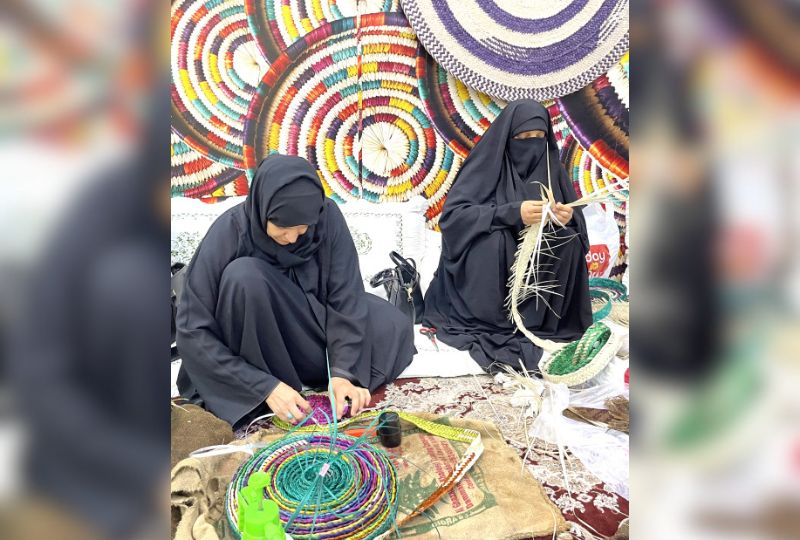
Bahrain’s centuries-old palm weaving industry is experiencing a demographic shift as workshops attract new students to the craft, regardless of their family background or gender.
Historically, basketry was passed down from fathers to sons, while women braided mats at home. Today, government-backed courses at the Capital Mall are opening the traditional art to everyone.
Palm weaving uses natural fronds to create items like sofra dining mats, food covers and storage baskets. Long centred in villages like Karbabad, Jasra and Budaiya, the trade once relied solely on knowledge passed down inside families.
However, formal classes supported by the Social Development Ministry are breaking those old rules.
Among those learning the trade is Hassan Al Naser, a male student attending weaving courses at the Capital Mall for Bahraini Handmade Products. While most men inherit the trade from their fathers, Mr Al Naser sought workshops as he is completely new to the craft.
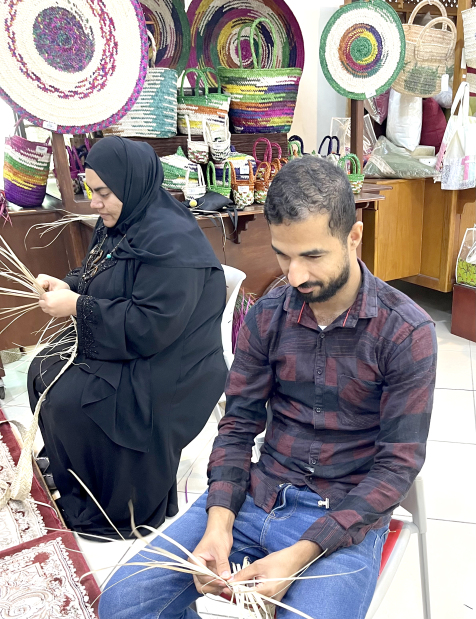
Students learning the trade
“I love all traditional handcrafts; I chose weaving because we have many palm-woven pieces around our house, so I wanted to create some too,” he said.
Instructor Zainab Jumaa, known locally as Um Moosa, says welcoming new people is key to saving the craft.
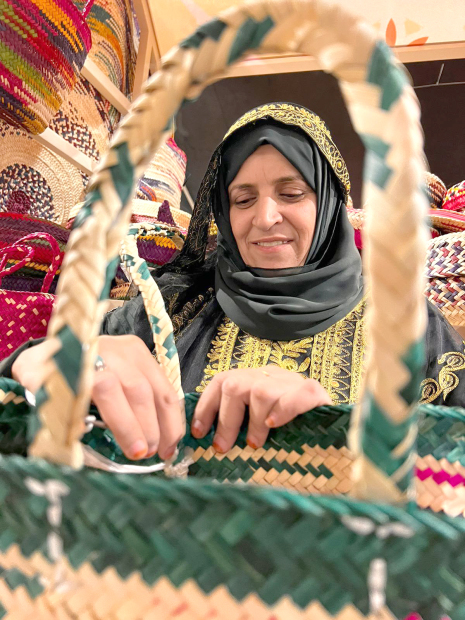
Ms Jumaa weaving her magic
“Historically, many weavers were hesitant to share their techniques, fearing that newcomers might replace them,” Ms Jumaa said.
“But that is exactly my goal. This art needs to be passed on to newer generations.
“I am most excited when a trainee is outside my regular demographic circle; usually it’s middle-aged women, but the recent shift brings me joy.”
Ms Jumaa herself represents a broader shift among young people choosing traditional skills over modern careers. Her journey began at home under her mother’s guidance, learning the core techniques of palm frond preparation and braiding.
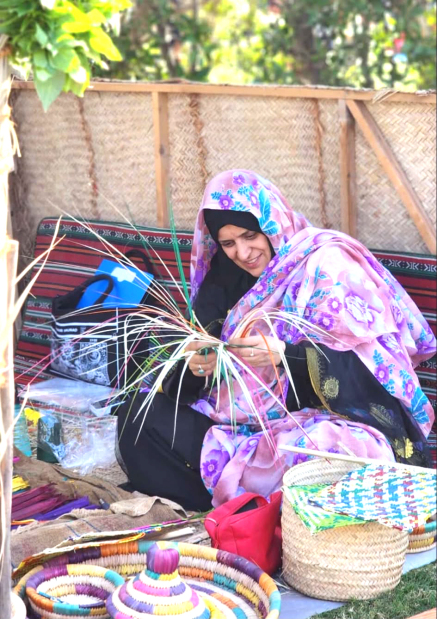
Ms Jumaa weaving outdoors
She later studied sewing and fashion design in high school before earning a National Diploma in IT Practitioners from the Bahrain Training Institute.
Despite her background in computer science, she chose to shift her focus back towards traditional practices, starting a small business in hand-blended spices before dedicating herself to palm weaving and instruction.
The instructor expresses her gratitude to the Social Development Ministry for its support, which has been instrumental in her mission to preserve traditional Bahraini crafts.
“I am thankful for the opportunities the ministry has provided me, allowing me to share this invaluable tradition with others.
“Their support has enabled me to conduct training courses and reach eager learners who want to connect with their heritage.
“It’s through this partnership that we ensure the longevity of our cultural identity, fostering a new generation of artisans who will carry these traditions forward.”
To help her students succeed, Ms Jumaa sells their finished goods directly in her shop at the Capital Mall, giving new weavers a way to earn money from their work.
The craft is also reaching a global audience. Ms Jumaa has shown her work on Bahrain TV, taught a workshop at King Faisal University in Saudi Arabia, and worked with a designer to display Bahraini woven goods in Italy.
Similar teaching efforts are taking place nearby at the House of Basket Weaving in Karbabad, near the historic Bahrain Fort. Looking ahead, heritage supporters hope to bring these skills into local schools so every young person gets a chance to learn hands-on crafts.
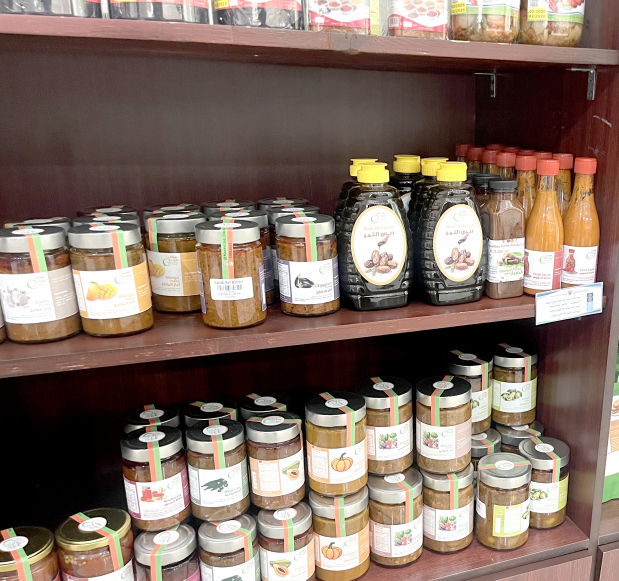
Hand-blended spices
“For me, the real success is seeing my students work on their own,” Ms Jumaa said. “Every new project made by a former student proves that Bahrain’s culture will stay alive.”
&uuid=(email))