


Medical researchers and psychiatrists are warning that behavioural addictions are an emerging concern among citizens and residents, fuelled by dependence on social media, gaming, relationships and other coping behaviours.
Speaking during the fourth Bahrain Psychiatry Conference, being held at the Gulf Convention Centre in Manama, Health Ministry senior consultant psychiatrist Dr Charlotte Kamel said that while substance addictions remain a concern, behavioural dependencies are becoming more prevalent.
“Addiction in the 21st century is not only about substance abuse, which is still prevalent, but behavioural addictions have come to the forefront,” Dr Kamel told the GDN.
“This includes social media, shopping and digital addictions, as well as things like relationship addiction, where someone keeps changing relationships.”
Several studies completed over the last five years estimate that one in three individuals in the GCC, including adults and adolescents, is addicted to the Internet.
In ‘Digital Addiction Among Arab Families: Status, Contributing Factors, Responsibilities, and Solutions’ published last year, researchers defined digital addiction as a problematic relationship with technology characterised by symptoms of behavioural addiction, including mood swings, conflict, withdrawal symptoms, and relapse.
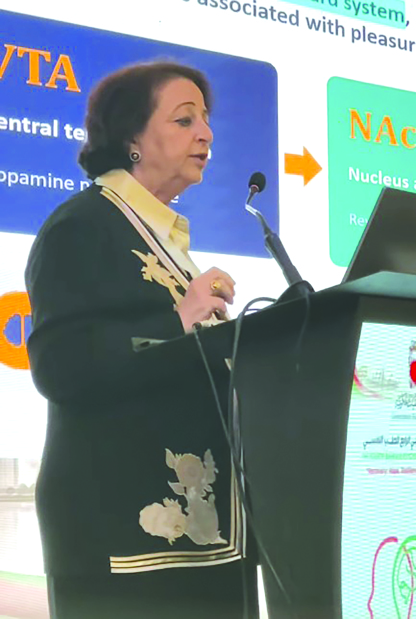
Dr Kamel
According to Dr Kamel, addiction has expanded to include behavioral addictions to the Internet, social media, online gaming and gambling, shopping, social media and relationships. These modern forms of addiction may not involve a chemical substance but can activate similar brain reward mechanisms, she added.
The increase in addiction globally is due to numerous stressors like academic pressure, job insecurity, financial concerns and social isolation.
While addictive use of technology is not yet officially recognised as a clinical diagnosis, certain forms, such as Internet gaming disorder, have been classified as clinical conditions.
Prevention strategies for both behavioural and substance addiction include digital literacy, education, family support, identification and treatment of anxiety, depression, and trauma, healthy technology habits and community programmes.
Treatment options can range from psychological interventions like Cognitive Behavioral Therapy, family therapy and medical treatment.
The two-day conference in Bahrain, held under the theme ‘Recovery: Hope, Resilience and Renewal’ also focused on addiction medicine, modern psychiatric solutions and the neurobiology of addictive behaviours.
Amongst the topics discussed were the epidemiology of addiction by Dr Ihab Rakha, how substance abuse can lead to mental disorders by the Interior Ministry head of forensic laboratories Ahlam Khudeir Al Majed and the Ta’afi addiction recovery programme presented by Lieutenant Colonel Abdulla Al Mannai.
Another key addiction emerging in the 21st century is dependence on prescription medication amongst patients dealing with chronic illnesses.
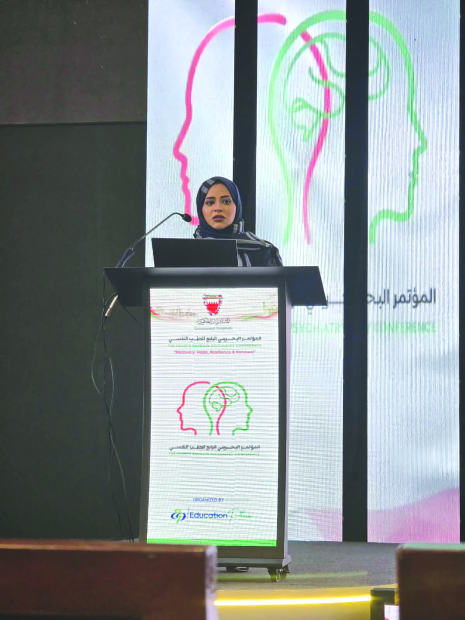
Dr Al Noaimi
In her lecture on the subject, Dr Haya Al Noaimi noted that physicians and medical professionals are increasingly concerned about this and may sometimes under-prescribe medication to avoid the risk of their patients becoming addicted to the substances.
“Iatrogenic addiction develops following medical treatment and is the drug-seeking behaviour caused by inadequately treated pain,” she added.
Dr Al Noaimi cautioned that pain could be debilitating and said doctors should prescribe appropriately once they have screened patients based on clinical judgement and using tools like the Screening Instrument for Substance Abuse Potential (SISAP) – a brief questionnaire designed to identify patients at risk for substance abuse or opioid misuse before starting long-term opioid therapy.
The conference opening was attended by Government Hospitals chief executive officer Dr Mariam Al Jalahma and Supreme Council of Health chairman Lieutenant-General Dr Shaikh Mohammed bin Abdulla Al Khalifa.
Speaking to the GDN, Lt-Gen Dr Shaikh Mohammed noted that the overall purpose of this year’s conference was to explore solutions related to addiction and help those struggling with addictions become productive members of society.
naman@gdnmedia.bh
&uuid=(email))