

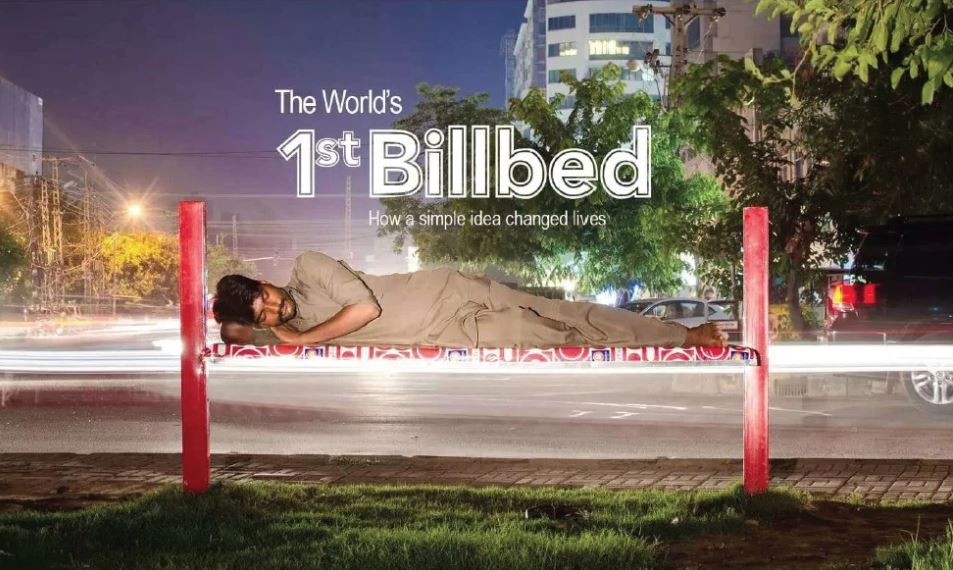
In busy cities across Pakistan, billboards are a part of everyday life. They stand along roads, above shops, and across crowded streets, carrying advertisements that catch drivers’ and walkers’ eyes. In 2015, Master Group Pakistan, a leading maker of mattresses and foam furniture, gave one type of billboard a second job. Through its Master MoltyFoam brand, the company introduced ‘billbeds’ –advertising boards that can be turned into foam beds at night.
The idea is simple. During the day, each billbed works like a normal billboard, showing a MoltyFoam advert. At night, it can be flipped open or changed into a flat foam sleeping surface. The bed is meant for a homeless person who might otherwise spend the night on a pavement or roadside. The company says that the project responds to the needs of people who sleep outdoors in Pakistan’s major cities.
For many people, a night on the street brings more than discomfort. Hard ground makes it hard to rest, while cold, damp weather and busy roads increase the risk. A foam bed cannot solve the deeper problems that lead to homelessness, such as poverty, unemployment, or a lack of safe housing. However, it may offer someone a cleaner and softer place to sleep for a few hours.
The project also asks people to look at street advertising in a new way. Cities already have many billboards, most of which serve only one purpose: to display a message to the public. This billboard is designed to serve the advertiser during the day and someone in need at night.
Master Group Pakistan says that giving back to society is part of its purpose. By using the knowledge and materials behind its foam products, the company is linking its business to a public need. The boards turn a product normally sold for homes into something that can offer temporary help in public spaces.
The number of people sleeping on the streets is often described as reaching about half a million across major cities. Yet, people without homes are not a single group with one story. Some may have lost their jobs or family support. Others may have moved to a city to find work or because of illness or other hardships. A short-term sleeping place will not meet every need, but it can help draw attention to people who are often overlooked.
For the beds to work well, they must be safe and easy to use. Place them where people can reach them without blocking walkways or creating danger near traffic. The materials must also withstand dust, rain, and regular use. Clear instructions and routine cleaning would make the beds more useful and comfortable for the people they serve.
There are also practical questions. City authorities may need to approve the location and design of the structures. Residents and nearby businesses may want to know how the beds will be managed and kept in good condition. Ask people experiencing homelessness what they need.
Charities and local community groups could help the initiative reach those who need it most. These organisations often know the streets and understand the challenges people without shelter face. They could help share information, check on the billbeds, and connect users with other services, such as meals, healthcare, or advice on finding longer-term support.
Billbeds are a small response to a very large challenge. They cannot replace safe housing, social services, or work to reduce poverty. Nor can one advertising campaign meet the needs of every person sleeping outside. However, the project brings an important challenge into public view and suggests that city structures can sometimes serve more than one purpose.
Billboards are usually designed to make people stop and notice a brand. A billboard may also make people aware of the lives of those who sleep beneath it. If the beds are placed and cared for responsibly, they can offer more than just a softer surface. They could encourage companies, city leaders, and communities to ask how existing resources can help people in need.
The test will be what happens after the idea is introduced: whether the beds are available, clean, safe, and welcomed by the people who use them. If these details are handled with care, a sign that advertises comfort by day may provide a small measure of comfort by night.
The brand placed weatherproof BillBeds in more than 150 locations across nine major cities in Pakistan, where it knew they would benefit homeless labourers most.
The campaign won a Bronze Lion at the Cannes Lions 2015 awards.
Dr Aloma Jayasundera
