

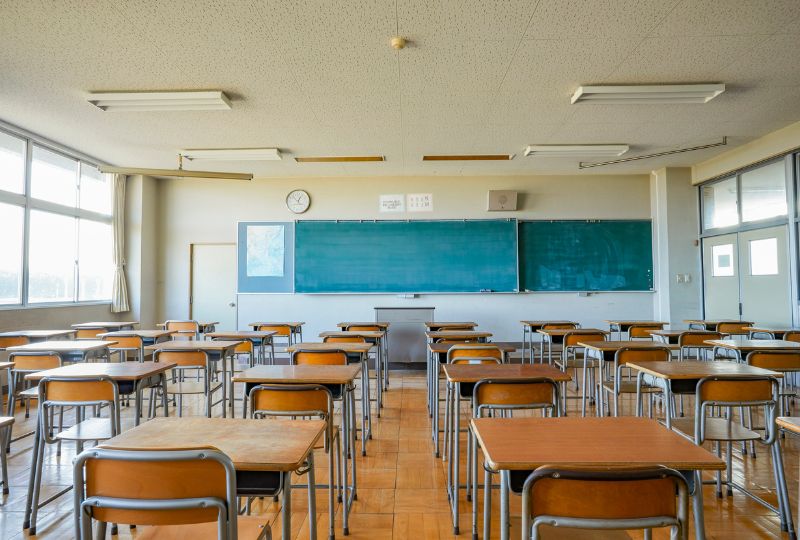
Imagine a science classroom where a student struggling to understand electricity receives a simpler explanation instantly, another student is challenged with a more advanced problem, and the teacher has more time to focus on discussion, experimentation and individual support.
This is no longer simply a vision of the future. Artificial intelligence (AI) is already beginning to change the way science is taught and learned. For teachers, AI is becoming a new classroom assistant – one that can help prepare lessons, generate activities, create assessments and present information in different ways.
For students, it can offer explanations, examples and learning materials that are better suited to their individual needs. This is particularly important in science, where students often encounter concepts that are abstract, technical or difficult to visualise. AI can help turn a complicated topic into a simpler explanation, a practical example, a diagram, a video or even an interactive activity.
Technology is also changing how teachers prepare their classes. Tools such as Gamma can help educators create presentation slides in minutes, while platforms such as InVideo can transform simple prompts into educational videos. What once took hours of preparation can now be completed much faster, giving teachers more time to concentrate on what technology cannot easily replace: understanding their students.
AI can also help teachers design lessons for classrooms where students have very different abilities and language backgrounds. Consider a lesson on electricity and magnetism. A teacher can ask AI to develop explanations for different levels of understanding, create practical activities, simplify scientific vocabulary for English-language learners and generate questions ranging from basic recall to higher-order thinking. Science, however, does not have to remain confined to textbooks and formulas.
AI can bring creativity into the science classroom. A teacher could ask AI to write a poem about electricity and then turn the poem into a song. A difficult scientific concept might become a short story, a visual presentation or an imaginative classroom activity. By combining science with art, music and technology, teachers can give students new ways to connect with ideas that may otherwise seem intimidating.
Assessment is another area where AI is making an impact. It can generate multiple-choice, true-or-false, matching and open-ended questions, suggest activities at different levels of difficulty and help teachers develop assessment rubrics. It can even provide feedback on student work when clear marking criteria are supplied.
For students, AI can also make large amounts of information easier to manage. Long documents can be summarised, key ideas identified and complex topics organised into mind maps. Used properly, these tools can help students move from information overload to genuine understanding.
Yet there is a danger of becoming too enthusiastic about technology.
AI is not an infallible teacher. It can produce inaccurate information, reflect bias and raise serious questions about privacy, academic integrity and responsible use. Students must learn that an AI-generated answer is a starting point for thinking, not necessarily the final answer.
This is why the teacher remains at the centre of the classroom.
The purpose of AI should not be to replace teachers, but to give them better tools. A machine can generate a worksheet. It cannot replace a teacher who notices that a student has lost confidence. It can produce an explanation; it cannot fully understand the human circumstances behind a student’s struggle.
As AI becomes increasingly common in education, teachers will need training and support to use it thoughtfully. Students, too, will need to develop a new set of skills: questioning information, checking sources, recognising bias and using technology ethically.
The biggest opportunity, therefore, is not simply to create a more technologically advanced classroom. It is to create a better one. Used wisely, AI can help science education become more personalised, creative and inclusive. It can give teachers more time to teach and give students more opportunities to learn in ways that suit them.
The future of education will not be about choosing between teachers and technology. It will be about bringing the strengths of both together and making sure that, even in an age of artificial intelligence, there is still plenty of human intelligence in the classroom.
Dr Funda Örnek
Professor in Science Education
Math, Science & ICT Department
Mohammed Jaber Al Ansari College for Teachers, University of Bahrain
