

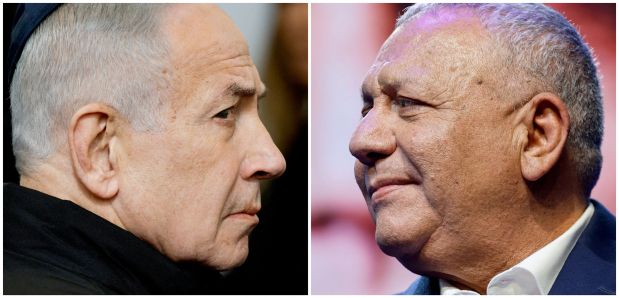
Prime Minister Benjamin Netanyahu and rival Gadi Eisenkot offered competing claims to lead Israel after Tuesday's election, with Netanyahu calling for a right-wing government and Eisenkot saying voters had rejected the longtime Israeli leader, even as early counting showed no clear winner.
Israel's Central Elections Committee was tallying votes on Wednesday and it will likely take until Thursday before definitive results of the election - the first since the Hamas-led attack of October 7, 2023 - are known.
With some 48.4% of votes tallied, Netanyahu's bloc was projected to win 55 seats, and Eisenkot's bloc 50 seats, with 15 seats going to Arab parties, Israeli media reported, a distribution will likely change as more votes are tallied.
That leaves both sides short of the 61 seats needed for a majority in the 120-seat Knesset, and neither Netanyahu nor Eisenkot claimed victory.
While the projected results may represent a setback for Netanyahu and his nationalist-religious coalition, a deadlock could work in his favour, leaving the 77-year-old in office as a caretaker prime minister during what are likely to be prolonged coalition negotiations or even until another election can be held.
Netanyahu's bloc rules out forming a government with Arab parties, which themselves campaigned on a platform of bringing down the prime minister and his far-right allies. Eisenkot, the leader of the Yashar party and a former military chief, has all but ruled out forming a government with Arab parties, complicating his path to power.
Far-right religious parties led by Itamar Ben-Gvir and Bezalel Smotrich were projected to take a combined 13 seats within Netanyahu's bloc – with no major gains for either of them.
