

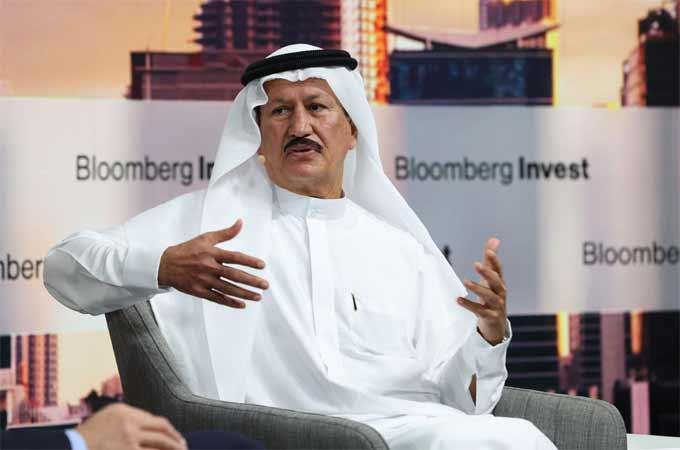
UAE-based DAMAC Group aims to increase the planned capacity of its global data-centre portfolio to 10GW by the end of 2027, compared with around 6GW currently planned, as it expands to meet accelerating global demand for artificial intelligence and cloud-computing infrastructure, said Hussain Sajwani, Founder and Chairman.
Speaking at Bloomberg Invest Dubai 2026, Sajwani said his investments in artificial intelligence and technology companies have generated substantial returns, noting that investments in OpenAI, SpaceX and Anthropic alone have produced gains running into billions of dollars.
He said his investment in Anthropic, made less than two years ago, had generated gains comparable to those accumulated over around three decades of his previous business activity, illustrating the pace of change and investment opportunities emerging across the technology sector, Bloomberg said.
Sajwani said DAMAC continues to implement an international expansion strategy through DAMAC Digital, with projects and sites across 14 countries in major markets in the United States, Europe and Asia.
He said the portfolio currently represents around 6,000MW of planned capacity, comprising approximately 1,000MW in the United States, 2,500MW in Europe and a further 2,500MW in Asia.
Expansion plans include Thailand, Malaysia, the Philippines, Finland, Spain, Greece, Italy, Türkiye and the United States, alongside opportunities being assessed in other international markets.
Sajwani said DAMAC plans to acquire additional land outside the United States over the next 12 to 18 months to develop new data centres.
He added that the group is in serious negotiations to acquire a large site in Australia and is also looking to expand in the United Kingdom.
Geographic expansion, he said, requires careful planning around infrastructure, logistics and access to power, with the group favouring measured expansion into new markets to ensure efficient execution and sustainable operations.
On the United States, Sajwani reaffirmed DAMAC's commitment to its previously announced US$20 billion data-centre investment programme.
He said around $9 billion of those commitments had already been invested and that work would continue in line with the availability of suitable land and power.
Sajwani said he expects the United States to remain the world's largest data-centre market because of the scale of demand, although constraints involving power, land and environmental requirements could encourage companies to increase investment in international markets.
He said the group is focusing on large data centres starting at around 100MW and relying primarily on liquid-cooling technologies designed to support AI chips and high-density computing.
According to Sajwani, data-centre development costs have risen by around 30 percent and could increase by a further 20 to 30 percent.
He noted that the United States and Europe are among the most expensive markets for development, while Asian markets offer comparative advantages in labour and equipment costs.
The industry's biggest challenge, he said, is not higher costs alone but also supply-chain disruption and recurring delays in obtaining equipment needed to complete projects.
