

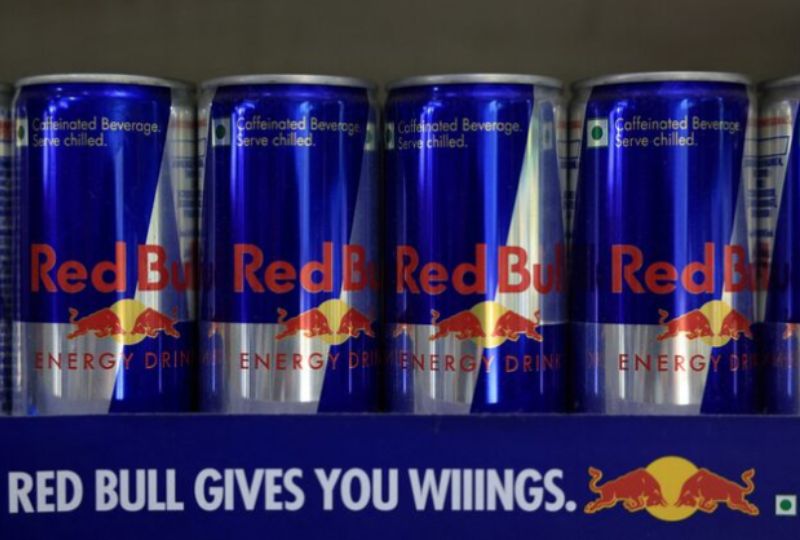
India is scrutinising the composition of Red Bull, the drink made by the eponymous Austrian company, warning the product's "energy drink" label could encourage people to consume too much added sugar, an official notice showed, opening a new front in the regulator's fight over food safety standards.
It is the first time India has raised health concerns and questioned companies on the ingredients of their energy drinks in a dispute that began in June and has triggered legal challenges in the Delhi High Court.
In a confidential notice to Red Bull on Monday, the Food Safety and Standards Authority of India (FSSAI) targeted the drink's "nutritional composition", saying it derived a significant proportion of its declared energy from the "substantial" amount of added sugar.
"The basis and nature of the energy-related positioning of the product require scientific and regulatory substantiation," the FSSAI said in the document, which was reviewed by Reuters.
The notice gives Red Bull seven days to explain why India should not prohibit its use of the "energy drink" label given it had the "potential to mislead consumers and encourage excessive consumption of added sugar."
Red Bull and the FSSAI did not immediately respond to Reuters requests for comment.
COURT FIGHT, NEW NOTICE
India's energy drinks market is set to be worth $1.6 billion by 2028, with sales growing 12.6% annually, faster than in the US and China, according to Euromonitor. Red Bull's India revenue stood at $130 million in 2024, more than double the earnings recorded four years ago.
Health experts are concerned energy drinks contain high levels of sugar, caffeine and taurine, an amino acid that research suggests can contribute to health problems. The drinks will be banned for under-16s in England from April next year.
In court in recent weeks, Red Bull, PepsiCo, Monster Beverage and Reliance Consumer have challenged the June order banning the label "energy drinks", saying they were not given any advance notice of the strict action.
However, while Red Bull managed to secure a temporary court injunction to enable it to continue using the "energy drink" label, its competitors were told that once they sold their existing stock they had to stop using the label.
The regulator has asked the Delhi judge to review the Red Bull decision because it says it gives the company "an undue commercial advantage" against its rivals, according to its October court filing reviewed by Reuters. That challenge will be heard in January.
In its latest notice, the FSSAI said Red Bull's beverage carried a consumption advisory indicating the product should not be consumed in quantities exceeding 500 millilitres a day, which it said could confuse consumers into believing it was fine to consume that quantity.
"At the declared sugar concentration of 11 g per 100 ml, consumption of 500 ml of the product would result in an intake of approximately 55 g of sugar, which exceeds the generally recommended daily limit of 50 g," the regulator said.
The notice comes as the regulator also steps up food safety inspections nationwide, checking labelling claims on food and beverages and restaurant chains for cleanliness.
