

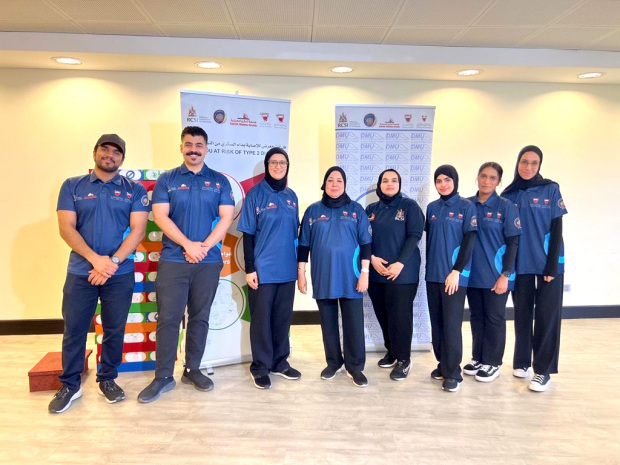
The Diabetes Mobile Unit (DMU) has launched a series of interactive videos highlighting the impact of Type 2 diabetes on the body and the healthy habits that can help prevent the condition, which affects around 22 per cent of Bahrain’s population.
DMU academic director Danah Smith said the videos cover six key areas: preventing Type 2 diabetes, recognising its signs and risk factors, increasing physical activity, adopting healthy sleep habits, developing healthier eating patterns, preparing balanced meals and understanding portion sizes.
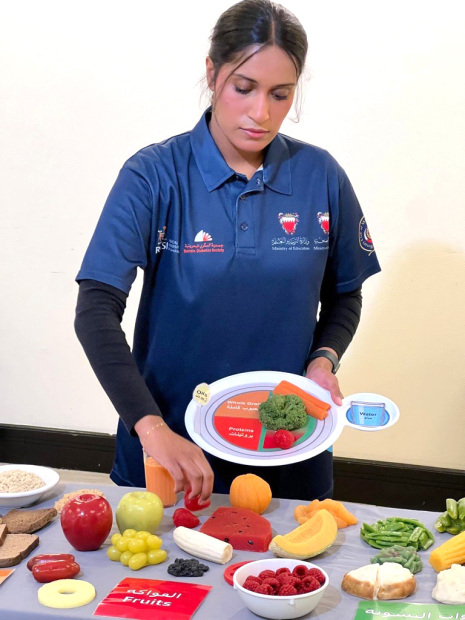
A DMU volunteer preparing a healthy, balanced plate
“The series brings the key health messages from our DMU interactive storybook, ‘Learn with Us, Move with Us’, into short, practical digital videos,” Ms Smith, a nursing lecturer, told the GDN.
“Using a family-centred approach and developmentally appropriate language and activities, the videos encourage children to build healthy habits alongside their families.”
The six-part series, available on Instagram, aims to reduce the risk of developing Type 2 diabetes. Its launch comes amid projections that more than 45pc of people in Bahrain could be living with the condition without knowing it.
Established in 2012, the DMU is a joint initiative of the Bahrain Diabetes Society and the Royal College of Surgeons in Ireland – Medical University of Bahrain.
It is sponsored by the Rotary Club of Manama and implemented in collaboration with the ministries of Education and Health, with approval from the Higher Education Council (HEC).
The launch coincides with World Diabetes Month, observed each November. This year’s theme, ‘Early Action on Diabetes’, highlights the importance of early diagnosis, timely access to care and reducing the risk of Type 2 diabetes.
World Diabetes Day was marked on November 14.
Ms Smith noted that many people in Bahrain may be unaware they have Type 2 diabetes, as the condition often develops gradually and can present with few or no noticeable symptoms. Recent statistics presented at the AI in Medicine conference indicated that more than 45pc of people in the kingdom may be living with diabetes without being aware of it.
“People may attribute tiredness and increased thirst to everyday life, and so they may not seek testing,” Ms Smith explained. “Raised blood glucose can damage the body before diagnosis and increase the risk of complications.”
Ms Smith also highlighted the misconception that Type 2 diabetes only affects adults, pointing out that cases are increasing among children and adolescents globally.
“Our awareness videos highlight signs, symptoms and risk factors, and encourage early screening for people who are overweight or obese, particularly those with fat accumulation around the waist, a family history of diabetes, prolonged physical inactivity or unhealthy eating habits.”
The videos, filmed in Arabic with English subtitles, also draw attention to signs of insulin resistance, including dark, thickened skin around the neck or underarms, known as acanthosis nigricans, as well as associated health conditions such as polycystic ovary syndrome (PCOS), high blood pressure and high cholesterol.
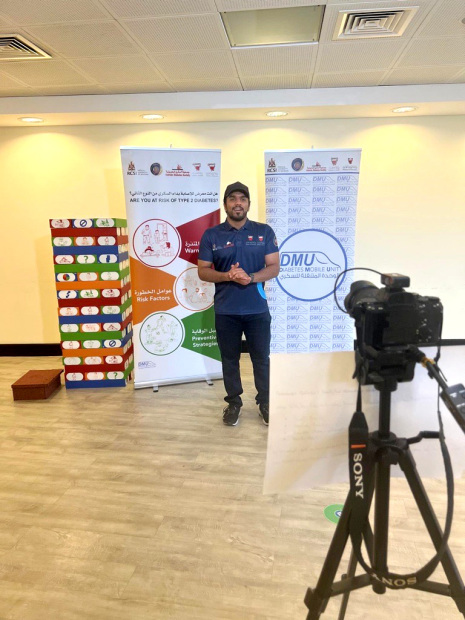
Behind the scenes shooting of the series
The GDN previously reported that the number of people living with diabetes in the kingdom could exceed 300,000 by 2050.
“Such a projection is deeply concerning because of its impact on individuals, families and healthcare services,” Ms Smith said. “It is important to act urgently through prevention starting in childhood, earlier identification of risk factors and support for healthier living.”
Discussing the key factors contributing to rising obesity rates in Bahrain, she highlighted the role of diet and lifestyle habits.
“Food quality, large portions, sugary drinks, prolonged sitting, limited activity and poor sleep can all contribute, alongside biological and environmental factors,” she said, encouraging families to prepare meals at home whenever possible. “When ordering, families can choose meals with vegetables, appropriate portions, modest amounts of healthy oils, little or no added sugar or salt, and water as their drink of choice.”
Ms Smith said tackling obesity and Type 2 diabetes in Bahrain requires a broader approach involving national policy, healthcare screening and intervention programmes for people at risk.
julia@gdnmedia.bh
