

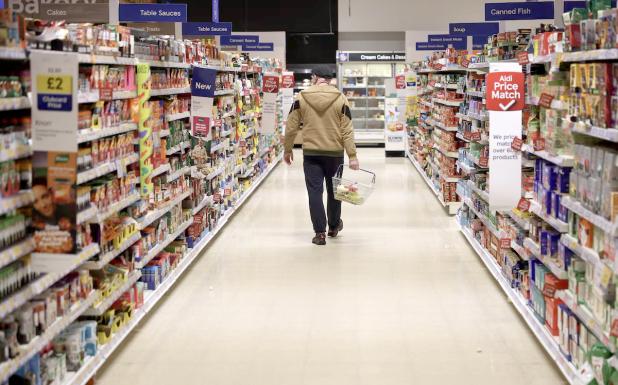
BRITISH retail sales volumes unexpectedly rose 0.7 per cent in October compared with September, bolstered by a government call for households to stock up on long-life items as well as stronger clothing sales, official figures showed yesterday.
The jump in October sales volumes beat all economists’ forecasts in a Reuters poll and lifted the annual growth in sales to a two-month high of 2.3pc from 0.4pc in September.
“Supermarkets have told us that sales of long-life food items such as tinned food and UHT milk were boosted by the government’s ‘Be Ready’ campaign,” Office for National Statistics chief economist Grant Fitzner said.
Last month, Britain’s government advised the public to keep three days of emergency supplies at home, a message it said had been hammered home by online computing security flaws, as well as a record-setting summer of heat, drought and wildfires.
Food stores reported a 0.8pc rise in sales volumes in October after a 0.3pc drop the month before, the ONS said, while cooler weather also boosted sales of autumnal clothes after a warmer than usual September.
British economic growth and consumer spending have been more resilient than analysts expected in response to the sharp rise in fuel costs caused by the US-Iran war, but economists said October’s pickup offered few clues on whether this would last.
“An unexpected recovery in retail sales in October underlines the current fickle nature of consumer confidence. The increase in sales ... is probably a one-off which hides the challenge facing retailers as they head into the crucial festive trading period,” said Rajeev Shaunak, head of consumer at accountants MHA.
Consumer sentiment had fallen sharply in October, according to Britain’s longest-running measure of it, as rising fuel bills and borrowing costs squeezed households, although November data released earlier yesterday showed a small recovery.
Consumer price inflation rose to a one-year high of 3.6pc in October, and the Bank of England forecast it would reach close to 5pc in the middle of next year when it raised interest rates for the first time in three years this month.
“Energy prices will rise by more than 20pc in January, squeezing households’ spending power. While the coming year will be challenging for the retail sector, it looks particularly tricky for retailers that don’t provide daily essentials,” said Matt Swannell, chief economic adviser at forecasters ITEM Club.
British household energy bills are regulated in a way that means they tend to rise and fall with a lag of 3-6 months compared to prices on international markets.
