

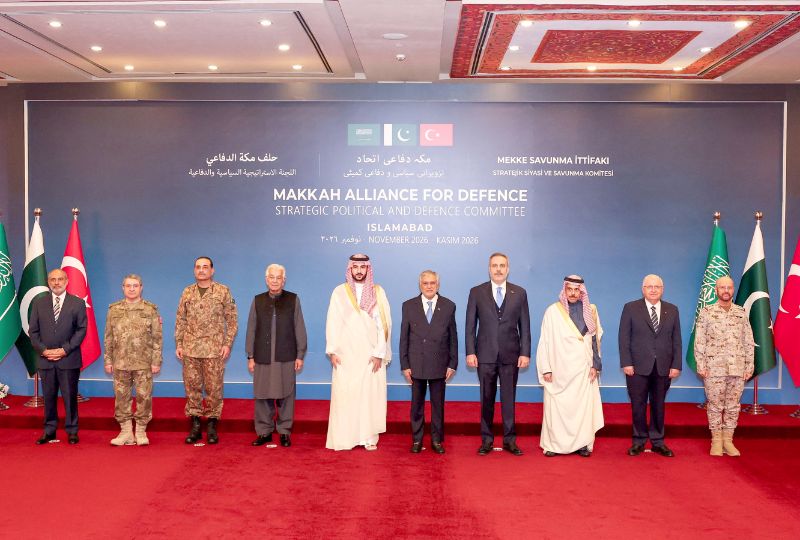
Saudi Arabia, Türkiye and Pakistan discussed a roadmap for allowing potential new members into their defensive alliance during a meeting in Islamabad yesterday and agreed on some principles for membership, Turkish Foreign Minster Hakan Fidan said.
The three countries signed a joint defence agreement in Mecca in August amid concerns about the Iran war.
“We held discussions on what kind of a roadmap should be followed for other countries wanting to become members... We took decisions on some principles. In short, everything is going very well,” Fidan said after the talks, which the countries’ defence ministers and military chiefs attended.
“The three sides reiterated their strong condemnation of the persistent and heinous attacks by the Houthi militia, targeting civilians and civilian infrastructure in the Kingdom of Saudi Arabia,” Pakistan’s foreign minister Ishaq Dar said at the conclusion of the meeting.
He added the three nations ‘reaffirmed their collective resolve to continue and intensify efforts to support the kingdom in safeguarding its security, sovereignty and territorial integrity.”
The foreign and defence ministers of Pakistan, Saudi Arabia and Türkiye attended the meeting, Dar said, as well as their respective military chiefs, including Pakistan’s Field Marshal Asim Munir.
“The parties reaffirmed their commitment to strengthening co-operation in defence industries, joint technological development, training and capacity building,” Dar added.
The committee reviewed the outcomes of its inaugural meeting, held in Istanbul on August 31, and its emergency meeting in Riyadh on October 5, as well as progress made in implementing decisions adopted during the two meetings.
Fidan said Türkiye would continue working to strengthen the alliance’s institutional structure and operational capabilities to contribute to regional security and stability.
In a joint statement following the meeting, the three countries also welcomed progress towards establishing and operationalising the alliance’s secretariat in Saudi Arabia, which is expected to co-ordinate its institutional activities.
