

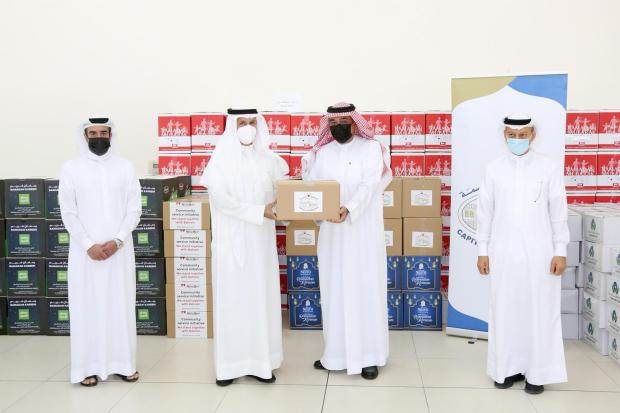
AN annual Ramadan campaign aimed at distributing food parcels among low-income Bahrainis and expatriates has been launched.
Under the ‘Together We Care’ initiative, more than 15,000 hot Iftar meals will be handed out during the holy month to representatives of various non-governmental organisations (NGOs) by the Capital Governorate.
The NGOs will then distribute the food packets to needy individuals.
“We have launched our annual Ramadan campaign to help low-income families, including expatriates, by providing them daily with food parcels,” Capital Governor Shaikh Hisham bin Abdulrahman Al Khalifa told the GDN yesterday.
Challenges
“More than 1,500 boxes containing essential food items have so far been handed over to different NGOs.”
Shaikh Hisham added that challenges posed by the coronavirus (Covid-19) pandemic and lessons learned in the past have forced them to abandon the idea of distributing food parcels at different locations to avoid overcrowding that occurred during Ramadan last year.
The GDN reported last year that the campaign was criticised after images appeared of long queues of expats in Manama waiting to collect the food baskets, in violation of social distancing norms.
This prompted a rethink following which it was decided to drive to specific locations to distribute the baskets, rather than let queues build up at one location.
“This year, the food parcels will be handed directly to the NGOs which have their own list of beneficiaries.
“There will be no long queues and all our team members are vaccinated.”
The Iftar food parcels are both vegetarian and non-vegetarian and contain dates along with a bottle of water.
Meanwhile, the Capital Governorate will also organise during Ramadan the 10th edition of Mohammed’s Nation, a programme featuring awareness sessions and webinars.
“Bahrain is known for its humanitarian efforts and cultural diversity, and we urge people in need to contact us via our Instagram account, @cg_bahrain,” added Shaikh Hisham.
Last year, several national campaigns were organised, including by the Capital Governorate, during which more than half a million people hit by the Covid-19 pandemic received food aid.
The donations for Manama residents helped thousands of expats and citizens, especially those who lost their jobs due to the pandemic.
Iftars are not allowed at mosque premises this year as part of government directives to control the spread of the pandemic.
sandy@gdn.com.bh
&uuid=(email))