

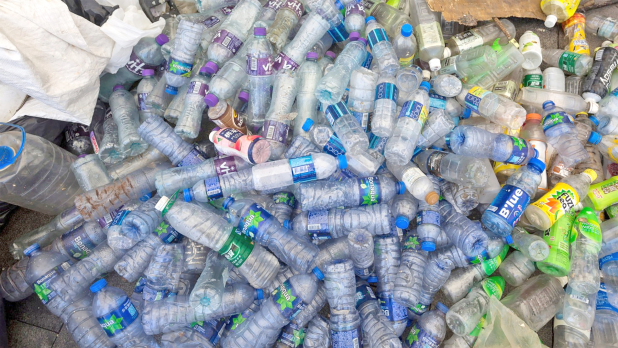
BAHRAIN has banned the production, import and sale of plastic water bottles that are less than 200 millilitres.
The Industry, Commerce and Tourism Ministry has passed a law imposing the clampdown, according to the Official Gazette.
However, businesses will be given six months’ time to implement the rule.
The GDN has reported in the past that environmentalists have complained about tonnes of plastic bottles being picked up during their cleaning campaigns. Several initiatives have been suggested to help reduce the amount of plastic dumped in Bahrain.
German architect Kai Miethig, Bahrain’s Island Innovation Programme ambassador and a member of The International Ecotourism Society (TIES), appreciated the ban, however, adding that it may not achieve much environmentally.

Mr Miethig
“Banning small water bottles would not have much of an impact,” he told the GDN.
“It’s the same with banning small plastic bags, they’ll just be replaced with bigger ones and people will still use it.”
Mr Miethig called for a wide-ranging clamp on all forms of plastic, while stressing the need for industries to innovate and go green to save the planet.
“As long as we care more about the industry and economy, rather than nature and the environment, we will always lose,” he said.
“If you tell the industry that after two years there will be no more plastic bottles, they will find a solution and a way to move forward.
“It’s the same with plastic bags, you can ban them tomorrow and people will find an alternative,” he said, adding that a partial clamp of this nature may not benefit the nature.
“In 1969, people flew to the moon and this year humankind reached Mars and we are somehow still in a position where we cannot replace plastic bottles, that is just unbelievable.
“Technology is so advanced with artificial intelligence and all these new materials,” he said, stressing the need to think differently to create a change.
Bahrain had announced a ban on the use of single-use plastic bags in 2019.
The GDN reported that the first phase focused on single-use plastic covers as well as banning the import of non-biodegradable bags. Plastic table covers, which contribute to a significant part of the landfill, were banned in the second phase last year.
The GDN also reported that plastic bottles could be exchanged for money as part of a ‘cash for trash’ recycling plan, approved by the Northern Municipal Council.
It was proposed by councillor Mohammed Al Dossari and backed by council chairman Ahmed Al Kooheji.
More than 480 billion plastic drinking bottles were sold in 2016 across the world, up from about 300bn a decade ago.
By 2021 this will increase to 583.3bn, according to estimates from Euromonitor International’s global packaging trends report.
Forty countries around the world have implemented some kind of ‘deposit return scheme’ to encourage recycling and cut down plastic.
A small extra cost is added to the price of a drink, which is refunded to the customer when they take the bottle back to be recycled.
In some areas, bottles or cans are taken back to the shop they were bought from, while in others a network of automated collection points known as ‘reverse vending machines’ are installed.
ghazi@gdn.com.bh
&uuid=(email))