

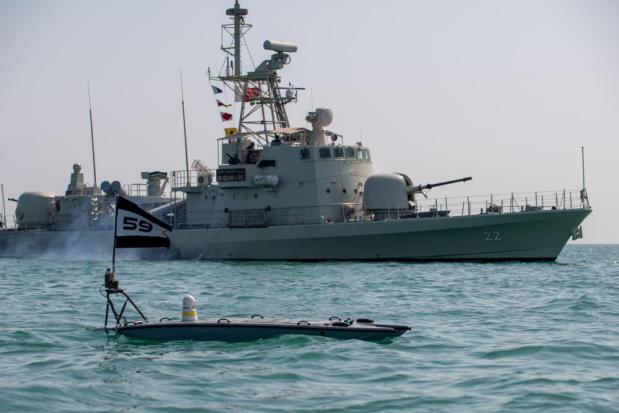
NAVAL forces from Bahrain and the US took part in a first-of-its-kind exercise in the Arabian Gulf which featured the use of unmanned systems.
The two-day training drill, ‘New Horizon’, was led by the US Naval Forces Central Command (NAVCENT) in partnership with the Royal Bahrain Naval Force (RBNF) and Bahrain Coast Guard.
This marked the first time the two nations have worked together and operated unmanned surface vessels (USV) alongside manned US patrol craft and Bahrain Defence Force (BDF) maritime assets.
This was the first event conducted by the newly set up Task Force 59 under the Juffair-based Fifth Fleet, as part of a maritime awareness campaign to deter “malign actors”, a term used to describe adversaries threatening regional stability.
An unmanned system (US) or vehicle (UV) is controlled by a remote pilot and can navigate autonomously based on pre-programmed plans or specific targets.
TF 59 is the first US Navy task force of its kind designed to rapidly integrate unmanned systems and artificial intelligence with maritime operations in the US Fifth Fleet area of operations.
“Bahrain as our first regional partner collaborating with Task Force 59 during an at-sea exercise demonstrates the strengthening of our strategic relationship,” said Fifth Fleet Commander Vice Admiral Brad Cooper.
“Working with our regional partners on unmanned systems, integration is crucial to enhancing collective maritime domain awareness.”
The first phase of ‘New Horizon’, was conducted on October 20 and featured operators controlling the USVs aboard patrol coastal ship USS Firebolt while the vessels conducted high-speed manoeuvres in formation.
The final phase that ended on Tuesday brought together a larger force of manned and unmanned maritime and aerial assets from US and Bahrain naval forces.
Both US and Bahraini forces practised operating the vessels in formation to strengthen interoperability.
The Mantas T-12 unmanned surface vessel was operated by Bahrain naval forces during the exercise.
Participating units included patrol boat USCGC Maui, an SH-60S helicopter, a V-BAT unmanned aerial vehicle and RBNF patrol craft, according to the Fifth Fleet.
“This is a significant milestone for our new task force as we accelerate the integration of unmanned systems and artificial intelligence into complex, cross-domain operations at sea,” said the Bahrain-headquartered TF 59 Commander Captain Michael Brasseur.
Meanwhile, Fifth Fleet spokesman Commander Tim Hawkins told the GDN that Bahrain is the first nation that the TF 59 has partnered with to conduct this exercise.
“This is a significant milestone because Bahrain for the first time is getting hands-on experience operating USVs alongside US Navy forces,” he said.
“These efforts boost maritime domain awareness, deterrence and further reflects the strong bilateral relationship between our two nations.”
TF 59’s strength includes 15 military and civilian personnel and is expected to include five additional personnel as well as five to 10 liaison officers by the fall of 2022.
The autonomous systems aim to provide additional strategic and tactical capabilities to the US Navy and its partners and comes at a time of heightened maritime threats from Iran, specifically with the alleged use of unmanned drones.
US officials on Monday said they believe Iran was behind the drone attack last week on the military outpost in southern Syria where American troops are based.
However, no injuries or deaths were reported.
The devices were identified as Iranian drones, and Tehran appears to have facilitated their use, said officials speaking on condition of anonymity.
The last major Iranian attack on US forces was in January last year, when Tehran launched a barrage of ballistic missiles on Al Asad air base in Iraq.
US and coalition troops were warned of the incoming missiles and were able to take cover, but more than 100 US service members received traumatic brain injuries as a result of the blasts.
The Iran attack was in response to a US drone strike earlier that month near Baghdad airport that killed Iranian General Qassem Soleimani and Iraqi militia leader Abu Mahdi Al Muhandis.
sandy@gdn.com.bh
&uuid=(email))