

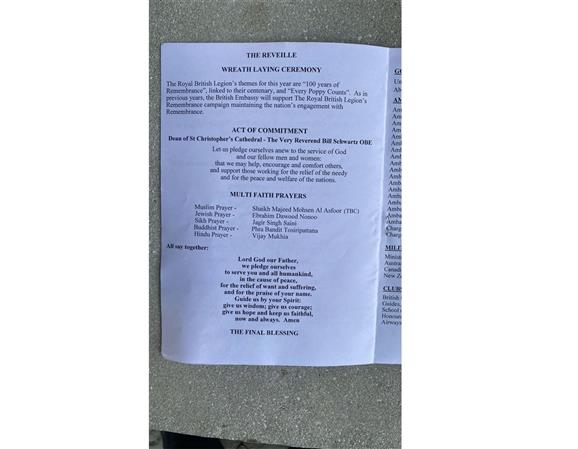
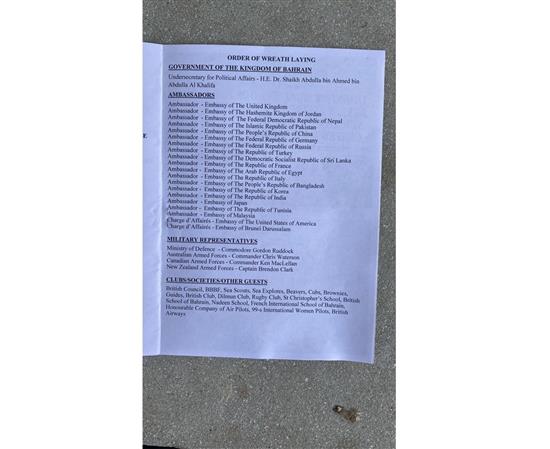
A Remembrance Day Service is being held today in the gardens of the British Embassy in Manama with VIPs, members of the military, diplomats and special guests in attendance.
They have been invited by British Ambassador Roddy Drummond and his wife, Yasmin, and the service will be broadcast live on GDN social media.
The day of memorial is an annual event set aside to remember and honour service men and women who lost their lives in the First World War.
It was a tradition first started by King George V in 1919, and initially called Armistice Day, the day is also marked by war remembrances in many countries.
However, after the outbreak of the Second World War, some members of the Commonwealth chose to call it Remembrance Day. In the UK, it is now known as both, while the US prefers Veterans Day.
Others know it as Poppy Day. Scarlet corn poppies (popaver rhoeas) grow naturally in conditions of disturbed earth throughout western Europe. The destruction brought by the Napoleonic wars of the early 19th Century transformed bare land into fields of blood red poppies, growing around the bodies of the fallen soldiers.
In late 1914, the fields of Northern France and Flanders were once again ripped open as the First World War raged through Europe’s heart. Once the conflict was over the poppy was one of the only plants to grow on the otherwise barren battlefields.
The significance of the poppy as a lasting memorial symbol to the fallen was realised by the Canadian surgeon John McCrae in his poem In Flanders Fields. The poppy came to represent the immeasurable sacrifice made by his comrades and quickly became a lasting memorial to those who died in the First World War and later conflicts. It was adopted by The Royal British Legion as the symbol for their Poppy Appeal, in aid of those serving in the British Armed Forces, after its formation in 1921.
A two-minute silence is held at 11am on November 11, which marks the day the armistice was signed between the Allies and Germany that brought the end of the First World War.
The armistice took place on the 11th hour of the 11th day of the 11th month in 1918, which is why the UK holds two minutes of silence at 11am every November 11.
It was signed in Compiegne in Northern France and forced Germans to evacuate invaded countries within a two-week period.
The Royal Marine buglers signal the start of the silence by playing The Last Post.
editor@gdnonline.com
&uuid=(email))