

BAHRAIN could collaborate with Denmark on five strategic platforms – digitalisation, water and environment, food and agriculture, health and energy, according to Copenhagen’s envoy to Manama.
Danish Ambassador Ole Emil Moesby was speaking to the GDN exclusively during his visit to Bahrain when he met ministers and government officials.
Based in Riyadh since September 2017, Mr Moesby is responsible for the approximately 80 Danes residing in Bahrain, who, he said, were “happy”.
Adapt
Denmark’s tackling of the energy crisis in the 1970s, and the progress it made over the years to emerge as the front-runner in renewable energy, especially wind energy, could be lessons that Bahrain could adapt, pointed out Mr Moesby.
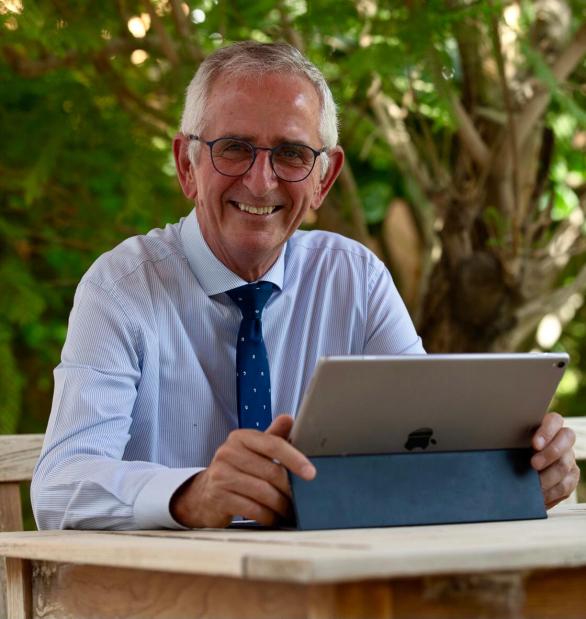
Mr Moesby
“A country like Bahrain should focus not only on being known as an oil-producing country, but also on being known as an energy-producing country,” he said.
“Looking ahead, there is no country in the world that does not want to be CO2-neutral by 2050 or 2060.
“Countries can benefit from co-operating with field partners, by being proactive, with initiatives and innovation to move forward in that direction.
“That is where I see Bahrain’s potential because it has a fantastic food culture, industrial culture, business culture, and it is far more advanced than other countries in this region.”
Denmark is constructing the world’s largest wind farm in Saudi Arabia. In September, work began on the Dumat Al Jandal farm, which will include 99 wind turbines with a total capacity of 4.2MW.
“Our experience in digitalisation, both in the public and private sectors, is a step forward. Yes, we still have challenges, but we are leaders globally, and this is another area in which Bahrain can benefit.
“Food and agriculture are areas in which we are heavily involved, including fisheries, as also in water and environment; Denmark has a very environmental approach in terms of protecting our surroundings.
“Another issue is health, which is becoming increasingly difficult in this part of the world.
“Obesity is an increasing challenge in Denmark, like in Bahrain. We have some experience and methods that may be of interest to Bahrain.”
Bahrain and Denmark ties date back to 1953 when the Danish Moesgaard Museum and Aarhus University began exploring Bahrain’s unique Bronze Age burial sites.
“I hope to return in two years and be a part of the celebration of 50 years of bilateral relations.”
Knud Holscher, a partner at the Danish architectural firm Krohn & Hartvig Rasmussen, designed the Bahrain National Museum, while Danish consultants and engineers completed the King Fahad Causeway’s study, design, and construction supervision.
“Just recently, we had a trio of Danish musicians performing in Bahrain, and I felt very privileged to have made that happen,” the envoy said.
Mr Moesby said that he will be returning home with “several proposals” to collaborate with Bahrain in culture and art as a result of his visit to Muharraq and the Pearling Path. “Having lived here for four-and-a-half years, I would say Bahrain is very different, and it’s difficult to compare to the rest of the GCC. I think there’s a lot of potential for developing Bahraini-Danish partnership.”
According to statistics, Bahrain was Denmark’s 81st largest export market in 2020, totalling to 789.9m kroner (BD45.4m) in revenues which accounted for 0.1 pc of Danish exports.
Exports of Danish products to Bahrain increased by 37.7pc in 2020 compared to the previous year. The top export in 2020 was medicinal and pharmaceutical products (Kr114.5 million / BD6.5m).
Imports
Last year (until November 2021) Danish exports to Bahrain were worth Kr453.5m (BD26m), a rise of 27.3pc compared to the same time period in 2020 (Kr356.3m million / BD20.4m). In the same period, imports of goods from Bahrain were worth Kr42.1m (BD2.4m), a rise of 203.9pc compared to 2020 (Kr13.8 million/BD793,380.42).
Meanwhile, imports of goods and services from Bahrain totalled Kr181m (BD10.4m) in 2020. Imports of goods reached Kr17m (BD977,382.81) in 2020, a fall of 58.3pc compared to 2019. The top import good in 2020 was textile yarn and fabrics (Kr7.9m / BD454,195.54).
There are eight Danish companies in Bahrain. They are DSV, a global transport and logistics company operating in road, air, sea, rail freight and warehousing; Arla, a state-of-the-art cheese production site operating since October 2019; catalysts and technology for chemical and refining industries Haldor Topsoe; architects, structural and geotechnical engineers COWI; design collective Bahraini-Danish; leading paint supplier Hempel which opened its first office in Bahrain in 1972; worldwide water freight services Maersk Bahrain which has been operating here since 2000; and CrossWorkers, Scandinavian managed supplier of high-end Arabic speaking IT Offshore/Nearshore/Outstaffing services.
In 2019, eight Danish subsidiaries employed 825 people in Bahrain.
The envoy underlined the importance of a united GCC as well as its partnership with the European Union.
raji@gdn.com.bh
&uuid=(email))