

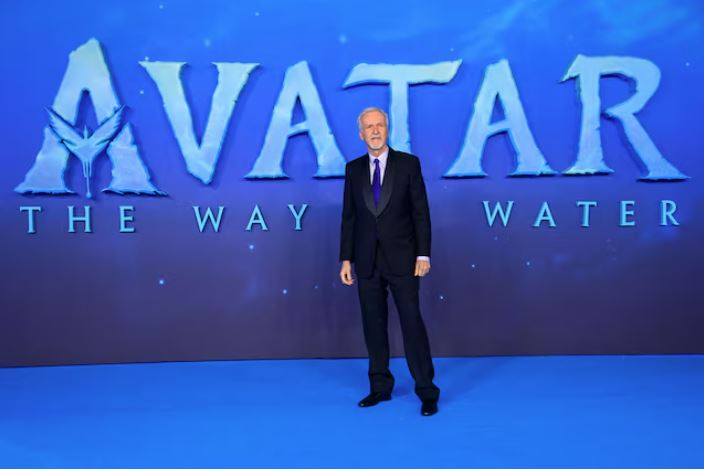
Disney and famed director James Cameron have been hit with a lawsuit in California federal court by a 3-D animator who alleges that Cameron copied his work in the blockbuster 2022 film "Avatar: The Way of Water."
Eric Ryder's complaint said that he collaborated with Cameron's Lightstorm Entertainment to develop a movie based on his science fiction story "KRZ" in the late 1990s. The complaint alleged that Cameron copied elements of the story for the Avatar series.
A third "Avatar" movie, "Fire and Ash," is set to be released in the United States on Friday. Ryder requested at least $500 million in damages and a court order blocking the new film's release.
Ryder filed a similar lawsuit over the first "Avatar" film in 2011, which a California state court dismissed after finding that Cameron created "Avatar" before Ryder submitted his story to Lightstorm.
"This action is not an attempt to relitigate prior claims," the new lawsuit said. "It challenges new acts of copying that occur for the first time in Avatar 2."
Spokespeople for Disney and Lightstorm did not immediately respond to requests for comment on the complaint on Tuesday.
The defendants' alleged misappropriation and downright theft of Mr. Ryder's protected creative work to create the third highest-grossing movie of all time is blatant and egregious, and it cries out for compensation," Ryder's attorney Daniel Saunders said in a statement.
The complaint said that the "Avatar" series, like "KRZ," includes "anthropomorphic beings, a vast oceanic setting, and a sinister, Earth-based corporation engaging in environmentally harmful mining operations on the moon of a gas giant planet called Europa."
Ryder said that "The Way of Water" revolves around "the harvesting of an animal-based substance that when refined can extend human life," a plot point that was featured in "KRZ" but not included in the first "Avatar" movie.
"While this animal-based, life-extending substance is just one of many examples of infringing content in Avatar 2, its use as a foundational plot device is central to Defendants’ appropriation," the lawsuit said.
&uuid=(email))