

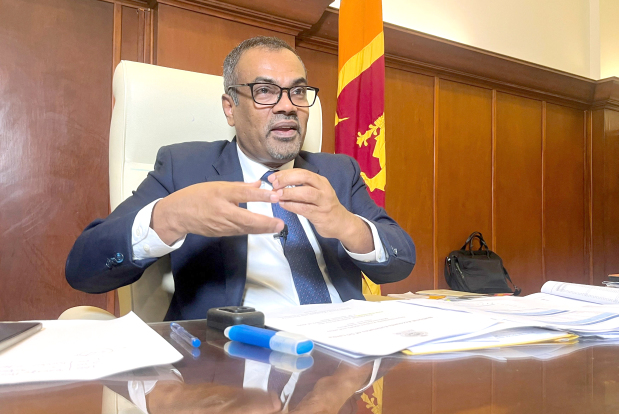
SRI Lanka expects its economy to expand by more than 5 per cent next year, matching this year’s pace and significantly outstripping IMF projections, partly driven by reconstruction efforts following Cyclone Ditwah, a senior minister told Reuters yesterday.
The storm hit in late November, killing nearly 650 people and affecting about 10pc of Sri Lanka’s 22 million population. It caused major damage to infrastructure, farms, and tea estates, with rebuilding costs estimated at up to $7 billion in a country still recovering from economic collapse in 2022.
The Indian Ocean island has been receiving funds under an IMF bailout programme, while additional emergency assistance has been pledged by global agencies and foreign governments for it to cope with its worst natural disaster since the 2004 tsunami.
This month, the Asian Development Bank committed $200m for the country and the World Bank $120m. The IMF is expected to approve Sri Lanka’s request for emergency funding of $200m tomorrow, said Anil Jayantha Fernando, the country’s deputy minister of finance and planning. “So with the quick response, support from agencies and the existing development programmes, I don’t think that (growth) would be really hampered,” he told Reuters.
“Rather, it would increase; maybe new investments come for reconstruction, the repair of these infrastructures and all those things. In a way, even from a technical perspective, it will not slow down, it will further go up.” He said growth this year would be more than 5pc, higher than the central bank’s 4.5pc projection, based on numbers in the first three quarters of the year. He expects similar growth next year too. The IMF has predicted 3.5pc in 2025 and 3.1pc next year.
To repair damaged homes, restore infrastructure such as roads and railways, and rebuild livelihoods, Fernando said the government would divert funds from other areas, utilise tax revenue and seek more international support.
He said parliament is expected to approve 500bn rupees ($1.6bn) in supplementary spending, funded partly through the reallocation of ministry budgets, when it convenes tomorrow and on Saturday. Additionally, 1.4 trillion rupees ($4.6bn) have been earmarked for capital expenditure in 2026, partly to support post-cyclone reconstruction efforts.
&uuid=(email))