

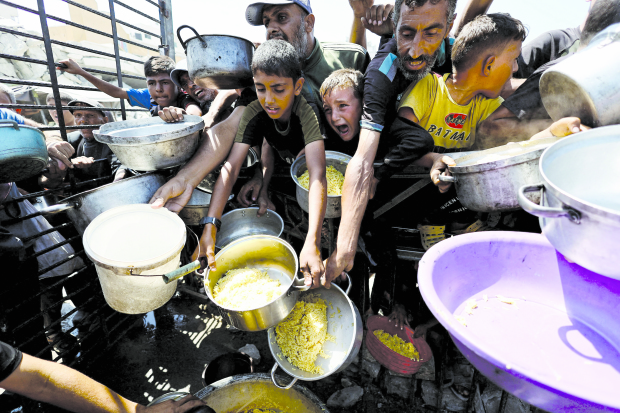
More than 100,000 people in Gaza are experiencing catastrophic conditions, a global hunger monitor has warned.
The Integrated Food Security Phase Classification (IPC) describes catastrophic conditions as those with extreme lack of food, starvation and significantly increased risks of acute malnutrition and death.
In its latest assessment released yesterday, the IPC warned that over the next year nearly 101,000 children across Gaza – aged from six months to five years – were expected to suffer from acute malnutrition and require treatment, with more than 31,000 severe cases.
“During the same period, 37,000 pregnant and breastfeeding women will also face acute malnutrition and require treatment,” it said.
There is no longer famine in Gaza, it said, after access for humanitarian and commercial food deliveries improved following a fragile October 10 ceasefire in the war between Israel and Hamas.
The latest assessment comes four months after it reported that 514,000 people – nearly a quarter of Palestinians in the Gaza Strip – were experiencing famine.
The IPC warned yesterday that the situation in the enclave remained critical.
“Under a worst-case scenario, which would include renewed hostilities and a halt in humanitarian and commercial inflows, the entire Gaza Strip (would be) at risk of famine through mid-April 2026,” it warned. “This underscores the severe and ongoing humanitarian crisis,” the IPC said in the report.
United Nations Secretary General Antonio Guterres said that while famine had been pushed back, the gains were ‘perilously’ fragile.
“Far more people are able to access the food they need to survive,” he said yesterday, but he added: “Needs are growing faster than aid can get in.”
Aid agencies have repeatedly said far more aid needs to get into the small, crowded territory and that Israel is blocking needed items from entering.
The IPC – an initiative involving 21 aid groups, UN agencies and regional organisations funded by the European Union, Germany, Britain and Canada – said the entire Gaza Strip was classified in an emergency phase, one step below catastrophic conditions.
The International Rescue Committee warned that the progress should not ‘be misread as a sign that the crisis is over.’
“Hunger in Gaza remains at catastrophic levels, with families still struggling to access sufficient, nutritious food,” Bob Kitchen, IRC Vice President for Emergencies, said in a statement.
“Without rapid, unimpeded and unhindered humanitarian access at scale, the risk of famine and preventable deaths will quickly return.”
COGAT, the Israeli military agency that co-ordinates aid, rejected the IPC finding, accusing it of presenting ‘a false depiction of the reality on the ground’ because it ‘relies on severe gaps in data collection and on sources that do not reflect the full scope of humanitarian assistance’.
&uuid=(email))