

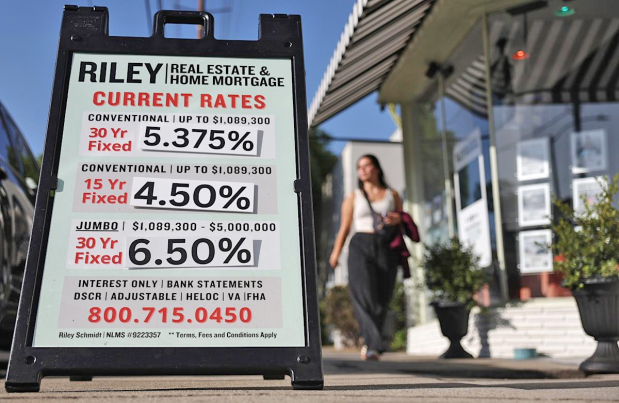
Mortgage rates in the US have hovered in a remarkably narrow range of 6.2 per cent to 6.3pc, roughly year-to-date lows, since mid-September. There’s a good chance they won’t move much in the new year either.
Those levels have been enticing enough to spark some gains in refinancing activity and homebuying in the fall, but are still elevated enough to keep many aspiring buyers priced out of the market.
The recent stability at relatively high levels can be explained by the country’s unusual economic moment – the labour market is weakening, but inflation remains relatively high – combined with government shutdown disruptions that have made it harder to parse where those trends are headed. A number of economic reports that typically influence mortgage rates were delayed, cancelled, or only partially released since the shutdown, giving rates few catalysts to move much either way.
“The shutdown just blurred everything,” said Hector Amendola, president of Panorama Mortgage Group in Las Vegas. “I think everyone’s on the edge of their seat for January numbers to see how the trend looks and where it’s going to go.”
Factors including future Federal Reserve actions, trends in government bond yields, and demand for mortgage-backed securities help determine mortgage rates. But on a basic level, mortgage rates are usually lower when the labour market is weaker and inflation is minimal and higher when the opposite is true.
In recent months, the Federal Reserve has been cutting benchmark interest rates amid signs that the labour market is slowing. But it has been doing so at a time when inflation has been running higher than its 2pc target, and the members of the rate-setting committee have signalled that they’re divided over the future direction of interest rates.
That mixed economic and policy backdrop is part of the reason most economists and industry professionals expect only minor fluctuations in rates next year. The Mortgage Bankers Association sees mortgage rates stuck in a narrow range between 6pc and 6.5pc “over the next few years.” Similarly, economists at Realtor.com and Redfin expect mortgage rates to average 6.3pc – near current levels – in 2026, while the National Association of Realtors and Fannie Mae see a slightly bigger dip, to around 6pc, by the end of next year.
“I don’t think they’re going to drop substantially, unless something big happens in the economy one way or another,” said Melissa Abramovich, a loan officer at A+ Mortgage Services in Muskego, Wis.
And what the Fed does ultimately has only an indirect effect on mortgage rates. In most scenarios, including this year, mortgage rates begin to drift lower before the Fed begins cutting interest rates. Over the summer, mortgage rates dropped from the high 6pc range to the low 6pc range, and then barely reacted when the Fed delivered three rate drops at its September, October, and December meetings.
For now, stable mortgage rates have left the housing market in something of a holding pattern. Buying and refinancing got a boost this fall, owing to lower rates, but ongoing affordability challenges mean home sales are still likely to finish 2025 at a 30-year low.
Dan Frio, a mortgage adviser at PBT Bancorp in Naperville, Ill., said the path of mortgage rates next year will be “data-dependent.”
He’s watching factors like inflation levels, legal challenges to President Donald Trump’s tariff policies, the job market, and the Fed’s purchase of short-term debt known as T-bills.
&uuid=(email))