

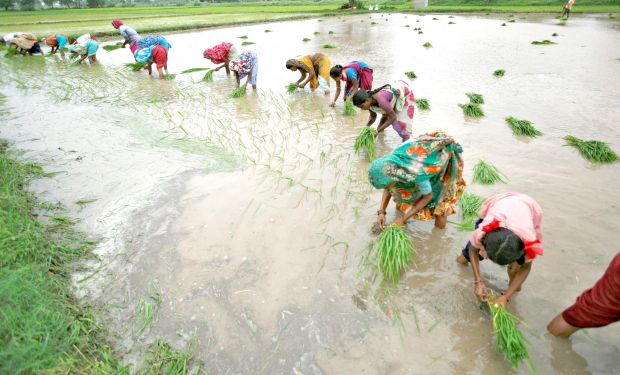
WHEN India overtook China as the world’s largest producer of rice this year, the country’s politicians and agriculture lobby marked the moment by praising resilient farmers and innovative government policy.
India has nearly doubled the amount of rice it exported over the past decade, with shipments crossing 20 million metric tonnes in the latest fiscal year.
But many rice farmers in the country’s agricultural heartlands are in a less celebratory mood. Interviews with growers, government officials and farm scientists, as well as a review of groundwater data, reveal widespread concern that thirsty rice crops are unsustainably draining India’s already-low aquifers, forcing farmers to borrow heavily to drill ever-deeper borewells.
In the rice-basket states of Haryana and Punjab, groundwater was reachable at around 30 feet a decade ago, according to 50 farmers and eight water and agriculture officials.
But drainage has accelerated in the past five years and borewells must now go between 80 and 200 feet, according to the farmers, whose accounts were corroborated with government data and research by Punjab Agricultural University.
“Every year, the borewell has to go deeper,” said Balkar Singh, a 50-year-old farmer in Haryana. “It’s getting too expensive.”
At the same time, government subsidies that incentivize rice cultivation discourage farmers from switching to less water-intensive crops, said Uday Chandra, a South Asia politics expert at Georgetown University in Qatar. The subsidies – some of them a legacy from past decades when India struggled to feed its growing population – include a state-guaranteed minimum price for rice that has climbed by around 70 per cent over the past decade, as well as heavy power subsidies that encourage extracting water for farm use.
The net effect, said Avinash Kishore at the International Food Policy Research Institute think-tank in Washington, is that one of the world’s most water-stressed countries is paying farmers to consume vast amounts of precious groundwater.
Prime Minister Narendra Modi previously attempted to reform agricultural laws, including measures that would incentivise more private-sector crop purchases. But that raised fears that the government might reduce the quantity of grain it purchases at guaranteed prices, prompting protests by millions of farmers that paralysed the nation five years ago and forced Modi into a rare retreat.
India accounts for 40pc of the world’s rice exports, so any changes in production will have global implications, Kishore said.
&uuid=(email))