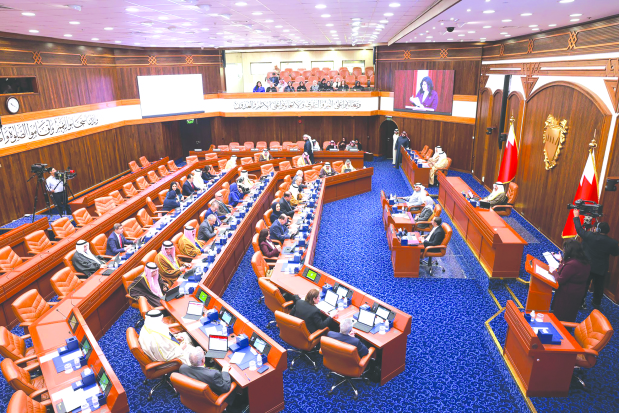
An amended draft law aimed at regulating and expanding the use of renewable energy in Bahrain is set to be debated during the Shura Council’s session on Sunday.
The public utilities and environment affairs committee, chaired by Dr Mohammed Ali Hassan, has endorsed the proposal after extensive review, consultations and revisions, describing it as a key step towards strengthening Bahrain’s energy security and supporting national environmental commitments.
The committee said the bill aims to ease electricity costs for households and businesses, reduce strain on the national grid, lower expenditure by the Electricity and Water Authority (EWA) and promote local and foreign investment in renewable energy technologies. It also seeks to position Bahrain in line with global trends towards sustainable and clean energy solutions.
“This amended legislation reflects a balanced and forward-looking approach,” Dr Hassan said.
“It creates a comprehensive legal framework for renewable energy, supports investment and aligns with Bahrain’s Economic Vision 2030 and its international environmental obligations.”
The proposal was submitted by five Shura Council members, led by services committee vice-chairman Talal Al Mannai, and revised following feedback raised during earlier council discussions and consultations with relevant authorities.
According to the committee’s supplementary report, the amended version was referred back for further study after observations were raised during a previous Shura Council session. These remarks were reviewed in detail, resulting in targeted amendments designed to improve legal clarity, implementation flexibility and constitutional alignment.
One of the key changes involves redefining the authority responsible for implementing the law. Instead of naming a specific body, the amended bill allows the competent authority to be designated by decree, ensuring flexibility amid ongoing legislative reforms in the electricity and water sector.
“This amendment avoids any potential legislative conflict and grants the executive branch the necessary flexibility to designate the most suitable authority,” Dr Hassan explained. “It strengthens the bill’s legal resilience without affecting its objectives.”
Another significant addition is a provision confirming that civil law provisions will apply to matters not explicitly addressed in the renewable energy legislation, particularly with regard to compensation and liability for damages. The committee said this ensures legal certainty and aligns with established legislative practice.
The bill also includes a revised article exempting renewable energy systems, equipment, devices and production inputs from customs duties, with implementation to be regulated through a ministerial decision setting conditions and controls. While the financial and economic affairs committee, chaired by Khalid Al Maskati, noted that the exemption could reduce state revenues, it acknowledged that the exact financial impact could not be quantified due to the lack of detailed import data.
Dr Hassan stressed that the exemption was constitutionally sound and strategically justified.
“Encouraging renewable energy adoption requires tangible incentives,” he said. “Customs exemptions are a globally recognised tool to accelerate the transition to clean energy and reduce long-term pressure on electricity infrastructure.”
Following its review, the public utilities and environment affairs committee recommended that the Shura Council approve the amended proposal and refer it to the government for drafting into a formal bill.
“The proposal has been carefully refined to reflect both legislative observations and practical realities,” Dr Hassan added. “We believe it is now ready for constructive debate and decision.”
The matter will be placed before the Shura Council on Sunday.
mohammed@gdnmedia.bh