

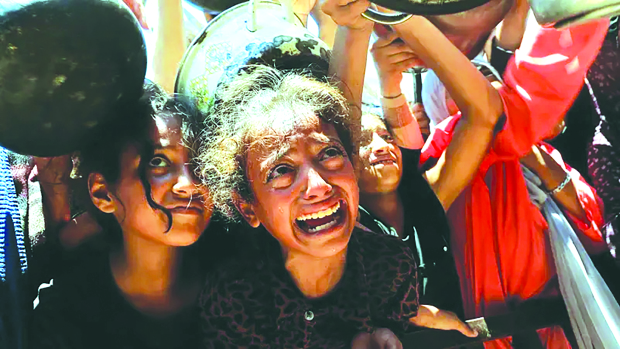
As we enter the new year, there is a shared global hope that 2026 will be a year of peace, stability, and healing after years marked by war, displacement, and uncertainty.
Across continents, many people welcomed the new year with the wish that violence will give way to diplomacy and that exhausted societies will finally have space to rebuild. Yet realism requires acknowledging that the international system remains fragile.
Several major conflicts remain unresolved, while others carry the potential to reignite or transform in unpredictable ways. These crises will demand sustained attention from global and international decision-making bodies, regional powers, and diplomatic institutions, writes Dr Majid Rafizadeh in Al Arabiya.
The turn of the calendar does not erase geopolitical realities. Long-standing rivalries, unresolved wars, and fragile post-conflict transitions will likely continue to shape global affairs in 2026. Five major issues stand out as especially critical: the war in Ukraine, the risk of renewed confrontation between Iran and Israel, the uncertain future of the Gaza-Israel ceasefire, the ongoing catastrophe in Sudan, and the evolving situation in Syria, where the success or failure of the new government will have consequences far beyond its borders.
The war in Ukraine is likely to remain one of the most consequential conflicts in 2026. Years of fighting have produced enormous human suffering, economic strain, and geopolitical polarisation, yet no decisive military outcome has emerged. Instead, the conflict appears trapped between growing talk of diplomacy and a persistent strategic deadlock that prevents meaningful progress.
The core obstacle remains unchanged: territory, sovereignty, and security guarantees. Ukraine continues to insist on the restoration of its territorial integrity and long-term protection against future aggression. Russia, meanwhile, remains unwilling to withdraw from occupied areas or accept an outcome it views as a loss of strategic influence. These opposing positions leave little room for compromise, even as both societies feel the cumulative cost of war.
In 2026, the conflict may increasingly be defined by parallel tracks of negotiation and confrontation. Diplomatic initiatives may multiply, but without genuine concessions, they risk producing stalemate rather than resolution. Any durable settlement would require painful compromises, credible international guarantees, and a broader rethinking of European security. Whether political leaders are prepared to take such steps will determine whether Ukraine moves towards peace or remains locked in prolonged conflict.
The possibility of renewed confrontation between Iran and Israel will remain one of the most dangerous variables in the global security environment in 2026. Even during periods of relative calm, the relationship between the two states is defined by deep mistrust, strategic rivalry, and competing visions for the Middle East.
Israel continues to view Iran’s military capabilities and regional influence as existential threats, while Iran perceives Israeli actions as part of a sustained effort to contain and weaken it. This rivalry is not confined to direct interaction; it extends through regional networks, proxy forces, and strategic signalling, making miscalculation a constant risk.
As 2026 unfolds, political timing and international alignment – particularly relations with the US – will play a critical role. Reports suggesting that Israel may revisit military options against Iran during key diplomatic or political windows underscore how fragile the current balance remains. Any escalation could rapidly expand beyond bilateral confrontation. This makes the Iran-Israel dynamic a central issue to watch closely throughout the year.
Whether the Gaza-Israel ceasefire can endure will be one of the most pressing humanitarian and political questions of 2026. After repeated cycles of conflict and violence, devastation has increased. Ceasefires in this context have historically been temporary and fragile, shaped more by immediate pressure than by long-term political solutions. Without addressing the deeper causes of conflict each truce risks collapsing under the weight of unresolved grievances.
In 2026, a sustained ceasefire could provide a rare opportunity for humanitarian relief, reconstruction, and the reduction of civilian casualties. Failure, however, would mean renewed tragedy and further destabilisation of the region. The ability of regional actors and international mediators to maintain calm and move beyond crisis management will be a defining test of global responsibility.
Sudan’s civil war remains one of the most devastating yet least resolved conflicts entering 2026. Years of fighting between rival armed forces have torn the country apart, displacing millions and pushing large portions of the population towards famine and extreme deprivation. Institutions have collapsed, and civilians have been left exposed to violence, hunger and disease.
Despite repeated attempts at mediation, ceasefires have failed to hold. Both sides continue to believe that military advantage remains possible, prolonging a conflict that offers no real winners. Meanwhile, the humanitarian cost grows, even as international attention fluctuates.
In 2026, Sudan will test the willingness of the international community to address crises that lack immediate geopolitical payoff but involve immense human suffering. Without sustained diplomatic pressure and co-ordinated humanitarian engagement, the country risks sinking further into prolonged instability with consequences that extend across the region.
Another critical issue to watch closely in 2026 is Syria, where attention will focus on whether the new government can continue what many hope will be a gradual process of stabilisation after years of devastating war. The stakes are high, not only for Syrians themselves but for the broader Middle East.
Key questions will centre on governance, security, and reconstruction. Observers will closely monitor whether the new authorities can maintain internal stability, continue efforts to combat IS and other extremist remnants, and prevent the country from sliding back into fragmentation or renewed conflict. The ability to establish security and rebuild trust among communities will be essential for any lasting progress.
Equally important will be Syria’s regional relationships. Support from regional partners – particularly Saudi Arabia and other Arab states – will continue to play a significant role in encouraging economic recovery, reintegration into regional diplomacy, and gradual normalisation. If managed carefully, 2026 could mark a slow but meaningful step towards a more stable and functional Syrian state. If mismanaged, however, the country risks remaining stuck in a fragile and volatile limbo.
These five issues will likely shape much of the global agenda in 2026, but the world remains unpredictable. New crises may emerge, existing conflicts may shift unexpectedly, and unforeseen events could redefine priorities overnight. What remains constant is the need for vigilance, diplomacy and a renewed commitment to peace.
As the world steps into 2026, there are no guarantees – only opportunities. The hope is that this new year will bring more dialogue than destruction, more compromise than confrontation, and more peace than conflict.
&uuid=(email))