

Global investors are facing a fresh surge in geopolitical risk after the US capture of Venezuelan President Nicolas Maduro, a move that could unlock the nation’s vast oil reserves and boost risky assets over the longer-term but prompt a flight to safety when trading resumes.
President Donald Trump said the US would take control of the oil-producing nation, while Maduro, whom the US has repeatedly accused of running a “narco-state” and rigging elections, was in a New York detention centre yesterday awaiting charges. Washington has not made such a direct intervention in Latin America since the invasion of Panama in 1989.
“The events are a reminder that geopolitical tensions continue to dominate the headlines and drive the markets,” said Marchel Alexandrovich, an economist at Saltmarsh Economics. “It is clear that the markets are having to cope with significantly more headline risk than they are accustomed to under the previous US administrations.”
Markets were closed when the strikes took place, but had kicked off the first trading day of the year on a strong footing, with Wall Street indexes closing in the green and the dollar rising against a basket of major currencies on Friday.
US and global stocks ended 2025 near record highs, having notched double-digit gains in a tumultuous year dominated by tariff wars, central bank policy and simmering geopolitical tensions.
Mohamed El-Erian, a former chief executive officer of bond fund giant PIMCO, said in a post on X that the economic and financial reaction to Maduro’s toppling was unclear.
“We would have probably seen an immediate decoupling of oil prices (lower on the prospect of increased Venezuelan exports, depending on the leadership succession there) from gold (higher due to safe haven flows amid heightened uncertainty,” had markets been open, he wrote.
Gold rose the most in 46 years to record highs last year, driven by a cocktail of factors including US rate cuts and geopolitical flashpoints.
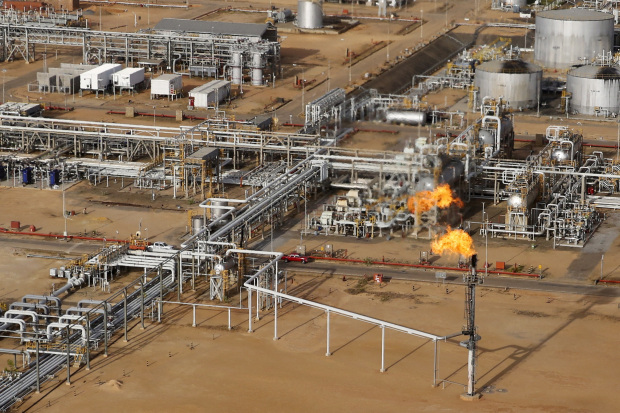
Just hours after capturing the Venezuelan leader, Trump said American oil companies were prepared to spend billions to restore Venezuela’s crude production, something that could give global growth a lift as greater supply lowers energy prices.
The oil price edged above $62 a barrel in December, when the US blocked sanctioned tankers from entering or leaving Venezuela, but has been fairly stable at around $60-$61 since.
“From an investing perspective, this could unlock massive quantities of oil reserves over time,” Brian Jacobsen, chief economic strategist at Annex Wealth Management, said. “Markets sometimes swing into risk-off mode on expectations of conflict, but once the conflict starts, they rotate quickly to risk-on.”
David Kotok, co-founder of Cumberland Advisers based in Sarasota, Florida, said that the possible unlocking of reserves – if it causes a lower oil price over the long term – could have bullish implications for stocks. “Whether it happens over the next year or two, and if the market discounts it before it happens, is a separate question,” said Kotok.
Most stock markets in the Gulf closed lower yesterday, in response to Friday’s fall in oil prices as investors weighed oversupply concerns against geopolitical risks. Still, most strategists agree it could take years to meaningfully boost Venezuelan output, which has plummeted over the past decades due to mismanagement and a lack of investment from foreign companies after the government nationalised oil operations in the 2000s, including the assets of Exxon Mobil and ConocoPhillips. Chevron is the only American major currently operating in Venezuela.
Any companies that might want to invest there would need to deal with security concerns, dilapidated infrastructure, questions about the legality of the US operation to snatch Maduro and the potential for long-term political instability, analysts told Reuters.
State-run oil company PDVSA is asking some joint ventures to cut back crude production amid an export paralysis, sources close to the decision said yesterday, adding pressure to an interim government trying to hang on to power.
PDVSA’s move includes shutting down oilfields or well clusters as stocks stored onshore mount and the company runs out of diluents to blend Venezuela’s heavy crude for shipment.
The requests were made to joint ventures including China National Petroleum Corporation’s Petrolera Sinovensa, Chevron’s Petropiar and Petroboscan and Petromonagas, the sources said.
&uuid=(email))