

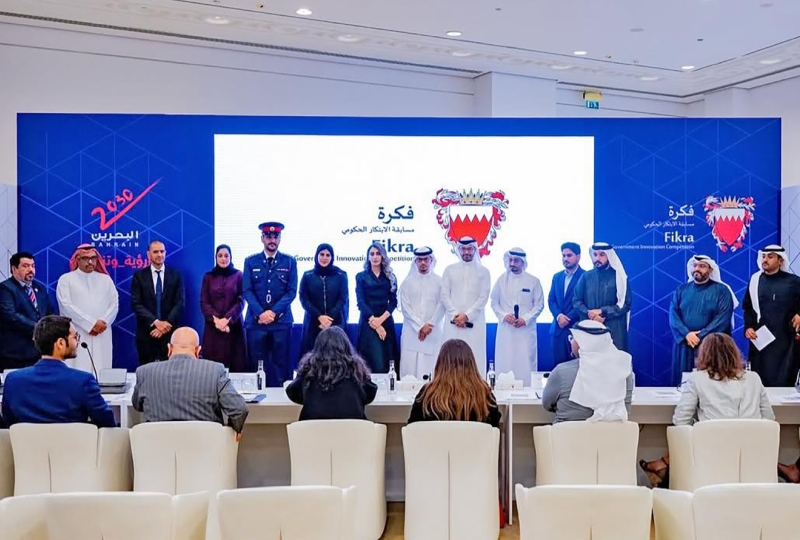
Twelve pioneering ideas developed by public sector employees, aimed at advancing sustainability, student safety, mental health and other critical areas, have been shortlisted as part of a government innovation initiative.
Electronic voting for the seventh edition of the Government Innovation Competition (Fikra) will remain open until tomorrow through the Prime Minister’s Office website, pmo.gov.bh, to determine the winner in the ‘Public Vote’ category.
Fikra was launched by His Royal Highness Prince Salman bin Hamad Al Khalifa, Crown Prince and Prime Minister, to foster a culture of creativity in the public sector.
This year, the finalists include 12 path-breaking concepts intended to benefit the public and utilise government resources efficiently.
The GDN interviewed some of the innovators, who shared details of their projects and how they can change the lives of citizens and residents.
***
Wasalt (Reach safely), an initiative by Manal Alhashemi from the National Communication Centre, specifically focuses on student safety in school buses.
The project was inspired by “real-life tragedies in 2013, 2015, and last year, when pupils were accidentally left behind in school buses,” Ms Alhashemi told the GDN.
“Last year, we all felt the pain when four-year-old Hasan died after being left asleep inside a bus for hours in soaring temperatures.

Ms Alhashemi
“Wasalt is a system that tracks a student’s journey – from boarding the bus to arriving safely at school or home – while sending real-time alerts to parents, teachers and drivers.”
She added that, globally, between 30 and 70 children lose their lives each year in similar circumstances.
In Bahrain, more than 50,000 students rely on school buses on a daily basis, including more than 11,000 young children, who are among the most vulnerable.
“This tracking mobile application system notifies all concerned parties at different stages about the child’s daily routine. I feel turning this into a real implemented solution will help protect the lives of children across Bahrain by ensuring no child is ever left behind on a school bus again.”
***
MindForward is another innovative solution created by Walaa Albaqali from Government Hospitals to help beat the stigma surrounding mental health.
The application helps a user to go through an internationally validated questionnaire about their mental health after they enter their personal details.
“There are a lot of stigmas around mental health here, and this application can be used as an add-on to the Sehati app to specifically reach out to the masses and know about their mental condition,”said Ms Albaqali.

Ms Albaqali
“After answering the online questionnaire, the tool checks on different parameters, following which a result is shown to the user.”
Ms Albaqali added that if the score is high, the application guides the user to different mental health practitioners for appointments and also alerts these experts about their condition.
“Both the parties are aware now that a visit is required to understand the diagnosis and provide the right care,” she said.
***
Two other finalists have submitted concepts that focus on using renewable energy to boost local fish stocks and recycling plastic to help feed stray cats.
The first idea by Bassam Alshuwaikh from the Supreme Council for Environment is called the Floating Oases – which is a solar-powered fish farm that can be set up in the middle of the sea in a controlled setting.
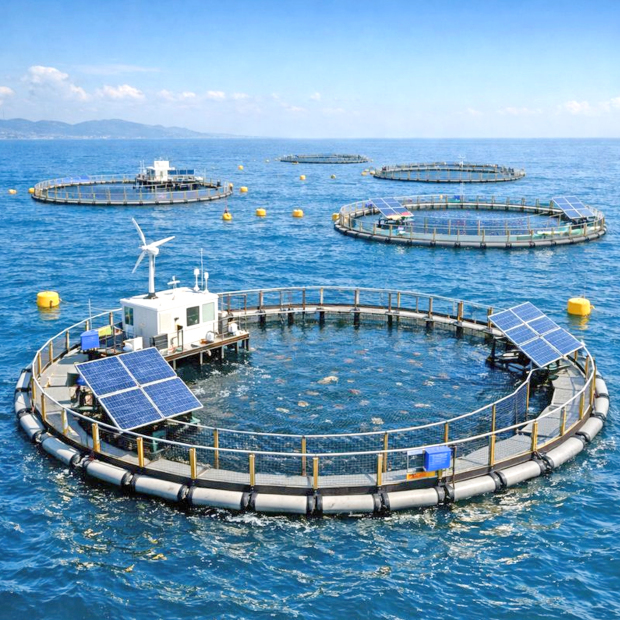
Floating Oases concept
“Bahrain imports about 6,000 metric tonnes of fish, and the idea is to reduce this by setting up 100 fish farms in the middle of the sea, which are solar-powered,” he added.
“Using artificial intelligence and solar power, these set-up platforms can reduce the operations and feeding in these fish farms, which will be resistant to local temperatures.”
Mr Alshuwaikh added that certain species of fish can be used for breeding in the farm and later released into the sea.
“This system will create jobs and help local small-and medium-scale enterprises in Bahrain, which has a limited land size but a vast sea area.”
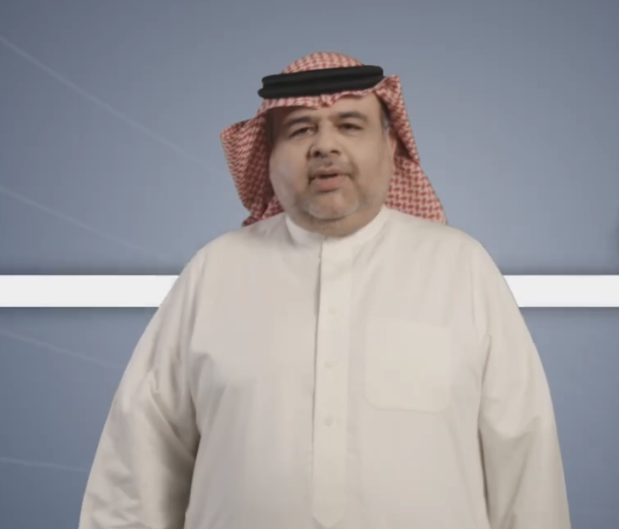
Mr Al Shuwaikh
He added that even local fishermen can benefit from the elevated fish farms in the sea, adding the project can be scaled and customised based on different conditions.
The other initiative is Rahma (Mercy), by Salamah Alkobaisi from the Finance and National Economy Ministry, which seeks to address environmental sustainability and animal welfare simultaneously.
The concept proposes installing dedicated plastic‑recycling machines in schools, universities and shopping malls. In exchange for recycling bottles, users would earn reward points or coupons that can be redeemed to purchase cat food for stray animals.
“I wanted to work on two issues together, which are recycling plastics and helping the stray cats in the country,” said Ms Alkobaisi.

Ms Alkobaisi
She highlighted the scale of the challenge, noting that approximately four billion plastic bottles are used annually, with the majority ending up in the Askar landfill. Data shows that household waste recycling rate was around 27 per cent in 2018. It increased to 36pc in 2021, and despite the efforts made, decreased by 6pc in 2022, posing a clear environmental challenge.
Ms Alkobaisi explained that Rahma offers a cost‑effective, smart recycling model, allowing individuals to insert plastic bottles into the machines and receive incentives such as pet food, reward points, or the option to donate points to charitable causes. These include supporting cancer patients or providing wheelchairs for people with disabilities.
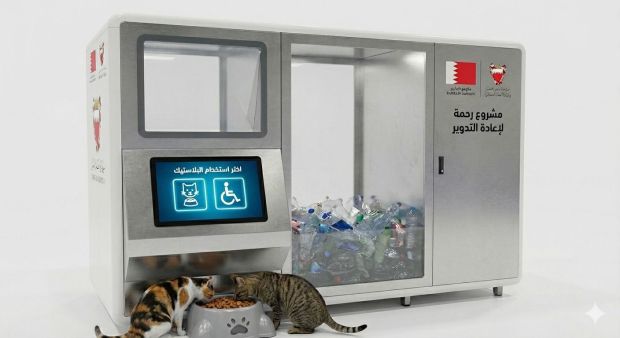
Rahma recycling concept that also helps stray cats
“This approach links reducing household plastic waste to a simple daily action, transforming recycling from a difficult habit into a positive human experience with clear environmental and social impact.
“The initiative also helps build environmental awareness among children and youth by directly linking recycling to humanitarian outcomes.”
***
Another shortlisted concept is Takamul (Integration) by Captain Abdulla Almannaei and Alaa Albalooshi from the Interior Ministry, which aims to unite government entities to share their assets and resources effectively.
“We came up with a common platform to help government entities use their unused assets or resources,” said Ms Albalooshi.
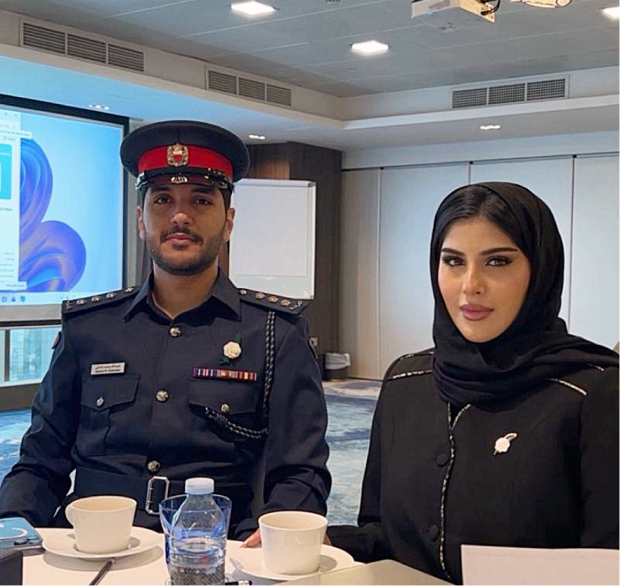
Capt Almannaei and Ms Albalooshi
“For example, a project was implemented in a ministry where 100 personal computers were required for three years, but after that period these machines were not used despite being in good condition.
“This is where the platform can help other government entities that require PCs for their operations.”
She added that assets include vacant land, buildings, or cars that are owned by the government, but listed under a particular ministry.
“If a government entity requires additional land or building, then it can use the existing asset by sharing the resources.”
She added their platform can be integrated into applications run by some ministries as an add-on feature, where a list of unused assets can be displayed for sharing only within the ministries.
***
Three employees from the Information and e-Government Authority (iGA) have worked on an Annual Leave Exchange Platform that allows civil servants to ‘sell their surplus leaves’ to fellow government staff.
Mohamed Alhasan, Asma Almosawi, and Noof Fakhro have created the digital platform that allows civil servants to exchange their annual leave balances in a regulated and transparent manner.
“Employees with surplus leave can offer it, while others who need additional leave can access and buy it through clear rules that prevent misuse or personal gain,” said Ms Fakhro.
“The platform improves employee well-being, flexibility, and trust, while also introducing an administrative revenue stream for the government.”
The idea started more than four years ago as a simple, everyday conversation about annual leave balances.
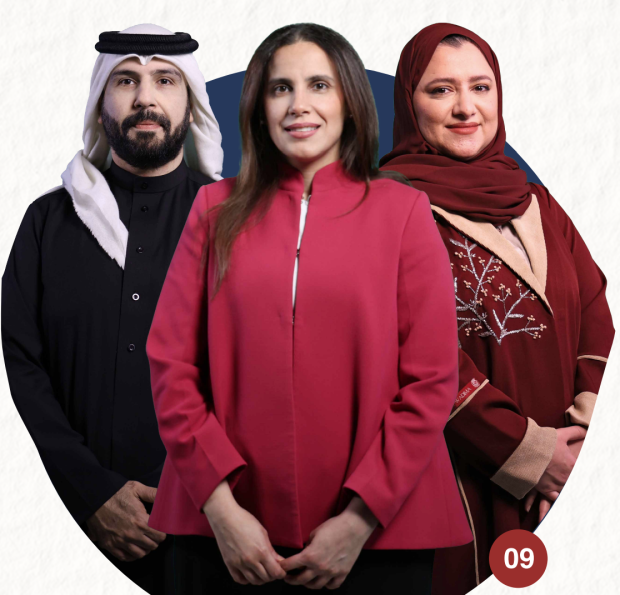
Mr Alhasan, Ms Almosawi, and Ms Fakhro, right
“It came from a personal and practical need, which gradually evolved into a structured concept aligned with public sector policies and digital transformation,” she added.
Ms Almosawi explained that unused leaves will be managed through a controlled digital system that benefits both employees and the government.
“From a public sector perspective, the platform modernises how leave is managed and promotes efficiency, transparency, and compliance,” said Mr Alhasan.
“The project is the result of continuous discussion and strong teamwork that reflects how collaboration can turn a simple idea into a scalable government innovation.”
A total of 40 concepts were submitted for Fikra from which 12 have been shortlisted by four specialised committees following a rigorous evaluation.
For e-voting, visit pmo.gov.bh and fill out the Fikra vote form by submitting your name, email, and smart card details.
sandy@gdnmedia.bh
Creative ideas that can make life easier and boost productivity
The 12 concepts that are shortlisted for the seventh edition of the Government Innovation Competition (Fikra):
1. Savings and Investment Programme by Ahmed Sanad, Ali Fadhul and Abdulla Alshamlan from the Finance and National Economy Ministry.
2. Ata’a – The National Giving Platform by Ahmed Mejairan from the Labour Fund (Tamkeen).
3. Floating Oases by Bassam Alshuwaikh from the Supreme Council for Environment.
4. Smart Employment Adviser by Jalal Maki from the Legal Affairs Ministry.
5. Rahma by Salamah Alkobaisi from the Finance and National Economy Ministry.
6. Takamul by Captain Abdulla Almannaei and Alaa Albalooshi from the Interior Ministry.
7. Secondary Education Curriculum Enhancement by Abdulla Badow from the Education Ministry.
8. Tameni by Ali Darwish, Maha Almaarej, Narjes Sabt and Fatema Alaradi from Government Hospitals.
9. Annual Leaves Exchange Platform by Mohamed Alhasan, Asma Almosawi and Noof Fakhro from the Information and e-Government Authority (iGA).
10. Wasalt by Manal Alhashemi from the National Communication Centre.
11. Tawazun by Maha Alsada, Ahmed Bucheeri from the Social Insurance Organisation and Nayla Matar from the Industry and Commerce Ministry.
12. MindForward by Walaa Albaqali from Government Hospitals.
&uuid=(email))