

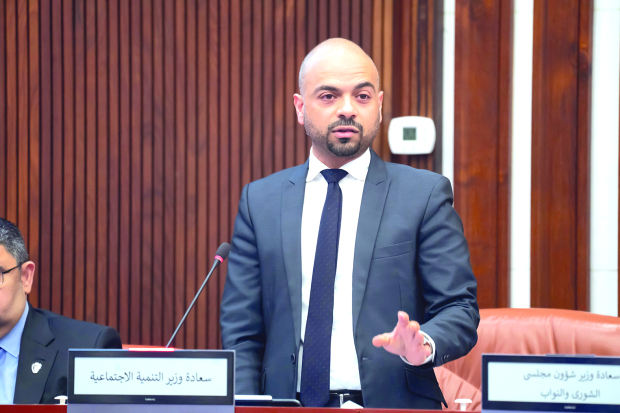
Bahrain’s civil society sector has grown to include 661 licensed non-governmental organisations (NGOs) as of November 2025, reflecting the kingdom’s expanding volunteer, charitable and professional landscape.
The figures were disclosed by Social Development Minister Osama Al Alawi in a written reply to Parliament’s financial and economic affairs committee chairman Ahmed Al Salloom, who sought comprehensive data on the number, distribution, governance and challenges facing NGOs across the kingdom.
Mr Al Alawi said the ministry viewed civil society organisations as a key partner in national development.
“Civil society organisations play a vital role in supporting social cohesion, community development and volunteer work,” Mr Al Alawi said. “The ministry is committed to strengthening this sector through sound legislation, effective oversight and continuous capacity building.”
According to the ministry, the 661 licensed organisations operate across a diverse range of sectors, including social and charitable services, professional associations, human rights advocacy, education and training, youth and women’s initiatives, support for people with disabilities, environmental protection, animal welfare, relief efforts and national development.
The largest categories are charitable organisations (118), followed by professional societies (77) and private institutions (72). Other sectors include women’s organisations (20), youth groups (20), organisations supporting people with disabilities (16), environment and natural resources (23), social responsibility initiatives (8), relief organisations (11) and human rights organisations (10). In addition, the sector includes co-operative societies, religious organisations, clubs, federations and branches of international organisations.
The ministry noted that NGOs are spread across all governorates, although their geographical distribution varies depending on the nature of their activities and organisational requirements, and is subject to continuous updating.
Between 2023 and 2025, a total of 12 organisations were dissolved in line with legal procedures. Seven were dissolved voluntarily at the request of their founders and members, while five inactive organisations were closed after failing to hold general assemblies for more than 10 years.
During the same period, 19 new civil society organisations were licensed.
The ministry confirmed that applications are processed within a legally mandated period of no more than 60 days, in accordance with Decree-Law No (21) of 1989 regulating associations and social and cultural clubs.
Mr Al Alawi acknowledged that some NGOs face challenges related to financial sustainability, attracting administrative talent and strengthening governance practices.
“In response, the ministry has intensified its support programmes to raise administrative and financial efficiency and help organisations plan for long-term sustainability,” he said.
More than 63 training programmes and specialised workshops were conducted over the past two years, focusing on financial and risk management, strategic planning and governance, as well as cybersecurity and safeguards against financial fraud, money laundering and terrorist financing.
He also highlighted the impact of Law No (24) of 2025, which amended existing legislation to allow associations to invest their financial surpluses to generate returns that support their development goals.
As part of its digital transformation drive, the ministry is developing a new electronic system that will allow NGOs to track applications and procedures online, improving efficiency and reducing administrative burdens.
On oversight, he said the ministry conducts periodic audits of financial and administrative records, reviews annual financial and fundraising reports and monitors financial transfers to ensure transparency and integrity.
“These measures are designed to balance effective supervision with the smooth functioning of civil society organisations,” Mr Al Alawi said.
Follow-up efforts between 2023 and 2025 led to a marked improvement in compliance, particularly in submitting financial reports, meeting disclosure requirements and rectifying violations.
He also confirmed ongoing co-ordination with other government bodies during both the licensing phase and operational stages.
“We remain committed to constructive co-operation with Parliament to achieve shared national goals and further empower civil society in Bahrain,” Mr Al Alawi added.
mohammed@gdnmedia.bh
&uuid=(email))