

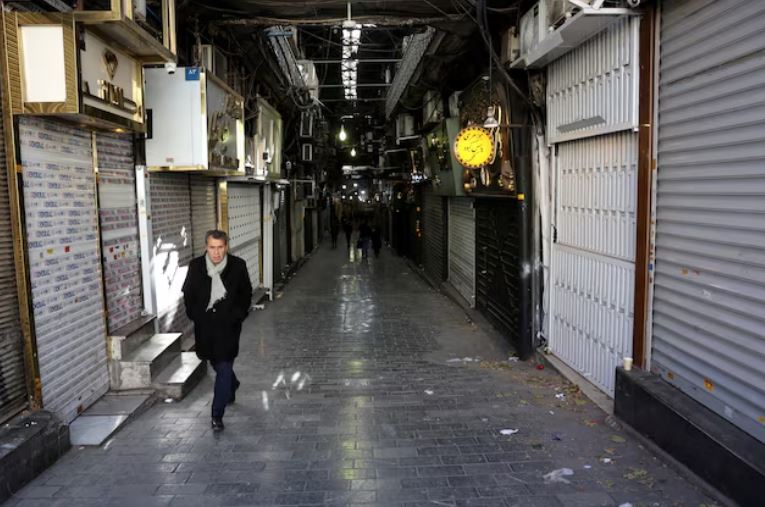
Iran’s bazaar merchants, the trader class who were the financial backbone of the 1979 Islamic Revolution, have turned against the clerics they helped bring to power, fuelling unrest over an economy that has morphed into full-blown anti-government protests.
Frustration among bazaar merchants, from small-scale shopkeepers to large wholesale traders, has grown as their political and economic clout in Iran has diminished over the decades while the elite Revolutionary Guards have tightened their grip on the economy, building sprawling and tightly held networks of power.
“We are struggling. We cannot import goods because of US sanctions and because only the Guards or those linked to them control the economy. They only think about their own benefits,” said a trader at Tehran’s centuries-old Grand Bazaar.
The wave of protests that has engulfed the country, posing one of the toughest challenges ever to the clerical leadership, erupted in late December in Tehran’s Grand Bazaar, where hundreds of shopkeepers denounced the sharp fall in the rial currency.
The demonstrations quickly swelled and turned political, challenging the Islamic republic’s legitimacy. Protesters burned images of Supreme Leader Ayatollah Ali Khamenei and chanted “Death to the dictator” – undeterred by security forces armed with tear gas, batons, and, in many cases, live ammunition.
Iran’s rulers, while acknowledging economic difficulties, have blamed their longtime foes the US and Israel for fomenting the unrest.
A combination of international sanctions and the Guards’ sprawling economic empire has limited the government’s ability to ease the dire economic situation.
Tehran-based analyst Saeed Laylaz said the government has lost control over the situation.
“What is striking is that the unrest began in the bazaar. For merchants, the core issue isn’t inflation – it’s price volatility, which leaves them unable to decide whether to buy or sell,” he said.
Economic disparities between ordinary Iranians and the clerical and security elite, along with economic mismanagement and state corruption have fanned discontent at a time when inflation is pushing the price of many goods beyond the means of most people.
&uuid=(email))