

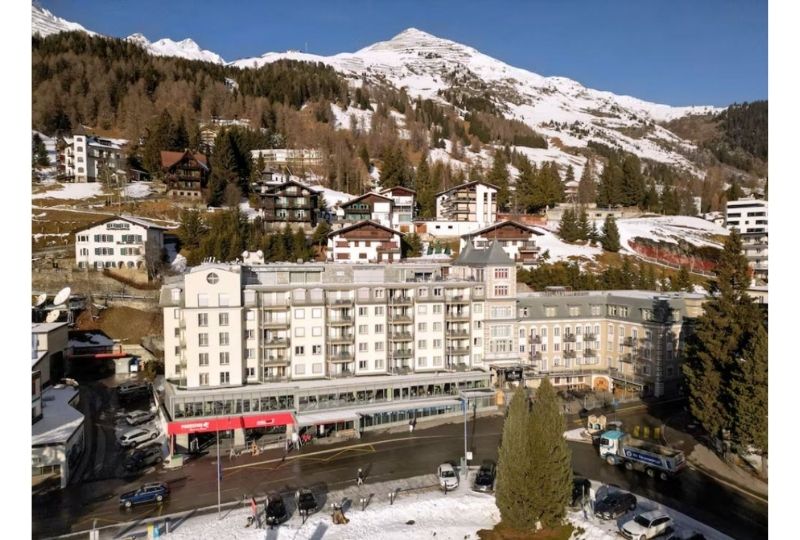
Business and political elites head to the World Economic Forum’s annual meeting in Davos next week with its vision of a rules-based global economic order being tested to the limits.
US President Donald Trump’s expected appearance in the Swiss mountain resort highlights the gap between his agenda and the consensus-driven approach of the WEF, which has faced enduring criticism that it is a talking shop of the rich.
His ‘America First’ policy has led to trade tariffs being used as punishment, military intervention in Venezuela, the threat of taking over Greenland by force and a US retreat from co-operation on climate, health and other global challenges.
The Trump administration has also threatened Federal Reserve Chair Jerome Powell with a criminal indictment, prompting many top central bankers to issue a statement defending him and central bank independence.
Dubbing its 56th edition ‘A Spirit of Dialogue’ – from January 19-23 –, the WEF’s leaders say that given the current uncertainty, getting together to map out a way forward in business and politics is crucial.
“Dialogue is not a luxury, it is a necessity,” said WEF president and CEO Borge Brende, a former Norwegian minister.
But others say that with the US and China leveraging power to suit national interests, the WEF risks obsolescence.
“Who is going to be making the case for the rules-based international order?” said Daniel Woker, a former Swiss ambassador and foreign relations expert.
“To be very blunt, in a system where everyone is only looking out for themselves, it has no reason to exist. It’s an event from the past.”
Davos watchers are also looking at whether the event has lost impetus since its 87-year-old founder Klaus Schwab stepped down as chair in April.
&uuid=(email))