

WALL Street indexes inched lower yesterday as major banks reported earnings and investors surveyed a panoply of economic and political uncertainties which helped inflate prices for precious metals and oil.
Data showed US retail sales increased more than expected and producer prices picked up slightly in November. This offered little reason to change broad expectations that the Federal Reserve will cut interest rates twice later this year.
Banner earnings releases from three of the largest US banks showed rising profits from lending to credit-hungry consumers and businesses, and rising fees from a dealmaking rebound, but investors sold their stock anyway.
Bank of America shares fell more than 4 per cent, Citigroup’s shed 2.5pc and Wells Fargo stock slid 5pc.
“Banks have had a very strong start to the year and markets are taking a little time to digest” the results, said Jake Johnston, deputy CIO, Advisors Asset Management.
“We’re seeing slight misses on some of the estimates, but these stocks had strong run-up into these reports, and it’s not unusual to see a little bit of a pullback.”
The Dow Jones Industrial Average fell 0.43pc, to 48,981.98, the S&P 500 fell 0.73pc, to 6,913.19 and the Nasdaq Composite fell 0.96pc, to 23,482.44. Banks stocks had jumped 25pc in the 12 months before yesterday’s slide.
Traders are grappling this week with questions over Federal Reserve independence, the US desire to own Greenland and its implications for the NATO alliance, and whether the US would attack Iran following a crackdown on historic protests there.
The mood remains positive towards equities, said Bradesco BBI head of equity strategy Ben Laidler, but “policy uncertainty, led by the US, has spiked, and that’s generated headlines around ‘sell America’.”
The dollar, meanwhile, is struggling to maintain a rally begun in late December, although expectations that the Fed will wait several months before re-starting rate cuts, along with geopolitical uncertainty, should support the currency.
The dollar index, which measures it against a basket of currencies including the yen and the euro, fell 0.17pc to 99.02, with the euro up 0.09pc at $1.1651.
The US Supreme Court took one item off the day’s agenda when it did not issue a ruling on the legality of President Donald Trump’s global tariffs. Investors are still processing news that US high-end department store conglomerate Saks Global filed for bankruptcy protection.
Much market momentum was reserved for oil and precious metals.
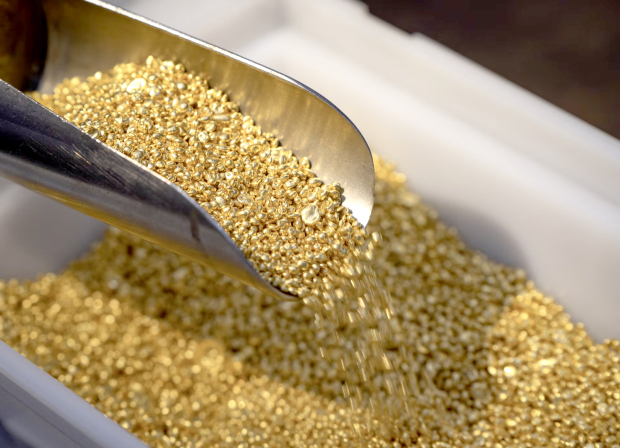
Silver rose to $92 per ounce for the first time yesterday. It began 2025 under $30 an ounce, and has surged 29pc in the first nine trading days of the year. Gold hit yet another record high of $4,641.40 per ounce and was last seen 0.7pc higher at $4,619.46 an ounce. Copper is also at unprecedented levels.
“All roads are leading to gold and silver,” said Alex Ebkarian, COO at Allegiance Gold, citing demand from diverse buyers and noting the market is in a structural bull phase.
Gold yields no interest and typically performs well when interest rates are low and uncertainty is high.
On the flip-side of the global uncertainty trade, concerns over Iranian supply disruptions sent oil prices higher for a fifth straight session.
US crude rose 0.98pc to $61.75 a barrel and Brent gained 1.08pc to $66.18 per barrel.
The oil price increase was contained by significant crude and product builds in the US, the American Petroleum Institute reported late on Tuesday.
n Meanwhile, Bahrain All Share Index closed at 2,045.38 points yesterday, marking an increase of 0.24 points above the previous closing.
This increase was due to the rise in the consumer discretionary and financials sectors.
Bahrain Islamic Index closed at 998.25 points, marking an increase of 2.35 points above the previous closing.
Results indicated that 79 equity transactions took place with a volume of 2,304,329 shares worth BD691,967.
Investors traded mainly in the financials sector, representing 63.39pc of the total value of securities traded.
Most Gulf stock markets closed lower yesterday due to ongoing geopolitical tensions in the region, despite slightly lower-than-expected US inflation data that boosted hopes for upcoming interest rate cuts.
Dubai’s main share index gave up early gains to conclude 0.9pc higher, with blue-chip developer Emaar Properties retreating 1.4pc. In Abu Dhabi, the index was down 0.5pc.
The Qatari benchmark lost 0.2pc, hit by a 1.3pc fall Qatar International Islamic Bank. Saudi Arabia’s benchmark index rose 0.5pc, with Al Rajhi Bank gaining 1pc and Saudi National Bank , the country’s biggest lender by assets, advancing 1.7pc. Saudi equity markets gained ground on reform-driven foreign investor confidence and capital inflows, according to Milad Azar, market analyst at XTB Mena.
Outside the Gulf, Egypt’s blue-chip index declined 1.4pc, snapping a five-day winning streak.
&uuid=(email))