

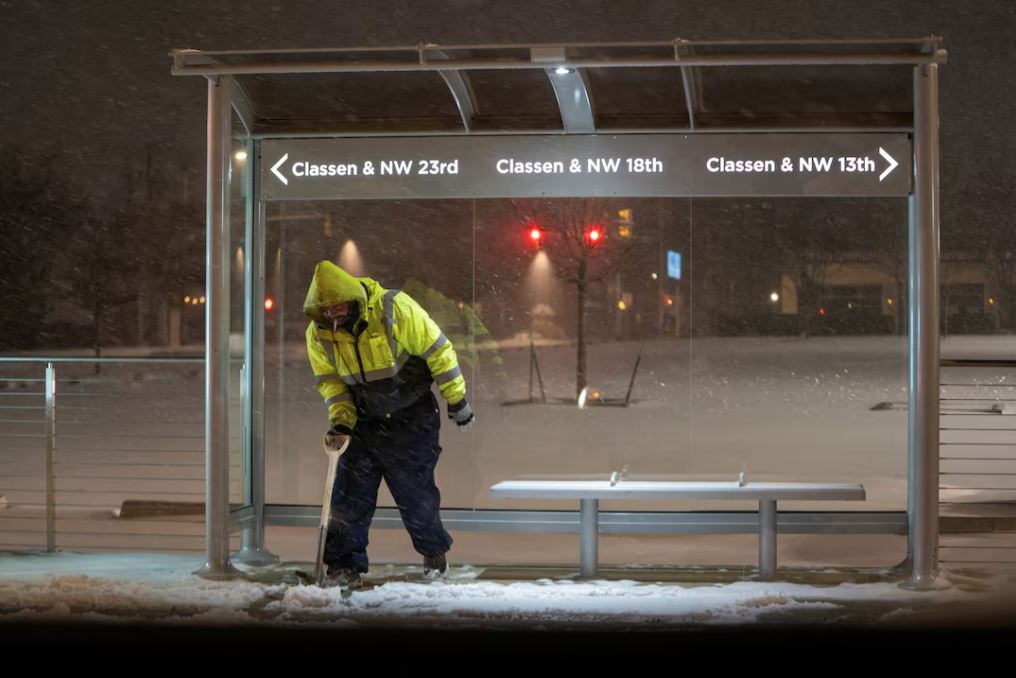
Snow fell over parts of Texas, Oklahoma and Kansas yesterday in a frosty prelude to a monster winter storm expected to converge with bitter Arctic cold and engulf much of the US over the weekend from the Rockies to the Eastern Seaboard.
Forecasts called for heavy snow, sleet and freezing rain, accompanied by dangerously frigid temperatures, to sweep the eastern two-thirds of the nation, threatening to upend travel and spawn widespread power outages.
At least 14 states and the District of Columbia declared weather emergencies, 12,000 flights were cancelled and major US airlines warned passengers to stay alert for further flight changes and cancellations.
“This is a mean storm,” said Jacob Asherman, a meteorologist at the US Weather Prediction Centre in Maryland, calling it the biggest so far this season in terms of intensity and scope.
Government warnings and advisories for winter storm conditions, ice storms and extreme cold were posted from the southern Rockies east to the mid-Atlantic Coast and New England, encompassing well over 200 million Americans.
Along the southern fringe of the storm’s snow belt, sleet and freezing rain were expected to glaze the southern Plains, the lower Mississippi Valley, Tennessee Valley and the Southeast with “catastrophic” ice accumulations, forecasters said.
The worst was predicted for parts of Louisiana, Mississippi and Tennessee, where ice up to an inch thick was likely to coat tree limbs, power lines and roadways, Asherman said.
By yesterday, life-threatening wind-chill readings had plunged to below -45C in the Dakotas and Minnesota, he said, warning that exposure to such cold without proper clothing “can lead to hypothermia very, very quickly.”
“Even in areas where you expect cold weather in January, this is a really dangerous Arctic blast,” Asherman said.
Sub-zero conditions were expected to reach as far south as the southern Plains, lower-Mississippi Valley, Ohio Valley and mid-Atlantic into early next week, shattering some record-low temperatures in those regions, forecasters said.
Officials warned that the bone-chilling cold and ice were likely to cause major travel and power disruptions in some areas unaccustomed to heavy winter weather.
&uuid=(email))