

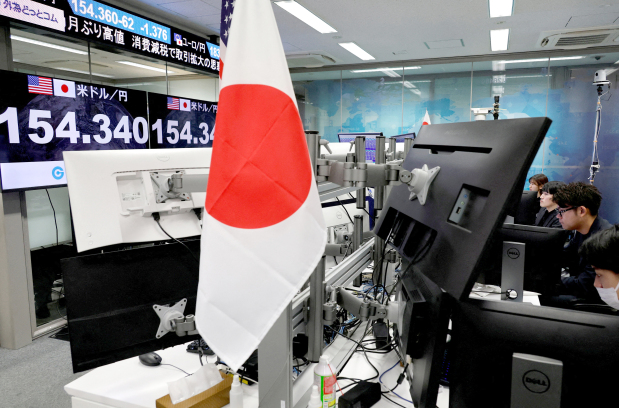
Global stocks rose for a fourth straight session yesterday as investors braced for earnings from a host of US megacaps while the yen strengthened against the dollar as investors remained on guard for any signs of intervention in the Japanese currency.
On Wall Street, US stocks were higher in the early stages of trading, with the S&P 500 materials sector among the best performers, as the rise in gold helped lift names such as Freeport-McMoRan and Newmont Mining. The materials sector has the second-highest earnings growth rate of any sector in the first quarter at 24.4 per cent, according to LSEG data.
“As long as fiscal dominance, geopolitical fragmentation and central bank credibility remain in question, precious metals are likely to stay at the center of this perfect storm, not just as hedges, but as alternatives,” said Daniela Hathorn, senior market analyst at Capital.com.
The Dow Jones Industrial Average rose 236.97 points, or 0.49pc, to 49,340.05, the S&P 500 rose 37.38 points, or 0.54pc, to 6,952.99 and the Nasdaq Composite rose 123.77 points, or 0.53pc, to 23,625.02.
MSCI’s gauge of stocks across the globe rose 7.27 points, or 0.70pc, to 1,044.82 and was on track for a fourth straight session of gains, while the pan-European STOXX 600 index rose 0.36pc.
Markets are also expecting earnings this week from names such as Microsoft, Apple, Tesla and Meta Platforms while the Federal Reserve is scheduled to release its policy statement tomorrow.
The central bank is widely expected to keep rates unchanged, according to CME’s FedWatch Tool, while investors will monitor comments from Fed Chair Jerome Powell for clues on the path of monetary policy.
The dollar index, which measures the greenback against a basket of currencies, fell 0.24pc to 96.99, with the euro up 0.42pc at $1.1876. Sterling strengthened 0.4pc to $1.3696.
Against the Japanese yen, the dollar weakened 1.23pc to 153.80 after rising as much as 1.6pc, to hit its lowest since mid-November at 153.30 yen, after sharp spikes in the Japanese currency on Friday sparked speculation over potential intervention. The New York Federal Reserve conducted rate checks on Friday, sources told Reuters.
Top Japanese authorities said on Monday they have been in close co-ordination with the United States on foreign exchange, which would mark the first coordinated intervention between the two countries in 15 years.
The yield on the benchmark US 10-year note fell 3.6 basis points to 4.203pc.
The yen has been under pressure since Sanae Takaichi took over as Japan’s prime minister in October, in part due to concerns over Japan’s government debt that stands at more than double its economic output. A historic rise in market interest rates has raised fears for Japan’s ability to service its debt, but Takaichi has said she will cut taxes as she campaigns for a snap election to be held on February 8.
BOJ money market data released on Monday suggested there had been no intervention on Friday.
US President Donald Trump provided temporary relief to markets last week when he appeared to back down from threats to slap tariffs on European allies unless they let him take over Greenland.
However, with the prospect of more sanctions targeting Iran in the offing, geopolitics continues to have an impact on markets.
US crude fell 0.49pc to $60.77 a barrel and Brent fell to $65.66 per barrel, down 0.33pc on the day after climbing more than 2pc in the previous session on output disruptions in US crude-producing regions and tensions between the US and Iran.
Meanwhile, Bahrain All Share Index closed at 2,051.57 points yesterday, marking a decrease of 0.51 points below the previous closing.
The decrease was due to the drop in the financial sector and industrial sector.
Bahrain Islamic Index has closed at 1,005.57 points, marking a decrease of 4.34 points below the previous closing.
Results indicated that 46 equity transactions took place with a volume of 611,247 worth BD403,222.
Investors traded mainly in the material sector, representing 81.18pc of the total value of securities traded.
Most Gulf stock markets ended lower yesterday, weighed by a mix of geopolitical and policy worries - ranging from US-Nato tensions over Greenland and uncertainty around tariffs to growing questions about the Federal Reserve’s independence.
Saudi Arabia’s benchmark index reversed early losses to finish flat. The Saudi stock market’s recent rebound lost steam, with investors turning cautious ahead of additional fourth-quarter earnings releases and ongoing regional geopolitical tensions, said Daniel Takieddine, co-founder and CEO, Sky Links Capital Group.
In Abu Dhabi, the index lost 0.2pc. Dubai’s main share index declined 0.6pc, dragged down by a 1pc slide in blue-chip developer Emaar Properties and a 1.7pc retreat in toll operator Salik Company. The market’s underlying fundamentals remain strong and growth forecasts for the year are upbeat, indicating that the rally could regain traction if fourth-quarter earnings come in favorably, said Takieddine.
The Qatari benchmark, however, rose 1.2pc, clawing back most of its losses from the previous session.
Outside the Gulf, Egypt’s blue-chip index advanced 1.4pc, reaching a new record high.
&uuid=(email))