

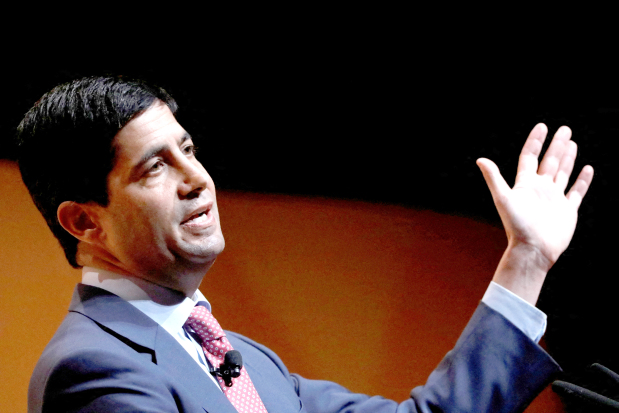
US President Donald Trump yesterday named former Federal Reserve Governor Kevin Warsh to lead the US central bank, lifting months of uncertainty and leaving investors to assess how monetary policy in the world’s biggest economy might evolve.
Trump had said a day earlier that he would name a successor to Federal Reserve Chair Jerome Powell, whose term ends in May. Betting markets moved quickly to price in Warsh following reports he had visited the White House on Thursday.
World markets have been shaken at the start of the year by Trump’s threats to impose tariffs on European allies over Greenland and heightened geopolitical tensions. Fresh worries about the independence of the US central bank after the Trump administration’s decision to open a criminal investigation into Powell this month have also kept financial assets on edge.
Warsh, a proponent of tighter monetary policy as Fed governor from 2006 to 2011, has said recently that Trump is right to press for interest rate cuts.
Lloyds FX strategist Nick Kennedy said that, from a policy perspective, Warsh’s track record is more on the hawkish side and noted his preference for a smaller Fed balance sheet.
“In the interview process you have to be aligned with what Trump wants on policy rates. I don’t think this is a role you would want to step into if you were in conflict with that,” Kennedy added. “So that idea that this is good for the dollar is going to be short-lived.”
Gold slid 5 per cent yesterday along with other beneficiaries of Fed asset-buying: bitcoin fell over 2pc and US stock futures slipped. Interest rate futures markets stuck with anticipating two US rate cuts in the second half of this year, after the new chair takes over.
The greenback, which slumped almost 10pc last year, has come under renewed selling pressure this month, due in part to US policy uncertainty.
“We just have to see whether or not he will be influenced by the White House,” said Peter Cardillo, chief market economist at Spartan Capital Securities in New York.
“My guess is that he will not and that he will look very carefully, he will be somewhat balanced in terms of inflation, labour markets. Less determined than Powell, but not that far apart.”
Fed interest rate decisions impact not only the daily rate at which banks lend to each other but also long-term interest rates, as measured by long-dated US Treasury yields, which in turn influence borrowing costs for consumers and companies.
Trump’s pick will be scrutinized for his perceived ability to carry out monetary policy without ceding to political pressure, a quality economists say is the bedrock of any central bank’s inflation-fighting capabilities and what underpins the financial stability of the US economy.
Warsh has called for regime change at the Fed, seeking among other things a smaller balance sheet – a goal seemingly at odds with Trump’s preference for looser monetary policy.
&uuid=(email))