

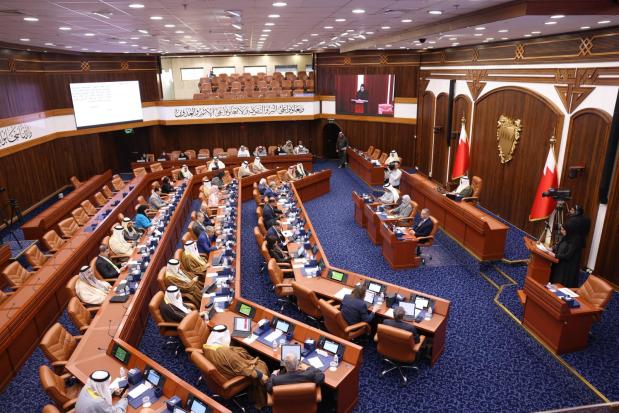
A proposed amendment to Bahrain’s environmental law that would have doubled the deadline for challenging certain administrative decisions was rejected by the Shura Council, following concerns that longer appeal periods could undermine swift environmental protection.
The draft legislation, submitted by Parliament, sought to amend Article 113 of Law No 7 of 2022 by extending the time limit for appealing the rejection of an administrative grievance from 30 days to 60 days.
However, 20 members voted against the bill, nine were in favour and seven abstained. The draft law will now be returned to Parliament for reconsideration.
The Shura Council’s public utilities and environment affairs committee had earlier recommended rejecting the proposal, arguing that the existing legal framework already provides sufficient safeguards for the right to litigation while ensuring urgent environmental decisions are enforced without delay.
Committee rapporteur Ali Al Shehabi explained that the law establishes a three-stage procedure that collectively allows up to 90 days before a case reaches court.
An affected party has 30 days to file a grievance, the authority has 30 days to consider and respond, and a further 30 days is granted to appeal before the competent court if the grievance is rejected or left unanswered.
“This cumulative period is sufficient for any concerned party to study the decision carefully and take appropriate legal action,” he said.
Mr Al Shehabi added that limiting the court appeal period to 30 days serves the broader public interest by ensuring stability of legal positions, particularly given the special nature of environmental legislation.
“Environmental decisions are often issued in response to urgent risks, such as pollution incidents, hazardous material leaks or activities that threaten biodiversity,” he said. “Delaying their legal finality could weaken the effectiveness of timely intervention.”
Committee chairman Dr Mohammed Ali Hassan echoed these concerns, stressing that the proposal, while well-intentioned, was unnecessary. He noted that many Bahraini laws adopt similar 30-day appeal periods and warned that altering timelines could create operational challenges for the Supreme Council for Environment.
However, Shura Council legislative and legal affairs committee chairwoman Dalal Al Zayed argued that extending the appeal deadline would not suspend the enforcement of environmental decisions.
“The administrative decision remains enforceable unless the court orders a stay of execution,” she said. “Granting 60 days for appeal does not harm enforcement and provides additional legal reassurance.”
Ali Al Aradi also supported extending the deadline, saying that fairness required giving litigants adequate time without affecting the implementation of decisions that are already effective upon issuance.
Fouad Al Hajji opposed the change, warning that environmental laws directly affect public safety and that ‘every hour can make a difference’ in preventing harm.
“We are talking about legislation linked to human safety and environmental protection,” he said. “Extending appeal periods without necessity could have real consequences.”
&uuid=(email))