

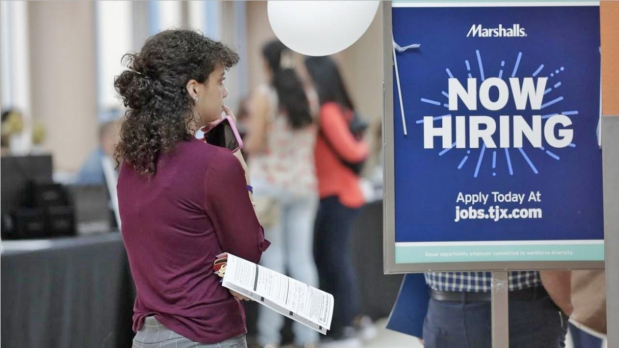
US job growth unexpectedly accelerated in January and the unemployment rate fell to 4.3 per cent, signs of labour market stability that could give the Federal Reserve room to keep interest rates unchanged for some time while policymakers monitor inflation.
But the largest increase in payrolls in 13 months reported by the Labour Department yesterday likely exaggerates the labour market’s health, as revisions showed the economy added only 181,000 jobs in 2025 instead of the previously estimated 584,000. That is a fraction of the 1.459 million jobs added in 2024, the final full year of former President Joe Biden’s term.
President Donald Trump’s aggressive trade and immigration policies continued to cast a shadow on the labour market, economists said, cautioning against viewing the surge in payrolls in January as marking a material shift in conditions.
They noted that other indicators, including job openings, pointed to a tepid labour market, adding that job growth remained concentrated in the healthcare and social services industries, which accounted for nearly all the rise in employment.
“The only jobs being filled in January are in health care and social assistance, along with some non-residential speciality trade contractors probably related to AI facilities, all of which do not guarantee the economy’s future success,” said Christopher Rupkey, chief economist at FWDBONDS. “If you are looking for a job ... you are unlikely to find anything to apply for in today’s report.”
Non-farm payrolls increased by 130,000 jobs last month after a downwardly revised 48,000 rise in December, the Labour Department’s Bureau of Labour Statistics said. Economists polled by Reuters had forecast payrolls advancing by 70,000 jobs. Estimates ranged from a loss of 10,000 jobs to a gain of 135,000 positions. The BLS said frigid temperatures and snowstorms that slammed large parts of the country had not affected the establishment survey, from which payrolls are calculated.
But the harsh weather affected the survey of households, resulting in a below-average response rate of 64.3pc, causing some economists to caution against reading too much into the decline in the unemployment rate from 4.4pc in December.
Economists expected the winter storms would be a drag on February payrolls.
The employment report, initially due last Friday, was delayed by the three-day shutdown of the federal government.
Healthcare employment increased 82,000, the most since July 2020, spread across ambulatory healthcare services, hospitals, nursing and residential care facilities. The job gains were well above the monthly average of 33,000 in 2025, leading some economists to conclude that January’s increase was a fluke. Social assistance payrolls increased 42,000.
&uuid=(email))