

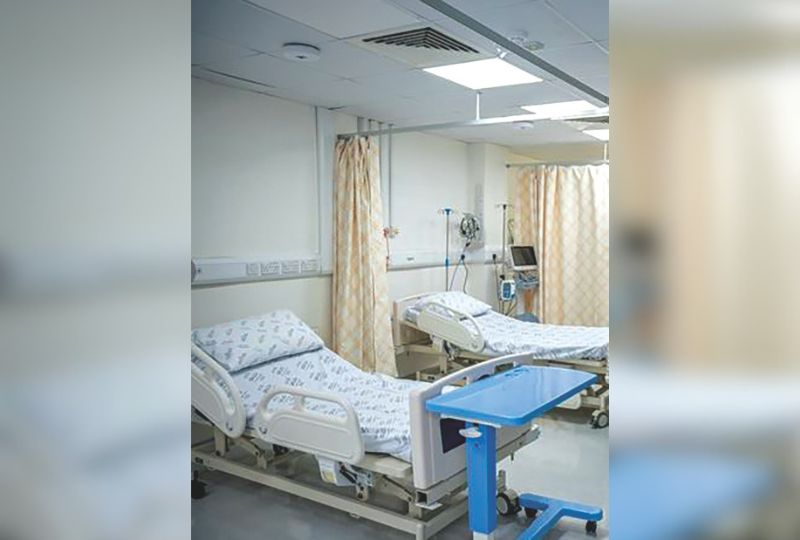
Hospital staff in Bahrain are becoming bug-busting supremos thanks to their diligence and determination for keeping the wards spotlessly clean and free of a globally-recognised health facility killer.
Enhanced screening and specialised cleaning protocols at Bahrain’s largest public hospital led to a significant reduction in the spread of a dangerous and drug-resistant fungus that has been causing concern in medical institutions worldwide.
Salmaniya Medical Complex (SMC) researchers found that a multidisciplinary approach successfully disrupted transmission pathways for Candida Auris – a fungus known for its resilience in healthcare settings.
These findings were highlighted in a recently published peer-reviewed academic paper titled ‘Impact of Infection Control Interventions on Candida auris at a Tertiary Care Centre in Bahrain: A Five-Year Experience’ authored by Government Hospitals researchers Saleh Sowar, Rommel Acunin, Harold Cabanalan, Safa Alkhawaja, Mohamed Dakheel, Hassan Darwish, Jumana Ahmed and Athraa Naser.
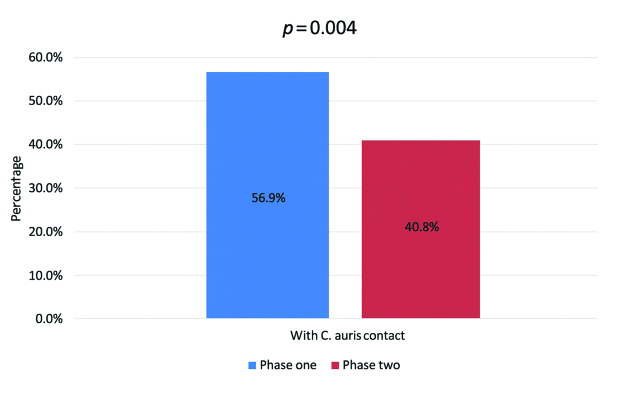
Drop in cases due to contact with other Candida auris patients between the two phases of the study
“Candida auris is a multi-drug-resistant fungal pathogen associated with high morbidity, environmental persistence and rapid transmission in healthcare settings,” researchers wrote in the abstract.
“This study evaluated the impact of a comprehensive infection-control intervention on hospital-acquired cases by comparing two post-implementation periods, Phase 1 (2021-22) and Phase 2 (2023-25), to assess the intervention’s performance over time.”
Candida auris can cause severe illness, particularly in hospitalised and immunocompromised individuals.
First identified in 2009 in Japan, it has become a global threat since the Covid-19 pandemic after surges in incidence and outbreaks, leading to high mortality rates among hospitalised patients.
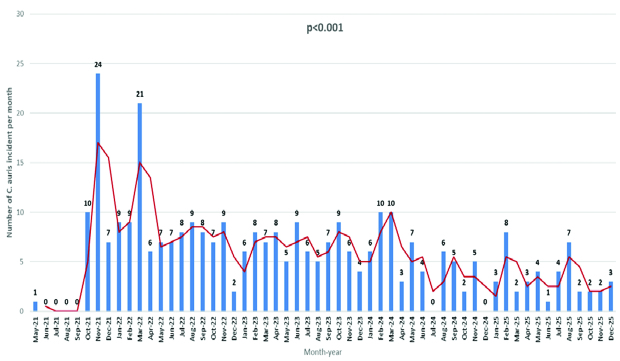
Number of hospital-acquired Candida auris cases per month from 2021 to 2025
It is frequently transmitted within healthcare facilities because of poor infection control measures, particularly around hand hygiene, contact precautions, as well as environmental cleaning and disinfection.
Even healthcare settings with proper infection prevention and control systems can sometimes see transmission and outbreaks of this pathogen, because of difficulty diagnosing infections using standard microbiology methods, an exceptional ability to survive on environmental surfaces for several weeks, and resistance to common hospital disinfectants and standard antifungal treatments,
All 323 eligible hospital-acquired Candida auris cases recorded at SMC between January 2021 and December 2025 were included.
More than half of these patients were aged 65 or over (51.4 per cent), with men accounting for the majority of cases (65.3pc). The most frequently identified sites of infection were the groin (28.5pc), axilla (23.5pc) and urine (19.2pc).
Approximately 54.2pc of patients got infected without showing symptoms, while 45.8pc were symptomatic.
Additionally, 48pc of patients had documented contact with an individual who was carrying the pathogen, and nearly half (49.5pc) had been hospitalised for more than 30 days prior to diagnosis.
In 2021, SMC implemented a comprehensive infection control intervention focused on the pathogen, following international guidelines.
A team composed of infection control, microbiology, nursing, environmental services, and hospital administration was established to manage the outbreak and respond quickly.
“We screened high-risk groups upon admission to the adult ICU (intensive care unit), patients exposed to confirmed cases, and those transferred from other healthcare facilities to identify and contain cases early,” researchers explained.
“Patients who tested positive were placed in a dedicated ward with strict contact precautions until discharge, thereby reducing the risk of transmission.
“We improved cleaning protocols by assigning specially trained staff, using approved chlorine-based solutions in combination with UV-C room disinfection for terminal cleaning and disinfection, and conducting follow-up inspections by the infection control team.”
Early identification, strict contact isolation, and environmental hygiene led to a drop in cases over the five-year study period.
“In 2021 and early 2022, during the peak of the Covid-19 pandemic, the facility experienced significant fluctuations, including several sharp spikes, particularly in November 2021 (24 cases) and March 2022 (21),” researchers explained.
“In 2023, case spikes began to decline, and monthly case numbers stabilised, with some months reporting zero hospital-acquired cases.
“By the end of the study period, cases remained consistently low. This steady drop in cases in the later years of the study highlights how effective the intervention bundle was in stopping transmission and preventing new cases.”
During the first phase of the study, 56.9pc of diagnosed patients reported that they had come in contact with another Candida auris patient, dropping to 40pc in the second phase.
Going forward, researchers are recommending that prevention and surveillance in Bahrain and the GCC for this fungus be standardised, to improve co-operation, early detection, faster reporting, and minimise spread between facilities, especially during outbreaks.
Facilities should also use advanced disinfection methods such as UV-C light, vaporised hydrogen peroxide, or chlorine-based disinfectants, and environmental monitoring should be stepped up with regular checks and reviews of cleaning practices, especially in high-risk areas.
naman@gdnmedia.bh
&uuid=(email))