

Parliament has unanimously approved a decree-law overhauling Bahrain’s fundraising rules, introducing tougher oversight, mandatory reporting and fines of up to BD10,000 to shield the kingdom from money-laundering and terrorism-financing risks ahead of key international evaluation.
The amendments to Decree-Law 21 of 2013, issued as Decree-Law 39 of 2025, were backed by MPs and sent to the Shura Council after a detailed review by the services committee.
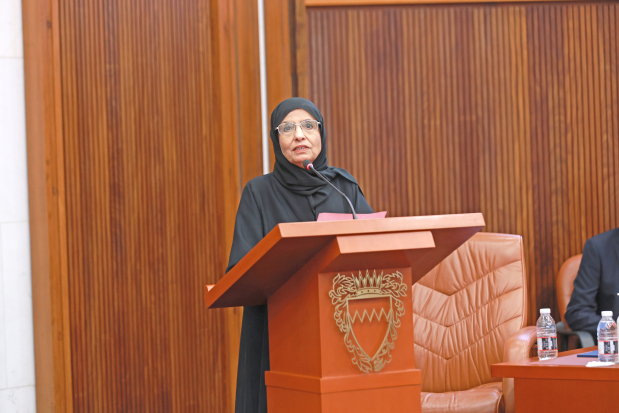
Committee rapporteur MP Lulwa Al Romaihi described the changes as ‘structural safeguards, not procedural tweaks’, aligned with standards set by the Financial Action Task Force (FATF).
The amendments redefine who qualifies as a ‘licensee’, require legal entities to obtain prior ministerial approval before launching any fundraising, and restrict individuals to religious fundraising only.
Anyone who receives donations for public purposes without a licence must notify the Social Development Ministry within seven working days. The ministry must respond within 30 days – and silence will now count as rejection, not approval.
Licensed organisers must submit detailed financial reports within 30 days of completing a campaign, with annual reporting required if the campaign runs longer than a year.
A new risk-based supervision clause empowers the ministry to assess each association’s exposure to terrorism-financing risks using a national risk matrix and apply proportionate oversight measures updated in line with Bahrain’s National Risk Assessment.
Administrative fines of up to BD10,000 can be imposed depending on the seriousness of violations.
The most debated change mandates court-ordered confiscation of funds collected without a licence – or an equivalent amount if already spent – with the money redirected to charitable causes designated by the ministry.
Some societies warned this could deter volunteers acting in good faith. The committee disagreed.
“The law clearly distinguishes between administrative mistakes and intentional exploitation,” Ms Al Romaihi said. “But money collected in the name of charity must remain protected under all circumstances.
“This is about protecting Bahrain’s reputation as much as protecting donations. Strong governance builds trust in the charitable sector.”
Social Development Minister Osama Al Alawi told MPs the ministry already applies a detailed risk matrix using data from the Financial Intelligence National Centre, security databases and UN sanctions lists.
“Licences are not granted blindly,” he said. “We assess background data, monitor performance and maintain a risk report for every association.”
He added that funds raised by associations are treated as public money that cannot be spent without prior authorisation. Associations must open dedicated bank accounts for each campaign with banks licensed by the Central Bank of Bahrain, ensuring full traceability.
Figures presented to MPs showed 215 fundraising licences were issued in 2023, 211 in 2024 and 184 up to September 2025, alongside 193 licences for individuals conducting religious fundraising. No violations were recorded during the current minister’s tenure, with five noted in 2025, three in 2024 and two in 2023.
Charitable groups broadly supported stronger governance while urging proportional penalties and clearer definitions in executive regulations. The Bahrain Bar Society raised no objections.
&uuid=(email))