

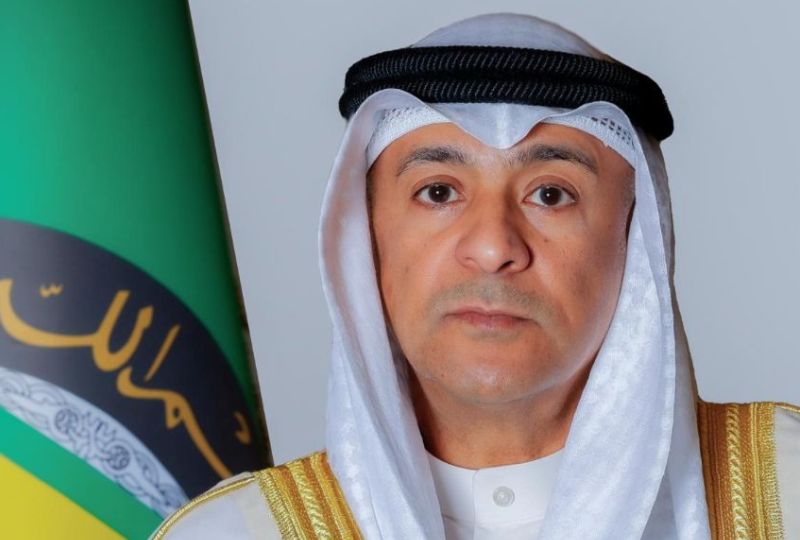
GCC Secretary General Jasem Mohamed Al Budaiwi has condemned Iran’s attacks on Bahrain, Kuwait and Jordan, describing the strikes on civilian infrastructure as ‘war crimes’.
The condemnation came after Iran launched more attacks on Gulf states in retaliation of intense US strikes, which continued last night, on Tehran’s military targets.
The US military said two of its personnel were killed in Jordan and another was missing after an Iranian attack.
The top GCC official said Iran’s actions ‘constitute a highly dangerous escalation, a grave violation of international law and the United Nations Charter, as well as war crimes requiring international accountability and prosecution, given the deliberate targeting of infrastructure and civilian facilities’.
Al Budaiwi reiterated the GCC’s solidarity with the three countries, stressing that the security of member states is ‘indivisible’ and calling on the international community to take action to hold those responsible accountable.
Kuwait came under sustained attack, with a desalination plant hit and operations at Kuwait International Airport suspended due to repeated missile and drone threats.
Kuwait Petroleum Corporation later said one of its oil facilities had been hit in ‘repeated Iranian attacks’, causing significant damage and some injuries, according to the state news agency.
Bahrain’s Defence Force said it had once again thwarted Iranian aggression on civilians and infrastructure and urged people to exercise caution, avoid approaching any unfamiliar or suspicious objects resulting from the attacks, and report them immediately.
Saudi Arabia strongly condemned Iranian attacks against Kuwait, Bahrain and Jordan, according to the Saudi Press Agency (SPA).
It reaffirmed its full support for the three countries in all measures they take in response to the Iranian attacks, saying the strikes violate international law and the
principles of good neighbourliness.
The kingdom also stressed the need for an immediate halt to all forms of military escalation in order to safeguard the security and stability of countries across the region and protect their people.
Earlier, the US military’s Central Command said it had completed its seventh consecutive day of strikes by hitting Iranian surveillance sites, military logistics infrastructure, underground weapons storage and maritime capabilities.
Oil prices rose more than four per cent on Friday to their highest level in more than a month, adding to political pressure on US President Donald Trump as his Republican Party tries to hold on to power in November congressional elections.
Washington and Tehran have been testing the limits of escalation since their ceasefire agreement fell apart last week, raising the prospect of a return to all-out war.
On Friday, both sides took aim at shipping traffic, with the US saying it was enforcing a naval blockade while Iran said it targeted vessels that violated its rules on navigating the Strait of Hormuz.
Iranian media reported that several missiles had struck power facilities and desalination pumps in the southern city of Jask yesterday, citing a local official.
Some 10,000 people in 20 villages were without water, Tasnim news agency reported.
The governor of Jask later said emergency water deliveries had begun to the affected villages.
US officials have said the strikes on southern Iran are designed partly to provide options for Trump, who has also declined to rule out a ground assault on Iran’s coast or islands.
Earlier, UN chief António Guterres reiterated his firm conviction that ‘there is no military solution to this conflict and calls for stepped up diplomatic efforts towards a peaceful and durable settlement’.
The European Union and GCC issued a joint call demanding Iran permanently keep the Strait of Hormuz open to international shipping without conditions or fees, according to Saudi state TV.
&uuid=(email))