

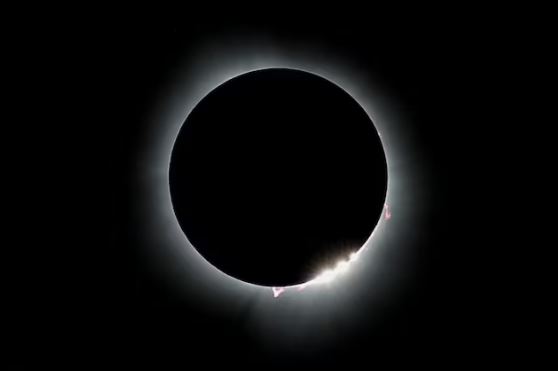
Sheltered from the blazing summer sun, a group of scientists in the northern Italian city of Padua spent weeks in a laboratory finalising an instrument they say could transform the study of the solar corona, the outer layer of the sun’s atmosphere.
As a total solar eclipse sweeps across Europe tomorrow, the Circular Slit Spectrometer (CISS) will undergo a decisive test at Spain’s Javalambre Astrophysical Observatory, where researchers hope to prove it can break down the Sun’s light into its constituent wavelengths much faster than existing instruments.
The eclipse creates conditions where the corona becomes more visible, facilitating studies of the area around the sun whose behaviour has huge potential to impact communications networks and power grids on Earth.
&uuid=(email))