

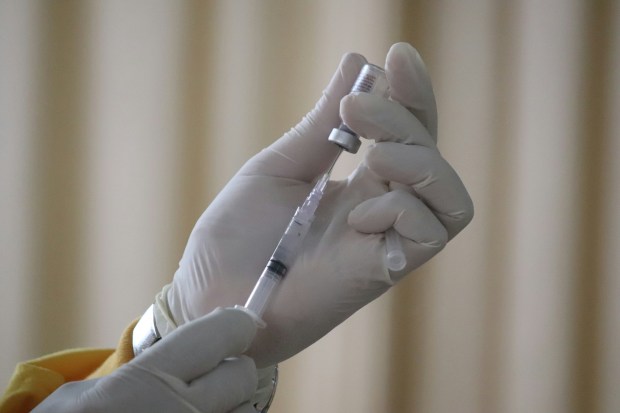
Parents in Bahrain are being urged to ensure that their children’s vaccinations are up to date and to avoid delaying their shots in order to protect their health and wellbeing.
Health Ministry public health physician Dr Zahra Ayoub recommended that parents of unvaccinated children contact their primary healthcare centre as soon as possible to get the jabs.
Speaking on Good Morning Bahrain, Dr Ayoub explained that vaccinations protect not just people themselves, but also other vulnerable individuals.
“Vaccines boost immunity and protect not just the people who receive them, but also members of the wider community from diseases,” she said.
“Immunisation makes the spread of diseases from one person to another very difficult and also provides indirect protection to those who cannot take the jabs for whatever reason.
“The higher the coverage, the more secure vulnerable people will be and the more society is protected against diseases.
“Protecting Bahrain’s high immunisation rate is also important because it prevents the return of diseases that are either under control, or have been outright eradicated.
“Diseases, particularly communicable ones, do not have borders and can spread from country to country through the movement of people.”
Under Bahrain’s public health code, the Health Ministry can institute compulsory vaccinations or preventative measures, especially during the outbreaks of communicable or infectious diseases.
Ministerial decisions strictly define which vaccines are officially recognised, standard storage methods, and the licensing conditions for healthcare facilities administering them.
The ministry’s Immunisation Guidelines mandate standard childhood immunisations, alongside targeted adult and high-risk group vaccinations such as annual influenza or specific boosters for medical and educational staff.
Educational institutions in Bahrain enforce compliance with mandatory screening and immunisation records as a prerequisite for registration and clinical placement eligibility.
Dr Ayoub highlighted the important role that primary healthcare centres in Bahrain play in protecting public health, with vaccination being one of their most important services.
“They make sure that children get the necessary vaccinations according to the kingdom’s requirements,” she said.
“They ensure that children get the jabs on time and that electronic records are kept.
“The centres also follow up with individuals who are not up to date with their shots or are missing necessary ones.
“Medical staff also educate parents on the importance of adhering to appointments, as well as potential side effects that could occur.”
Dr Ayoub urged parents to ensure that their children do not miss their vaccination appointments as it could put their immune systems at risk.
“It could put the child’s life in danger,” she said.
“The child will go longer without the jab, meaning they become more susceptible to communicable diseases.
“If your child is late, not up to date or missing some vaccinations, contact the primary healthcare centre immediately.”
Bahrain follows a structured national immunisation schedule for children from birth through early childhood. Essential routine childhood vaccines protect against tuberculosis, hepatitis, polio, measles, and other preventable diseases.
Children also cannot complete standard school registration in Bahrain without providing an immunisation record.
Submitting a child’s vaccination history matching the Health Ministry Immunisation Schedule is a standard requirement for enrolment across both public and private educational institutions.
Dr Ayoub also highlighted the importance of getting information about vaccines from only verified sources and not trusting random information on places like social media.
“Verified sources include the Health Ministry and medical professionals.
“Vaccinations are only approved after extensive research and studies into their safety and effectiveness.
“Health authorities are consistently reviewing vaccines and their safety.
“Some may have side effects, but they tend to be minor and temporary, such as pain and fever.
“By giving children vaccinations, you are providing them with a chance to grow and to be safe. It is their right and an investment in their future.”
nader@gdnmedia.bh
&uuid=(email))