

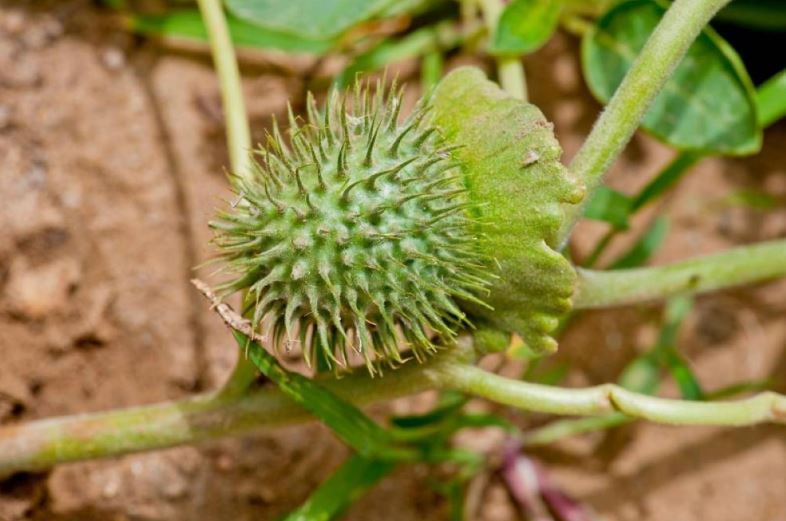
Health and environment authorities are stepping up public awareness efforts over Datura, a toxic invasive plant that has been spotted at several sites across Kuwait, including residential areas and public places, warning that eating any part of it can cause severe poisoning and even death.
Head of the Kuwait Poison Control Centre at Al-Amiri Hospital Dr Abdullatif Al-Omi told KUNA on Monday that the centre had recently dealt with severe poisoning cases in the country caused by eating toxic plants such as Datura, which required hospital admission and treatment. He said this underlined the need for awareness, particularly among children.
Datura, a seasonal member of the nightshade family, usually appears in spring and summer, sometimes into early autumn depending on temperature and humidity. It is recognisable by its large white or purple trumpet-shaped flowers that open at night, its large, strong-smelling leaves and its round, spiny green fruit packed with seeds. All parts of the plant contain toxic tropane alkaloids, including atropine, hyoscyamine and scopolamine. Symptoms include dry mouth, dilated pupils, a racing heart, confusion, delirium and severe hallucinations, and can progress to seizures, coma and death.
Al-Omi said the centre had received reports of the plant in some residential areas and public places, and was coordinating with the relevant authorities on prevention and on locating and removing it. He noted that the plant can grow and spread on its own, so its presence does not mean it was planted deliberately, and that the main danger lies in eating it or using it unsafely.
He urged anyone who has eaten a toxic plant and shows symptoms to go to an emergency department immediately, not to induce vomiting or use home remedies, and to keep a clear photo or part of the plant to help identify it. The centre offers specialist advice around the clock on 1804774. He also warned against using wild plants in drinks, folk recipes or home remedies, and urged parents to keep children away from them.
Head of the Wildlife Monitoring Section at the Environment Public Authority (EPA) Sharifa Al-Salem said the authority and the poison centre had recently held a coordination meeting on reports of toxic plants near public places, led by Datura, as well as venomous wildlife including scorpions, snakes, jellyfish and stonefish. She urged the public not to touch, collect or eat the plants and to report their locations to the authorities.
Acting Director of the Environmental Rehabilitation Department at the Public Authority for Agriculture Affairs and Fish Resources (PAAF) Nouf Al-Hashash said the plant adapts easily and produces large numbers of seeds that can lie dormant in the soil for long periods before sprouting when water is available.
She said PAAF had proposed a joint meeting with the poison centre and the EPA to prepare an integrated national program to curb the plant. It would include a field survey prioritising schools, public facilities, parks and areas used by children, a risk assessment, a plan for safe removal and disposal, regular monitoring of treated sites and a public awareness campaign.
