

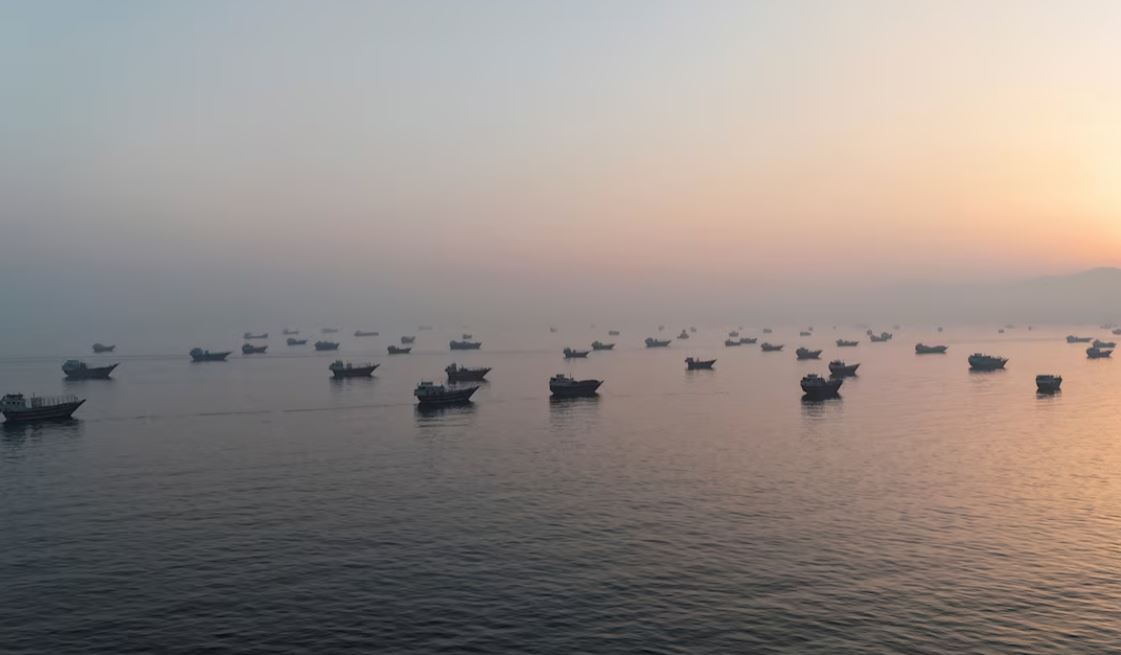
The United Nations’ International Maritime Organisation (IMO) has confirmed 130 ‘incidents’ – mainly attacks – in the region since the US-Israel conflict with Iran began, with at least 25 seafarers killed in a tragic catalogue of vanishing vessels and missing sailors.
Reuters news agency has spoken to shipping sources, officials and the families of seafarers to reveal the human cost of the continuing Hormuz Strait battles.
Commercial ships have come under fire since the war began on February 28. Tehran attacked ships to assert control over the Strait of Hormuz and the US in turn struck Iran-linked ships to impose a blockade on Iranian ports.
V Pandiselvi, the mother of Indian sailor Naveen Kumar, has not heard from her son for more than six months.Yet, she still clings to hope he will return, crying as she replays old voice notes.
Kumar was one of six crew members assigned to work on two Iran-linked cargo vessels last seen in Iranian waters in May before disappearing. The vessels’ fate is still unclear.
Kumar had been deployed to the vessels Bridge 1 and Bridge 2, which disappeared around May 9. The two ships were not on the IMO’s list of incidents.
The other Bridge 1 and 2 crew members missing are three Iraqis, one Pakistani and another Indian.
Iraq said in May it was monitoring the disappearance of the two vessels, which flew the Bolivian flag. No distress signals were received. Gulf ports requested information after communications with the crew were lost.
Khaled Saad Al Thaalibi, who heads the Iraqi maritime foundation in Basra, told Reuters the latest available information indicated the vessels’ Automatic Identification System (AIS) transmitted their last known position approximately eight nautical miles from Iran’s Kish Island on May 9 at 4.50pm.
“We called the agent in Iran but he told us that he knew nothing about the incident and on the following day the Iranian search and rescue tried to look for the vessels but they found nothing,” Thaalibi said from his office in Basra. “We don’t know if the vessels sunk or were confiscated by a country.”
Crew working aboard ships are usually contracted by agents and hired on six-month contracts. Since the Iran war, costs of hiring sailors have tripled with many working just one journey as risks mount.
One Dubai-based shipper told Reuters a crew member may make what they used to make in seven months in only two. “They ask for three months’ pay per month but after seeing what a journey entails they sometimes quit after one trip,” the shipper said.
The 23-year-old Kumar’s family took on considerable debt for him to complete a marine course and pursue his dream of working as a sailor, after which he left for a six-month crew contract he was told was based in Dubai. A week in, he found himself in Iran, to the consternation of his family.
For Pandiselvi, Kumar’s mother, the allure of good pay is now meaningless. “We worked tirelessly to secure our children’s careers and future,” she said. “Now, seeing everything that has happened, we are left wondering what our lives have come to.”
