

AN innovative agriculture programme capable of establishing 30 new startups within two years can help tackle the country’s food security concerns.
The project, called Agripreneur 3.0, will target the new generation of Bahraini entrepreneurs and is centred on new technologies such as artificial intelligence (AI), smart irrigation and robots.
The five-phase programme scales up the potential of entrepreneurs by coaching and training them on managing the agri-food value chain in a sustainable manner.
It also aims to reduce carbon footprint, create high value jobs and optimise natural resources.
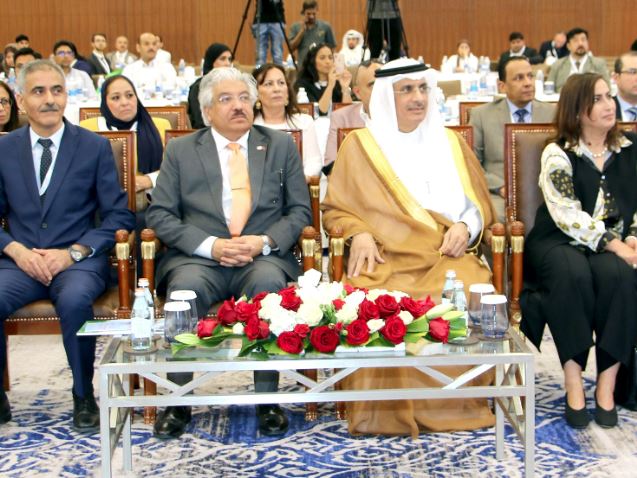
Details of the project, which has been adopted in Singapore, the Netherlands and Belgium, were discussed yesterday by Tunisia-based STECIA International at the Millennium Biotechnology Pan Arab Conference and Exhibition (MBPAC), which was held at the Gulf Hotel Convention and Spa.
“The project is suitable for Bahrain to help its agriculture sector shift to a knowledge-based technology driven one,” said MBPAC chairman Dr Dahmani Fathallah.
“This project can graduate 30 new startup companies within 18 to 24 months and it has a proven track record, so I hope that Bahrain could look at it seriously and tap into the potential of adopting this for the country.
“We know that Bahrain is not an agriculture reliant country and we need food safety and food security for which we need an agriculture segment that is technology driven.”
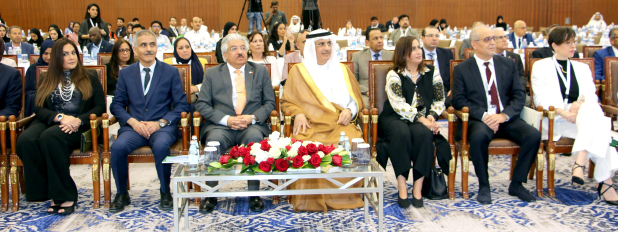
Officials at the conference
According to STECIA managing director Walid Gaddas, the project targets not only farmers but also entrepreneurs, young graduates and investors.
He explained that the heart of the programme was to introduce new technologies and biotechnologies into the field of agriculture.
“We are living in an era of revolution in the field of agriculture with the introduction of new technologies like AI, smart irrigation and robots among others,” he said.
“This programme gives big results as it can reduce the impact on natural resources like water and land, increase productivity and improve competitiveness.
“The second specificity of the programme is that we coach (entrepreneurs) for almost two years so we can be sure they will continue and survive the difficult phase post creation.”
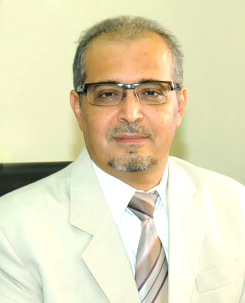
Dr Fathallah
Meanwhile, Dr Fathallah, who is also Arabian Gulf University faculty member, urged the private sector to tap in to the potential of the biotech startup field, which according to him was still in its infancy in the region.
“Biotechnology is in its infancy in the GCC region and it is so far limited to universities,” said Dr Fathallah.
“Some universities in the region are ready and developed and they are ready for partners, but we need the second link which is the private sector and the financial segment to partner with us so that we can start these small companies.
“In the biotech industry this is crucial because universities alone cannot do it as multiple layers of partners need to work together on biotech industry to make it happen.”
The three-day conference, jointly organised by Arabian Gulf University and Bahrain University, is held under the patronage of Education Minister Dr Majid Al Nuaimi.
Themed ‘How Life, Science and Biotechnology Will Re-shape the Third Millennium?’, the conference gathers 12 international speakers and over a dozen presentations on various topics in the fields of biotechnology.
raji@gdn.com.bh
&uuid=(email))