

MANAMA: A newly-formed Gulf naval coalition may be imperative to counter rising Iranian threats in the Arabian Gulf, an expert believes.
Bahrain fits in as the ‘key asset’ in such an alliance with its strategic geographical positioning, combined with the presence of the US fifth fleet, said Bahrain Centre for Strategic, International and Energy Studies (Derasat) International and Strategic Studies director Dr Ashraf Mohammed Keshk.
The expert was speaking to the GDN on the sidelines of a Derasat webinar on the Management of the Kuwait Invasion Crisis and Liberation – a view on the Gulf-International Alliance, when he cited the naval coalition as part of the lessons which the GCC nations should adapt from lesson learnt from the 1990 Iraqi invasion of Kuwait Liberation.
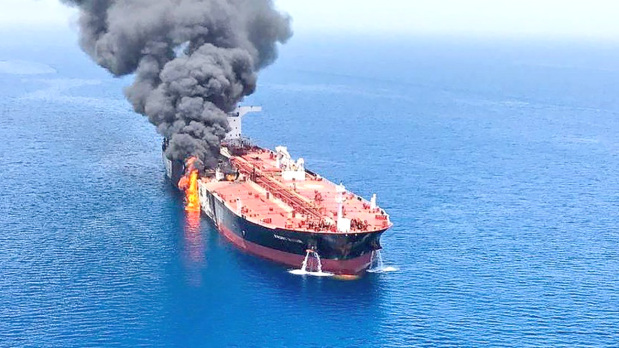
The ‘struggles at sea’ are likely to increase with Iran’s asymmetric warfare tactics against the GCC, cautioned the analyst, pointing to the recent tanker attacks allegedly carried out with Tehran’s support.
The latest incident was the attack on the Mercer Street oil tanker off the coast of Oman on July 29. G7 members blamed Iran for the suspected drone attack, which left two people dead.
“In the last two years and three months we have witnessed many incidents and mainly three attacks on oil tankers in the regional waters, which are serious,” Dr Keskh told the GDN.

Dr Keskh
“All of these allegedly from Iran, had similarities. They were well-organised, as in it always remains unclear as to who did it. There was technology used in all cases – we saw drone attacks but the attackers never destroyed the tankers for fear of international intervention.”
In May last year, four ships were targeted near Fujairah port, an incident that described as a threat to the security of global oil supplies.
This follows rising tensions in the region amid the deployment of a growing number of US military assets to the Middle East, due to deteriorating relations with Iran. Next month (June last year), two tankers were damaged by explosions in the Gulf of Oman, adding to the escalating tension between Iran and the US.
“Iran targets the GCC countries inflicting a lot of damage with the least cost,” said Dr Keskh. “The struggles at sea and the confrontations are likely to increase and it is vital that we establish a GCC maritime coalition.”
Dr Keskh pointed out that a vast number of maritime exercises already involve GCC countries with regional and international partners. This, he said, displayed their capabilities.
“As we know, Iran has greater maritime strengths than the six individual GCC countries, yet the number of manoeuvres that the GCC countries engage in round the year shows their capabilities,” he said. “So a GCC naval coalition is feasible and Bahrain will be the key asset on this apparatus, for its historical positioning and experience.
“The strategic location of the island helps as well as its alliance with international powers and moreover, it is home to the US Fifth Fleet.”
&uuid=(email))