

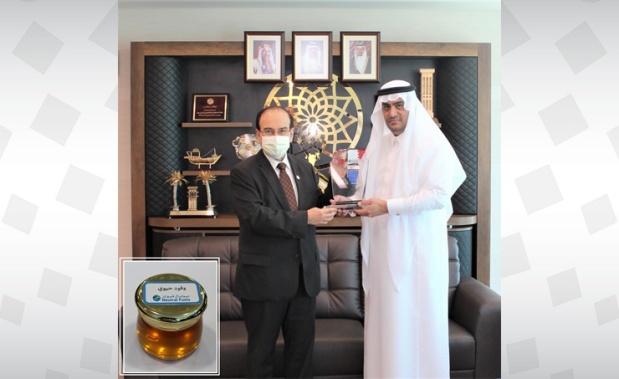
BAHRAIN achieved yet another milestone as the first sample of a locally produced zero carbon fuel that can be a diesel alternative was presented to a top official yesterday.
Sustainable Energy Authority president Dr Abdulhussain Mirza was presented with the sample by Dubai-based biofuels producer Neutral Fuels’ chief executive Abdulla Al Otaibi, who is also the main investor of the project in Bahrain.
The company produces biofuels that can replace conventional fuels in transportation, agriculture, power generation and other industries.
Zero carbon fuels emit no carbon dioxide when consumed compared to the environmentally damaging fossil fuels.
Biofuels
“We now have a Neutral Fuels factory in the Hidd Industrial Area that converts used cooking oil into biofuels,” Dr Mirza told the GDN last night.
“This a big development of creating a net zero biofuel in Bahrain that will attract companies to use this latest technological innovation.”
Dr Mirza added that the first biofuel produced in Bahrain is diesel-compatible and it is not based on crude oil, but on used cooking oil.
“The end product can be used as a direct replacement in diesel engines, or as a high-quality fuel additive for different purposes,” Dr Mirza said.
“Bahrain is creating value from what was a waste stream by producing a low environmental impact fuel which has export potential. It can turn waste into net zero energy.
“The conversion of used oil into fuel not only helps the environment but also contributes to the circular economy.”
A circular economy is an economic system that tackles global challenges like climate change, biodiversity loss, waste, and pollution.
Dr Mirza said the new technology will also help in reduction of carbon emissions from the use of fossil fuels, and further diversify energy resources.
It further deals with the difficult problem of disposing of used cooking oil from the waste stream (flow of waste from domestic and industrial sources), he added.
Bahrain has adopted a series of green projects including installing solar panels on rooftops of government schools and ministries, discussing plans of floating wind turbines, energy efficient ratings for buildings and more recently setting up the first electric cars station in Saar.
These renewable energy projects as part of the National Energy Efficiency Action Plan that has set a target of 10 per cent of total energy consumption to be met through renewables by 2035, doubling the 5pc goal by 2025.
This is expected to save energy costs worth BD230 million annually and measures are being taken to diversify the energy mix towards low carbon alternatives.
sandy@gdn.com.bh
&uuid=(email))