


BAHRAIN will step up its health infrastructure to tackle the rising incidence of strokes and heart attacks in the kingdom.
A total of 150 paramedics at the national ambulance department will be trained to identify symptoms of strokes.
The stroke unit at Salmaniya Medical Complex (SMC) will also be strengthened.
Measures will be adopted to boost co-ordination between the ambulances and the Mohammed Bin Khalifa Bin Salman Al Khalifa Cardiac Centre, Awali to ensure quick response so that people suffering from strokes get immediate attention.
Projects
The projects are scheduled for early next year, said Supreme Council for Health (SCH) chairman Lieutenant Colonel Dr Shaikh Mohammed bin Abdulla Al Khalifa.
He was speaking to the GDN on the sidelines of the seventh Middle East and North Africa Stroke Congress (Mena Stroke Congress) at the Gulf Convention Centre, which opened yesterday.
“By early next year, we are planning to train 150 paramedics at the national ambulance to identify symptoms of stroke,” said Dr Shaikh Mohammed. “Patients should be rushed to the nearest hospital as it can help in preventing complications.
“The paramedics will also be trained and equipped with facilities to identify myocardial infarction (heart attack) even if the patient exhibits mildest symptoms.
“The echocardiogram (ECG) done in the ambulance will be sent to the cardiac centre monitor and doctors will be able to identify the intensity of the case and be ready.”
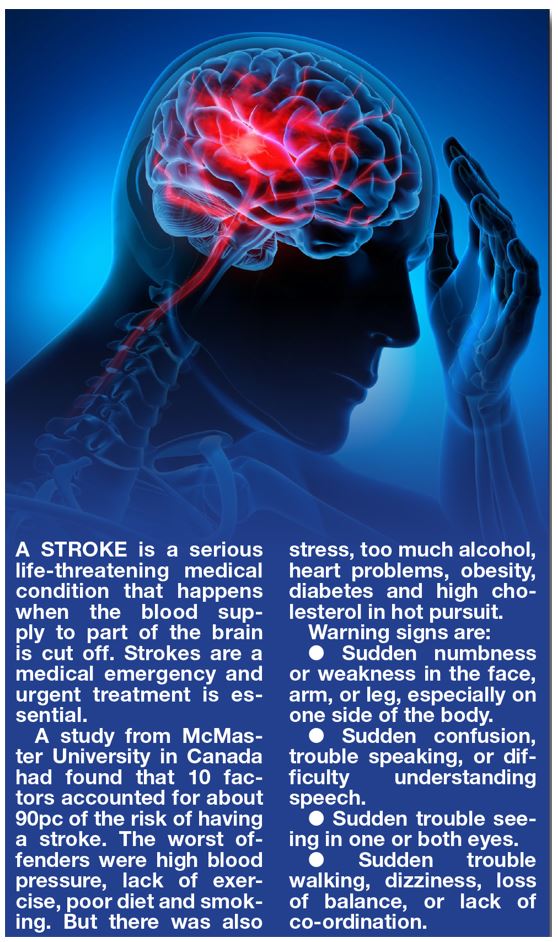
Stroke is a leading cause of death and disability worldwide, despite the fact that up to 80pc of attacks are preventable.
Cardiovascular disease is the number one killer in the world.
However, there is no official data on these conditions in Bahrain. Experts in the field had called for a national centre to research into cardiac concerns to help tackle the disease.
The GDN reported last year that incidences of stroke are on the rise in Bahrain, with an estimated 300 cases reported in one of the public hospitals in the country since last February.
Lt Col Dr Shaikh Mohammed said measures adopted by the SCH were part of “quick response”, which is important in case of strokes.
“The treatment is efficient if the person receives medical help within one to two hours and this is our aim,” he said.
“The SMC ambulance team will be trained as well, however, they will be soon taken over by the national ambulance team.”
According to medics, a door-to-treatment time of 60 minutes or less is key to tackling stroke. This period is often referred to as the “golden hour” during which a focused diagnostic work-up must be completed to rule out conditions that may mimic stroke as well as other contraindications.
“The stroke unit at SMC will be further strengthened in terms of personnel and equipment – we will ensure that there will be round-the-clock support available,” added Lt Col Dr Shaikh Mohammed.
“Stroke is a serious concern globally and the same goes with Bahrain.”
The three-day forum held in hybrid format under the patronage of Lt Col Dr Shaikh Mohammed is being organised by the Bahrain Medical Society (BMS)’s Bahrain Neurosciences Association.
The opening was also attended by National Health Regulatory Authority chief executive Dr Maryam Al Jalahma, Bahrain Neurological Association President Dr Fatima Abdulla, and officials from the World Stroke Organisation, the European Stroke Organisation, the American Heart Association and the Pan Arab Union of Neurological Societies (PAUNS).
Around 40 doctors and consultants from Bahrain, the region and other parts of the world will deliver lectures during the congress.
raji@gdn.com.bh
&uuid=(email))