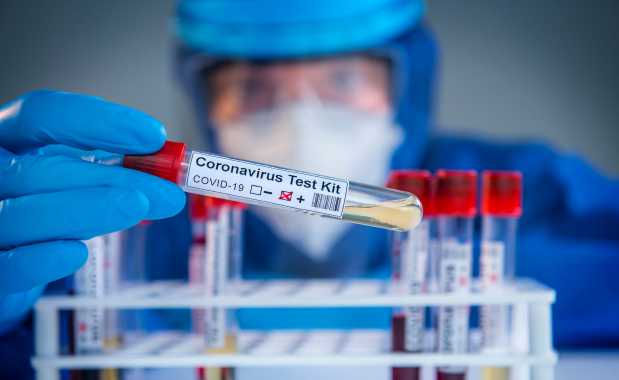
ONLY four private laboratories in Bahrain are equipped to detect the Omicron variant of the coronavirus (Covid-19), it has emerged.
The National Health Regulatory Authority (NHRA) yesterday revealed this in its circular to all government and private facilities – a copy of which the GDN has secured.
The four labs are in addition to the Public Health Laboratory, which has been sequencing a majority of samples since the outbreak of the pandemic in 2019.
Samples
All hospitals and testing facilities across the country can continue collecting nasal swabs for the reverse transcription-polymerase chain reaction (RT-PCR) test. However, the samples will have to be sent to the NHRA-approved labs, which will do the genome sequencing and provide the result.
The move comes after the National Taskforce to Combat Covid-19 found that several healthcare facilities in the kingdom were not equipped to detect the ‘missing S-gene’ in swab samples – a quick and reliable test for the Omicron variant.
“Any lab unable to perform SARS Cov2 test to detect the missing S-gene must immediately stop conducting PCR tests,” read the NHRA circular.
The reagent used in labs for gene sequencing of nasal swabs is crucial in detecting variants.
“There are different types of reagents – those which can detect one, two and three genes,” explained a senior technician who requested anonymity.
“Some of the laboratories have invested in reagents that can detect only two genes, which will not serve the purpose of detecting the Omicron variant.
“They will not be able to identify if the S-gene is missing.”
The NHRA move has dealt a severe blow to several private hospitals, which had procured machines as well as reagents to process the results of RT-PCR tests as Covid-19 cases surged in the country last year.
A few facilities offering RT-PCR tests had also tied up with private laboratories to process the results.
A representative of a private facility, who did not want to be identified, told the GDN that their machines and reagents will not be able to detect the missing S-gene.
“We are waiting to find out ways to tackle this issue as we have invested in machines and kits. We are not sure how they could be upgraded,” he said, adding, “We fear huge losses.”
It remains unclear as to how many laboratories were earlier authorised to process Covid test results. According to sources, at least nine facilities in the country were doing gene sequencing in the past.
The NHRA had, in its circular dated December 1, restricted labs that are unable to detect the S-gene from performing the test for a week.
“In pursuant to the task force instructions due to the current spread of new Covid-19 virus variant, please be informed that all positive or undetermined samples must be sent to the Public Health Laboratory immediately (within 24 hours),” read the circular.
“All samples from travellers must also be done at the Public Health Laboratory.”
With the deadline set by the authority ending today, hospitals and clinics are awaiting a decision.
The private facilities now approved by the NHRA are – Thyrocare Gulf Laboratory, Bahrain Medical Laboratory, Express Med Laboratories and Al Borg Medical Laboratory.
Banned
Bahrain has reinstated the travel red list following the emergence of the new Covid-19 variant that has sparked global concern.
Ten countries are on the list – South Africa, Namibia, Lesotho, Botswana, Eswatini, Zimbabwe, Malawi, Mozambique, Angola and Zambia and Nigeria.
Passengers from these countries, including those who transit through them, have been banned from entering Bahrain. However, citizens and residents of Bahrain have been exempted.
Those eligible for entry will, however, have to undergo quarantine and Covid-19 testing according to government protocols.
raji@gdn.com.bh