


UNVACCINATED people and those who have recovered from the coronavirus (Covid-19) infection are at risk of contracting the rapidly spreading Omicron variant, according to a senior doctor.
National Taskforce for Combating the Coronavirus (Covid-19) monitoring committee head Dr Manaf Al Qahtani also warned of the severity of infection among the elderly and immuno-compromised people.
The BDF Hospital microbiologist’s warning comes as 80 per cent of the country’s population has received at least one dose of a vaccine.
As of Sunday, 1,20,0396 people had received one jab, accounting for 80.02pc of Bahrain’s estimated 1.5 million population, while 1,174,698 people had received two shots, accounting for 78.3pc.
This means that the country would need to double jab around 25,000 people more to achieve herd immunity – which is around 80-90pc of the population.
Meanwhile, 809,532 people (54pc) took a third, booster dose.
“With Omicron, we may see an increase in the severity of infection among unvaccinated people, particularly the elderly and those with weakened immunity,” Dr Al Qahtani said on Twitter.
“Among the unvaccinated (Covid-19) recovered, the risk of infection (with Omicron) is high.”
While these he said were “bad news”, the veteran medic also shared some “good news” about the variant, which has been studied as the fastest spreading mutant capable of evading the body’s defences.
“Vaccines prevent complications from the variant, and the third (booster) dose stimulates immunity and contributes to limiting its spread,” he explained.
“All precautions, such as wearing face masks and physical distancing, prevent infection, and all tests (for Covid-19) have the ability to detect the infection (with Omicron).”
Experts attribute the rapid spread of the Omicron variant to two factors – its ability to replicate quickly and an unprecedented number of mutations (32) on the spike protein, which plays an important role in infection.
They explain that the infected people have a lot more virus in their throats, which is expelled into the air when they breathe, particularly when they cough or sneeze.
According to the World Health Organisation, the variant has been reported in 89 countries, and the number of cases doubles in 1.5 to three days in areas with community transmission.
However, preliminary research indicates that the variant’s higher rate of transmission has not resulted in any fatalities.
Meanwhile, Dr Al Qahtani stated that Bahrain was following up on US Centres for Disease Control (CDC) studies on the need for additional vaccine doses.
Bahrain has approved a second booster shot for people aged 18 and above who have already received three doses of the Sinopharm vaccine. They can choose between Sinopharm and Pfizer-BioNTech.
However, this was not required for those who received a booster job different than Sinopharm, according to Dr Al Qahtani.
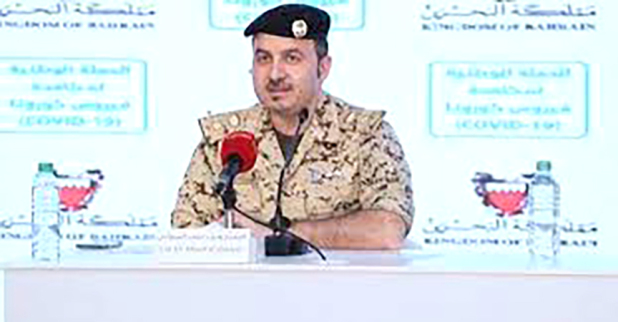
Dr Al Qahtani
He also urged people not to spread “rumours” and “anxiety” as the country records a rise in daily and active cases.
“This undermines team morale which is the foundation of the nation’s success and achievements.
The GDN reported last week that between December 16 and 22, Bahrain saw a 153pc in Covid-19 infections. The number of daily cases continues to rise, with 930 reported from December 23 to Sunday.
On Friday, there were 221 cases, which increased to 241 on Saturday and 287 on Sunday.
Active cases also surpassed 1,000 on Friday (Dec 24) – 1,121, and has been steadily increasing since – 1,316 on Saturday, and 1,548 on Sunday. There are no cases currently being treated or in intensive care.
The task force also urged all individuals who were eligible for the second booster to go directly to the designated health centres, a list of which the Health Ministry updated on Sunday.
There is no need for people to make an appointment to receive Covid-19 vaccinations and booster shots.
raji@gdn.com.bh
&uuid=(email))