

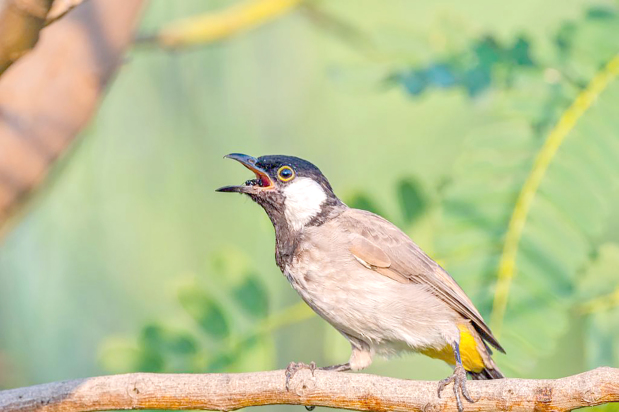
AUTHORITIES are adopting tough measures to combat the illegal trade of Bahrain’s national bird, the bulbuls – a protected species whose population has plummeted in recent years.
Inspectors from the Supreme Council for Environment (SCE) confiscated 24 bulbuls from local markets during routine inspections and released them into the wild.
White-cheeked Bahraini bulbuls, which are resident breeders, are originally from Iraq and Iran. Although some of the medium-sized songbirds are colourful, with yellow, red, or orange vents, cheeks, throats, or supercilia, the majority have a uniform olive-brown to black plumage. Some species have distinguishable crests. Bulbul, the Farsi word for nightingale, is the name given to these lovely birds that whistle.
“SCE officials inspected local markets and confiscated 24 Bahraini bulbuls,” SCE chief executive Dr Mohammed Bin Daina told the GDN. However, he did not reveal the time frame during which they were seized.
“The inspections were carried out in accordance with decisions made under the 2005 law, which forbids the trade of all types of Houbara birds and Bahraini Bulbuls.
“The goal is to protect these endangered species by preventing their illegal hunting and trading in markets.”
Most of the seized birds were immediately released into the wild, while a few that needed treatment and care were directed to the Al Areen Wildlife Reserve for rehabilitation. They will be freed once they are healthy and fit, Mr Bin Daina added.
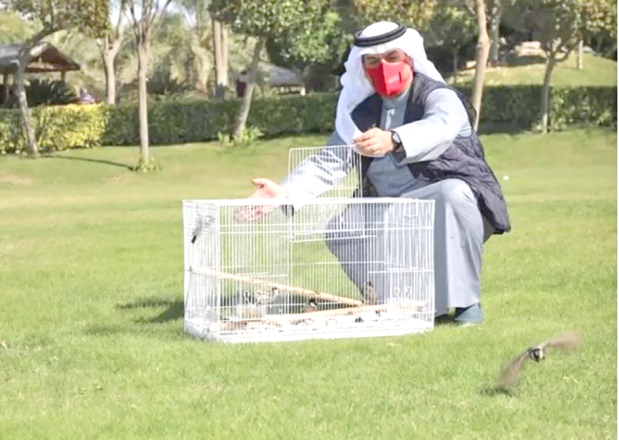
Dr Bin Daina releasing the bulbuls back into the wild
According to a SCE official, there are no statistics on bulbuls in Bahrain - either in the wild or in captivity. However, he said the country’s best-loved birds have seen their population plummet in recent years.
“It could either be due to illegal hunting or their habitats being threatened,” said the official, who requested anonymity.
“It could also be the result of mynahs, an invasive species, competing with the bulbul habitat.
“It’s an alarming trend.
“However, we have launched programmes to control and combat illegal bulbul trade, both on social media and in markets, and we also have schemes to increase awareness among the public.”
The GDN earlier reported that mynah, which is now docile in Bahrain, could pose a threat to the environment if its population is not reduced. With its aggressive nature of feeding on hatchlings of other bird species, Kuwaiti researcher Naseraldeen Asadalla had highlighted the potential of mynahs becoming invasive in a study conducted in collaboration with the Arabian Gulf University.
Wildlife photographers in Bahrain have also noticed a drop in the number of Bahraini bulbuls.

Mr Singh
“Earlier, we could spot a lot of white cheeked bulbuls in the country,” Indian Ajay Kumar Singh told the GDN.
“The numbers seem to have fallen and I believe it’s due to the birds being trapped by poachers. Illegal collection of seaweeds from the sea and destruction of their habitats have also contributed to their decline.
“Some of the raptor (migratory) birds like common kestrels are also being caught illegally.”
Mr Kumar called for tougher action against bird poachers.
“We also need to protect the habitats of these endangered birds as construction and expansion activities are impacting their survival,” the 53-year-old Geographical Information System Specialist added.

Mr Saidalavi
Amateur photographer Ambalath Veetil Saidalavi said it was a surprise to see such well-known species in big trouble.
“Poachers are attracted to bulbuls which are easy to breed in captivity. They are also susceptible to attack by raptors,” said the 38-year-old Indian.
“Burgeoning population of crows in Bahrain could also be a reason for their decline, as crows and mynahs eat bulbuls’ eggs and juveniles from their nest.”
raji@gdn.com.bh
&uuid=(email))