

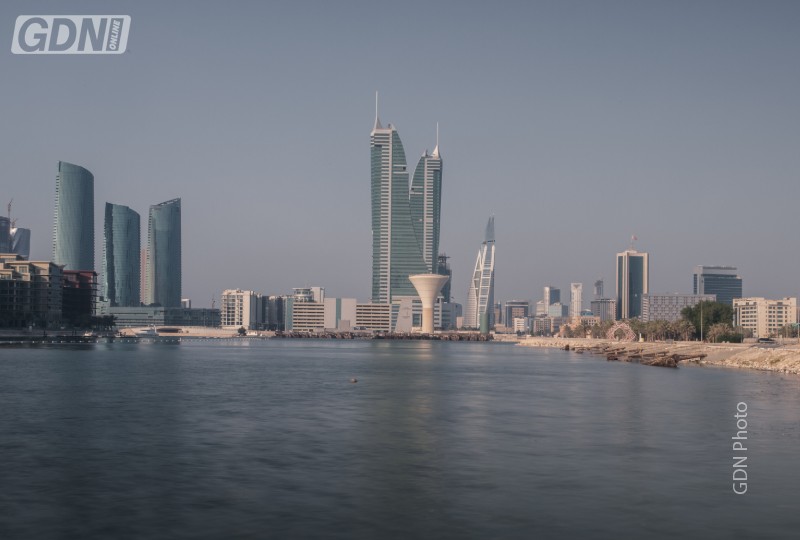
MANAMA: Bahrain continues to outpace most global emerging markets when it comes to creating business-friendly conditions, according to a new report that looks at competitiveness.
The 2022 Agility Emerging Markets Logistics Index ranks Bahrain fifth among 50 countries in terms of business fundamentals – a measure of the ease of starting a business, getting credit, paying taxes and resolving contract disputes.
The kingdom has risen two places from last year due to its business-climate reforms.
The report says Bahrain offers free zones across a range of manufacturing sectors as well as 100 per cent foreign ownership of enterprises. The country also plans to attract more manufacturers to its shores with investment to boost the production of aluminium, petrochemicals and renewable energy as part of its 2022-2026 economic recovery plan.
Transport Intelligence (Ti), a leading analysis and research firm for the logistics industry, compiled the index on the basis of a survey of 756 supply chain industry professionals.
China (1) and India (2) top the list of the world’s 50 leading emerging markets in terms of overall competitiveness, with the kingdom bagging the 15th place, while the UAE (3), Saudi Arabia (6) and Qatar (7) are in the top 10.
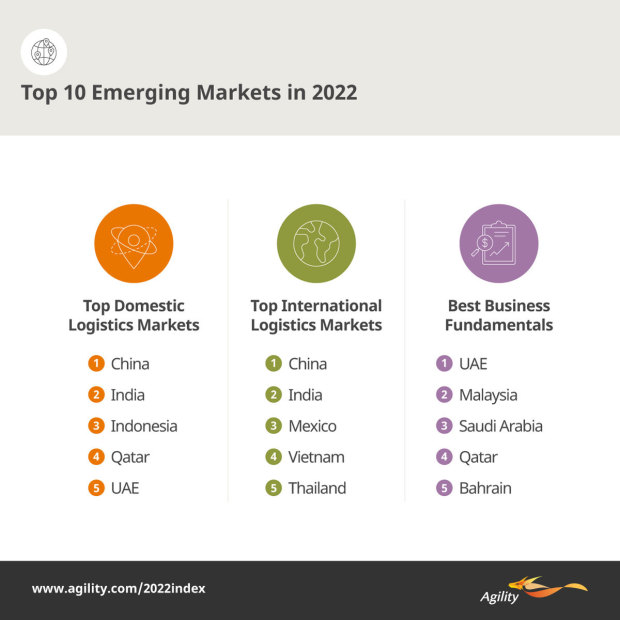
The assessment is based on the markets’ logistics strengths, business climates and, for the first time, their digital readiness – factors that make them attractive to logistics providers, freight forwarders, air and ocean carriers, distributors and investors.
Commenting on the findings, Ti chief executive John Manners-Bell said: “Covid-19 has meant that shipping has become even more costly, complicated and slower, especially for small and medium-sized businesses. How quickly emerging markets recover from the crisis of the last two years is heavily reliant on the speed of the vaccine rollout, not least from the perspective of social, economic and political cohesion. At the same time, the links connecting these economies with western markets need to be reinstated if shippers are to be integrated back into the global trading system.”
Recognising the important role played by digitisation in facilitating frictionless cross-border movements, Mr Manners-Bell went on to add that in the long run the benefits of globalisation will only be shared with emerging markets if supply chains and logistics can be made more resilient in the face of future crises.
The UAE ranked highest for digital readiness, a new category in the index.
The top 10 in digital readiness are UAE, Malaysia, China, Saudi Arabia, India, Thailand, Qatar, Indonesia, Chile and Philippines, whereas Kuwait (12) and Oman (15) also rank highly and Bahrain is 22nd.
Digital readiness assesses digital skills, training, Internet access, e-commerce growth, investment climate, and ability to nurture startups, as well as sustainability factors such as renewable energy mix, lower emissions intensity and green initiatives.
“The connection between a country’s digital capabilities and growth prospects is undeniable,” Agility chief executive Tarek Sultan said.
“The competitiveness of emerging markets countries will be determined by their ability to develop digitally skilled businesses and talent pools, and find the resolve to lower their emissions in ways that spur growth rather than sacrificing it.”
The importance of digital readiness was apparent in the survey. Logistics executives identified adoption of technology as the leading driver of economic and business growth for emerging markets. The top focus areas for their companies: technology and sustainability.
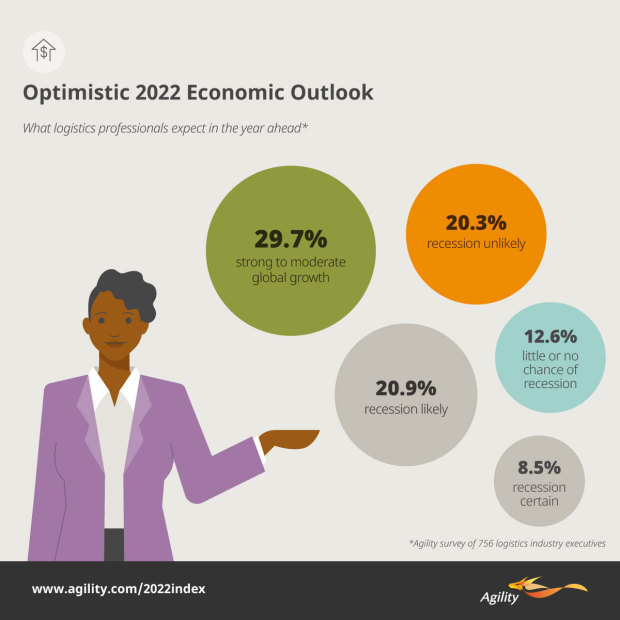
Most logistics industry executives see moderate-to-strong economic growth and little or no chance of recession in 2022, even without immediate relief from the snarled supply chains and sky-high ocean and air freight rates triggered by the Covid-19 pandemic.
Roughly two-thirds of the 756 industry professionals surveyed for the index believe shippers will see cargo rates come down by the end of the year. Eighty per cent see port bottlenecks, air capacity shortages and trucking issues easing by year end.
“The industry’s optimism reflects the fact that emerging economies are getting more resilient and figuring out ways to weather supply chain disruption,” Mr Sultan said.
“If emerging markets can get better access to vaccines and give small business a boost, they can help power a broad, dynamic global recovery.”
avinash@gdn.com.bh
&uuid=(email))