

The decree amends Article (7) of the Judicial Authority Law to state that disputes related to nationality cannot be challenged before the judiciary, and repeals Article (11 bis) of the Bahraini Nationality Law of 1963.
Parliament’s legislative and legal affairs committee endorsed the move after nine meetings and consultations with the Supreme Judicial Council, the Ministries of Interior, and the Justice, Islamic Affairs and Endowments, and the Bahrain Bar Society.
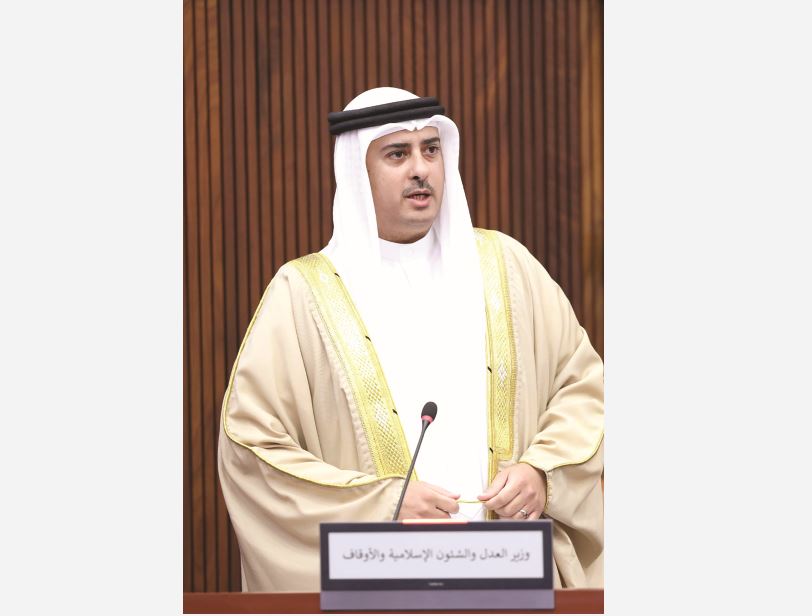
Justice, Islamic Affairs and Endowments Minister Nawaf Al Maawda told MPs the decree-law, originally issued in 2024 in connection with a specific case, was unrelated to current developments and was being debated now to complete the legislative framework.
“The purpose of the decree is to affirm the sovereign nature of nationality and to grant the state its full powers in this matter, removing it from the scope of judicial oversight because it is linked to national security and the supreme interests of the nation,” he said.
He stressed that nationality decisions are not legal punishments in the conventional sense.
“A penalty is imposed as a consequence of violating a legal text. Granting or withdrawing nationality, however, is a sovereign decision taken by the state based on higher sovereign considerations,” he explained.
Mr Al Maawda added that this approach was neither new nor exceptional, noting that many countries – including European states – grant governments broad discretionary powers over nationality matters.
“This reflects a normal sovereign practice consistent with international legal frameworks and does not represent a departure from established norms,” he said.
Crucially, MPs were also told that the amendment does not remove judicial oversight from routine administrative issues. Matters such as issuing, renewing or replacing passports, name changes, or administrative delays remain open to court review – provided there is no dispute over the person’s nationality itself.
Officials also clarified that a passport is a travel document and not, in itself, proof of nationality.
Committee chairman MP Mahmood Fardan said this distinction was essential.
“The law draws a clear line between sovereign decisions on granting, revoking, restoring or withdrawing nationality, and ordinary administrative procedures that remain open to litigation,” he noted.
If approved by the Shura Council, the amendment will remain in force as issued, having already taken effect the day after its publication in the Official Gazette.
&uuid=(email))